
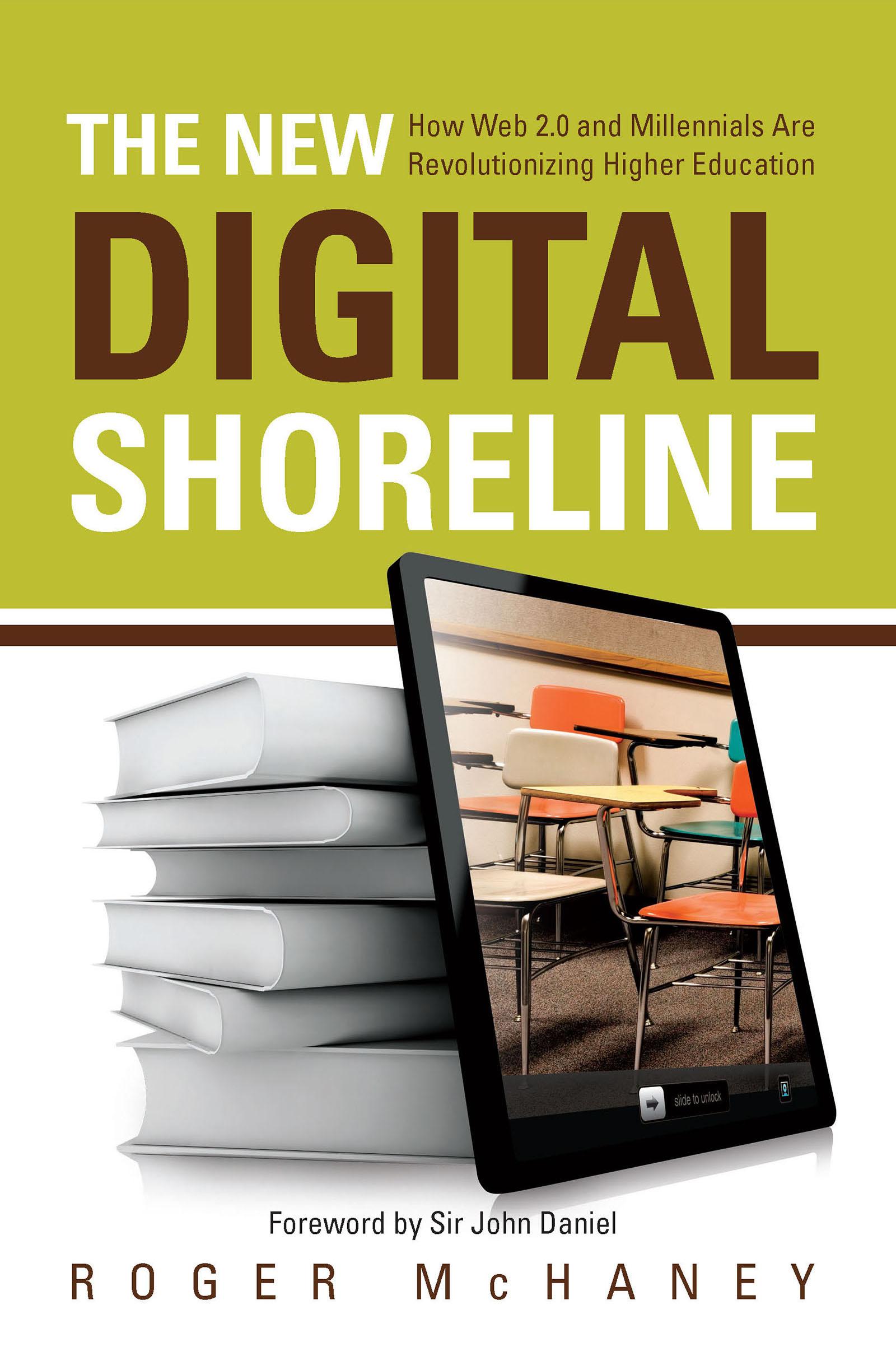
Two seismic forces beyond our control – the advent of Web 2.0 and the inexorable influx of tech-savvy Millennials on campus – are shaping what Roger McHaney calls “The New Digital Shoreline” of higher education. Failure to chart its contours, and adapt, poses a major threat to higher education as we know it.These forces demand that we as educators reconsider the learning theories, pedagogies, and practices on which we have depended, and modify our interactions with students and peers—all without sacrificing good teaching, or lowering standards, to improve student outcomes. Achieving these goals requires understanding how the indigenous population of this new shoreline is different. These students aren’t necessarily smarter or technologically superior, but they do have different expectations. Their approaches to learning are shaped by social networking and other forms of convenient, computer-enabled and mobile communication devices; by instant access to an over-abundance of information; by technologies that have conferred the ability to personalize and customize their world to a degree never seen before; and by time-shifting and time-slicing.As well as understanding students’ assumptions and expectations, we have no option but to familiarize ourselves with the characteristics and applications of Web 2.0—essentially a new mind set about how to use Internet technologies around the concepts of social computing, social media, content sharing, filtering, and user experience.Roger McHaney not only deftly analyzes how Web 2.0 is shaping the attitudes and motivations of today’s students, but guides us through the topography of existing and emerging digital media, environments, applications, platforms and devices – not least the impact of e-readers and tablets on the future of the textbook – and the potential they have for disrupting teacher-student relationships; and, if appropriately used, for engaging students in their learning.This book argues for nothing less than a reinvention of higher education to meet these new realities. Just adding technology to our teaching practices will not suffice. McHaney calls for a complete rethinking of our practice of teaching to meet the needs of this emerging world and envisioning ourselves as connected, co-learners with our students.
Payez facilement par carte, Klarna, Apple Pay ou Google Pay. Pas satisfait ? Vous avez toujours une garantie de remboursement de 14 jours. En savoir plus dans nos conditions. Si vous avez des questions, envoyez-nous un e-mail à hello@memmo.org.
Memmo facilite tes études, où que tu sois dans le monde. On rassemble tes manuels de cours et des outils d'étude intelligents au même endroit : résumés, quiz, podcasts et flashcards. Et il y a Ted, ton compagnon d'étude qui répond à toutes tes questions. Plus de 50 000 étudiants étudient déjà ici – conçu pour t'aider à apprendre plus vite et à moins stresser.