
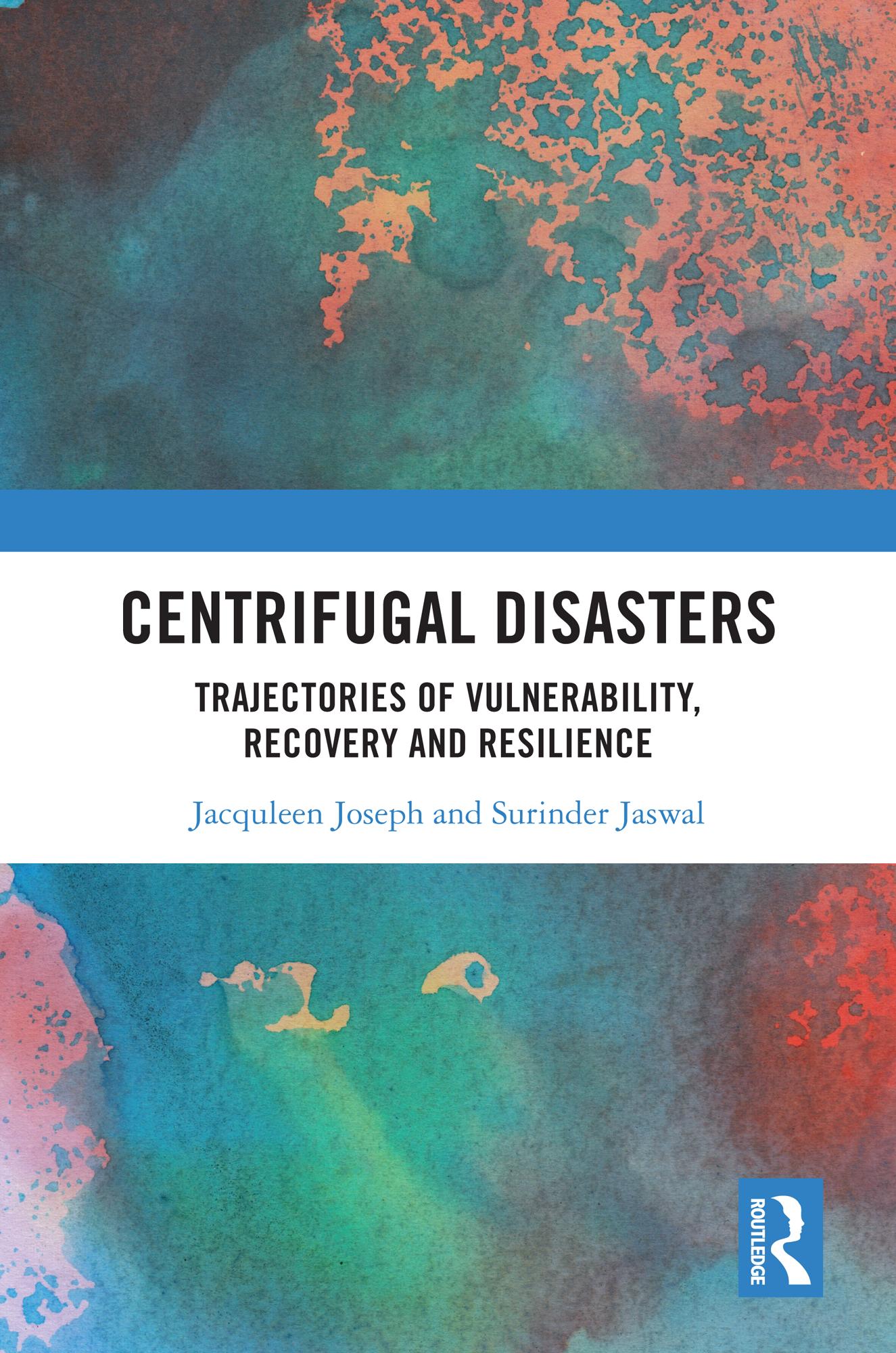
This book focuses on centrifugal disasters that impact a group of seemingly unconnected people congregated temporarily often by chance, unlike centripetal disasters that strike an extant community of people. In India as well as in South Asia, centrifugal disasters have increased significantly in the last few decades; however, the research remains limited as such incidents are often categorized as accidents. The book documents three such major disaster events–– the 26/11 terror attacks and the 13/7 blasts in Mumbai and the hospital fire in Kolkata–– and analyzes the lived and felt experiences of the survivors and their families.
Drawing on the authors’ experience of working with survivors, first responders (police, health workers), as well as policymakers, the book suggests a model of disaster intervention that bridges academia and praxis expertise. Besides providing a rights framework for disaster interventions, it also explores the moral and ethical considerations around disaster interventions.
This important book will be of interest to students and practitioners of disaster management, including first responders and those working in public management, risk management, hazards and disasters, emergency response, terrorism, and political violence. It will also be useful to mental health professionals, social workers, psychologists, civil society organizations, as well as bureaucrats and policymakers.
Payez facilement par carte, Klarna, Apple Pay ou Google Pay. Pas satisfait ? Vous avez toujours une garantie de remboursement de 14 jours. En savoir plus dans nos conditions. Si vous avez des questions, envoyez-nous un e-mail à hello@memmo.org.
Memmo facilite tes études, où que tu sois dans le monde. On rassemble tes manuels de cours et des outils d'étude intelligents au même endroit : résumés, quiz, podcasts et flashcards. Et il y a Ted, ton compagnon d'étude qui répond à toutes tes questions. Plus de 50 000 étudiants étudient déjà ici – conçu pour t'aider à apprendre plus vite et à moins stresser.