
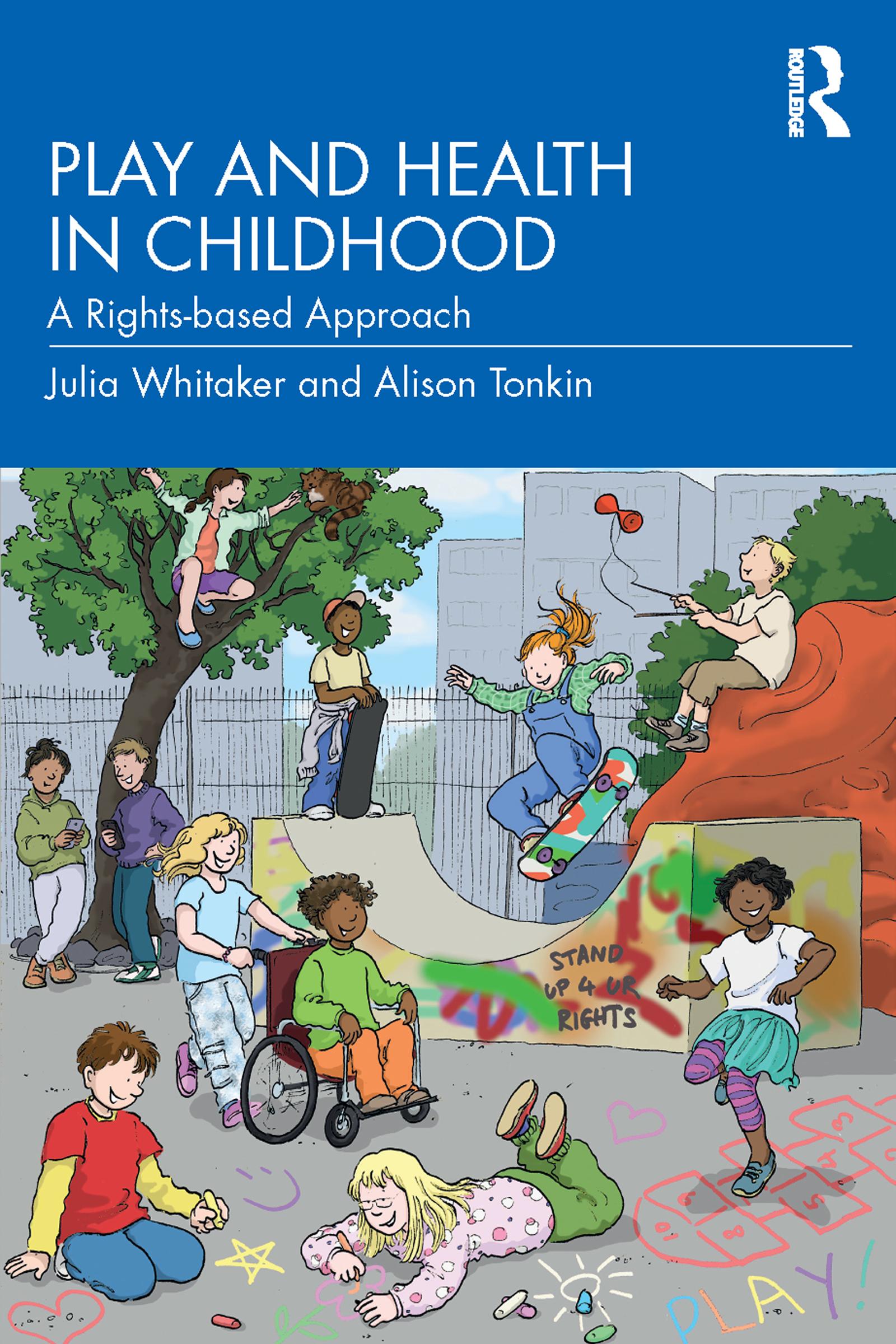
Taking a rights-based approach to the interdependence of play and health in childhood, this text argues that the child’s right to health and development cannot be satisfied without also the fulfillment of their right to play.
Underpinned by theory and real-life ‘case stories’ drawn from practice and family life, Whitaker and Tonkin present what is known about the benefits of play and its potential to address the pressing health needs in the short and long terms of the youngest generation. They define and discuss the concepts of childhood, play, health, and human rights before exploring how play interacts with the four fundamental principles of the UN Convention on the Rights of the Child: non-discrimination; best interests; life, survival, and development; and inclusion and participation. The book then investigates how practitioners can advocate for the child’s right to play to meet all their health and development needs. It presents numerous examples of best practice from a range of settings – including hospitals, schools, community initiatives, charities, families, and more – and incorporates the voices of children as they imagine a future in which play is elevated to a central position in their lives, allowing for the achievement of lifelong health and happiness.
Exploring children’s rights from a practical perspective, this accessible book is essential reading for students and practitioners in healthcare, social work, community work, early years, and education.
Payez facilement par carte, Klarna, Apple Pay ou Google Pay. Pas satisfait ? Vous avez toujours une garantie de remboursement de 14 jours. En savoir plus dans nos conditions. Si vous avez des questions, envoyez-nous un e-mail à hello@memmo.org.
Memmo facilite tes études, où que tu sois dans le monde. On rassemble tes manuels de cours et des outils d'étude intelligents au même endroit : résumés, quiz, podcasts et flashcards. Et il y a Ted, ton compagnon d'étude qui répond à toutes tes questions. Plus de 50 000 étudiants étudient déjà ici – conçu pour t'aider à apprendre plus vite et à moins stresser.