
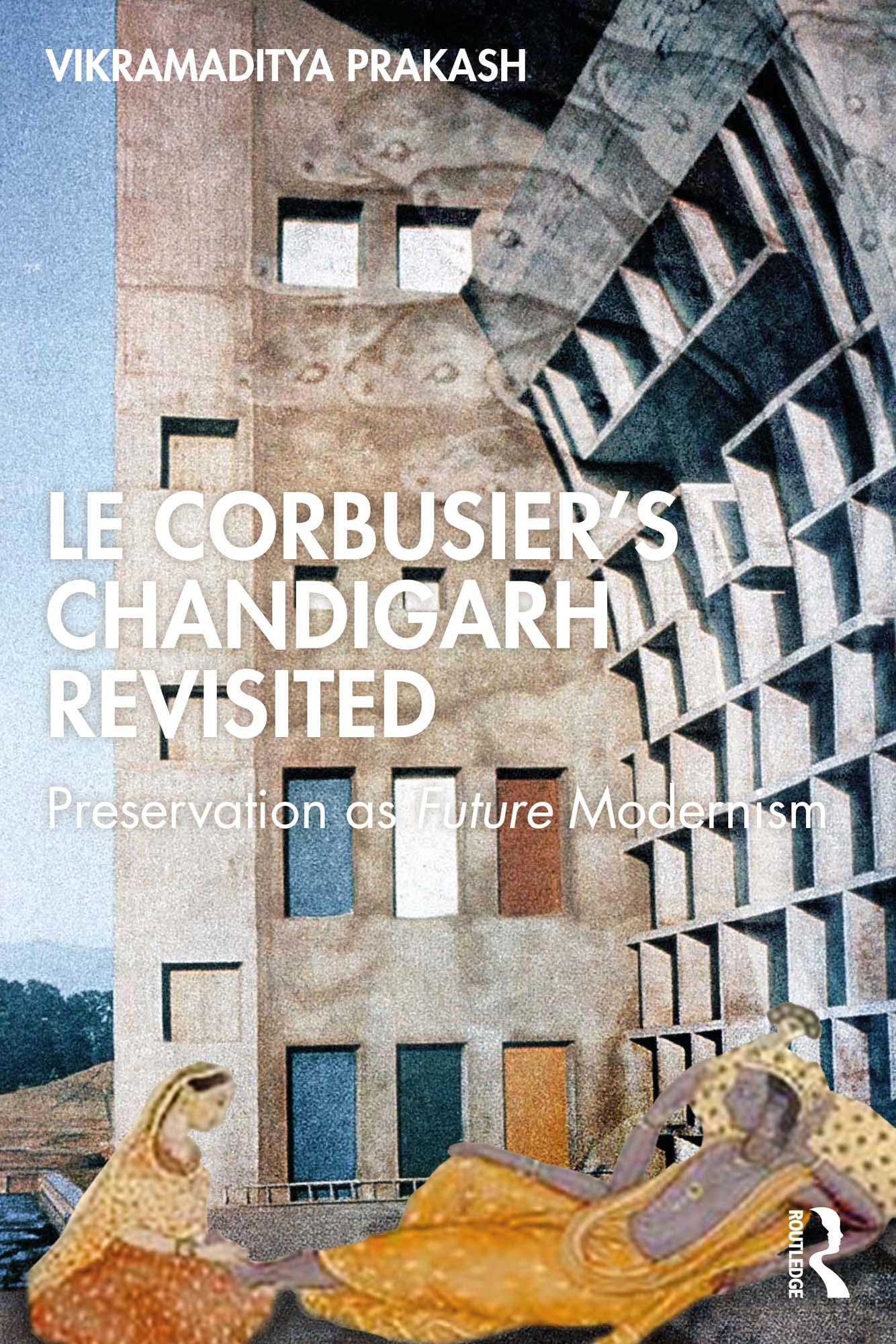
What is the relevance of the Chandigarh experiment today? Written by an esteemed scholar and former resident of the city, this fascinating book reevaluates Le Corbusier’s work in Chandigarh in terms of the pressing challenges of the present, in particular climate change, globalization, neo-nationalism, and information technology.
Through a lively poststructuralist and postcolonial framework, this book explores issues of preservation, identity, meaning, and change, comparing how the Chandigarh we see today compares to the original plans and drawings. But this book also asks whether Chandigarh’s aesthetics, as well as the ethical tenets on which it was based, are still relevant to urban planning and architecture today. What lessons, if any, does the utopian ethos within modernism offer in the face of the climate crisis, rising authoritarianism, and the digital explosion? Via chapters focused on the hydrologics of the master plan, the symbolism of the Capitol buildings, and the archeology of the unbuilt Museum of Knowledge, this book makes the future-preservation case for Chandigarh as an ‘open’ work, a project that was set up by design to be ‘completed’ by others in times yet to come.
Engaging and erudite throughout, this book will appeal to any student, scholar, or professional with an interest in architecture, landscape architecture, and urban planning.
Payez facilement par carte, Klarna, Apple Pay ou Google Pay. Pas satisfait ? Vous avez toujours une garantie de remboursement de 14 jours. En savoir plus dans nos conditions. Si vous avez des questions, envoyez-nous un e-mail à hello@memmo.org.
Memmo facilite tes études, où que tu sois dans le monde. On rassemble tes manuels de cours et des outils d'étude intelligents au même endroit : résumés, quiz, podcasts et flashcards. Et il y a Ted, ton compagnon d'étude qui répond à toutes tes questions. Plus de 50 000 étudiants étudient déjà ici – conçu pour t'aider à apprendre plus vite et à moins stresser.