
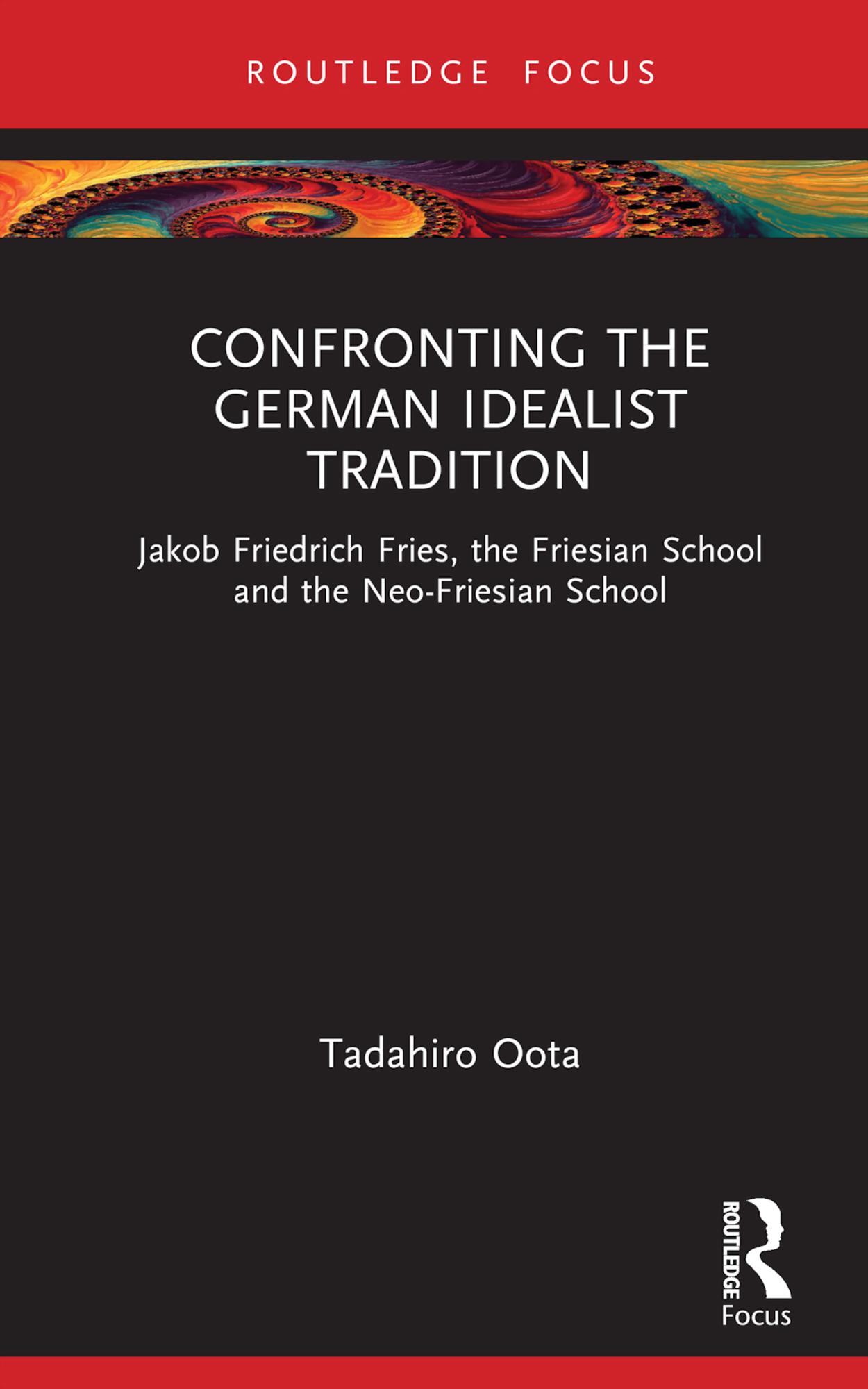
The philosophical activity of modern Germany represents a peak in the history of philosophy beginning from Thales in ancient Greece. This book attempts to reconsider the conventional image of 19th-century German philosophy. To this end, it illuminates a forgotten philosophical stream contemporaneous with so-called "German idealism."
From this perspective, this book examines the philosophy of Jakob Friedrich Fries, a philosopher contemporaneous and in confrontation with Hegel. By examining Fries’ standpoint, the book attempts to reconstruct the picture of 19th-century German philosophy. In the 19th and 20th centuries, philosophers other than Kant, Fichte, Schelling, and Hegel – especially Fries – had a significant influence on the history of philosophy, constituting an alternative genealogy to Hegel’s. One might say that the conventional history of philosophy conceals Fries’ influence. Accordingly, this book will examine Fries’ philosophy, the Friesian school established by E.F. Apelt, and the Neo-Friesian school formed by Leonard Nelson.
This approach reveals the factiousness of the history of philosophy that starts from Kant, passes through German idealism and flows into the Neo-Kantian movement. It will provide a new viewpoint from which to reconsider the history of German philosophy.
Payez facilement par carte, Klarna, Apple Pay ou Google Pay. Pas satisfait ? Vous avez toujours une garantie de remboursement de 14 jours. En savoir plus dans nos conditions. Si vous avez des questions, envoyez-nous un e-mail à hello@memmo.org.
Memmo facilite tes études, où que tu sois dans le monde. On rassemble tes manuels de cours et des outils d'étude intelligents au même endroit : résumés, quiz, podcasts et flashcards. Et il y a Ted, ton compagnon d'étude qui répond à toutes tes questions. Plus de 50 000 étudiants étudient déjà ici – conçu pour t'aider à apprendre plus vite et à moins stresser.