
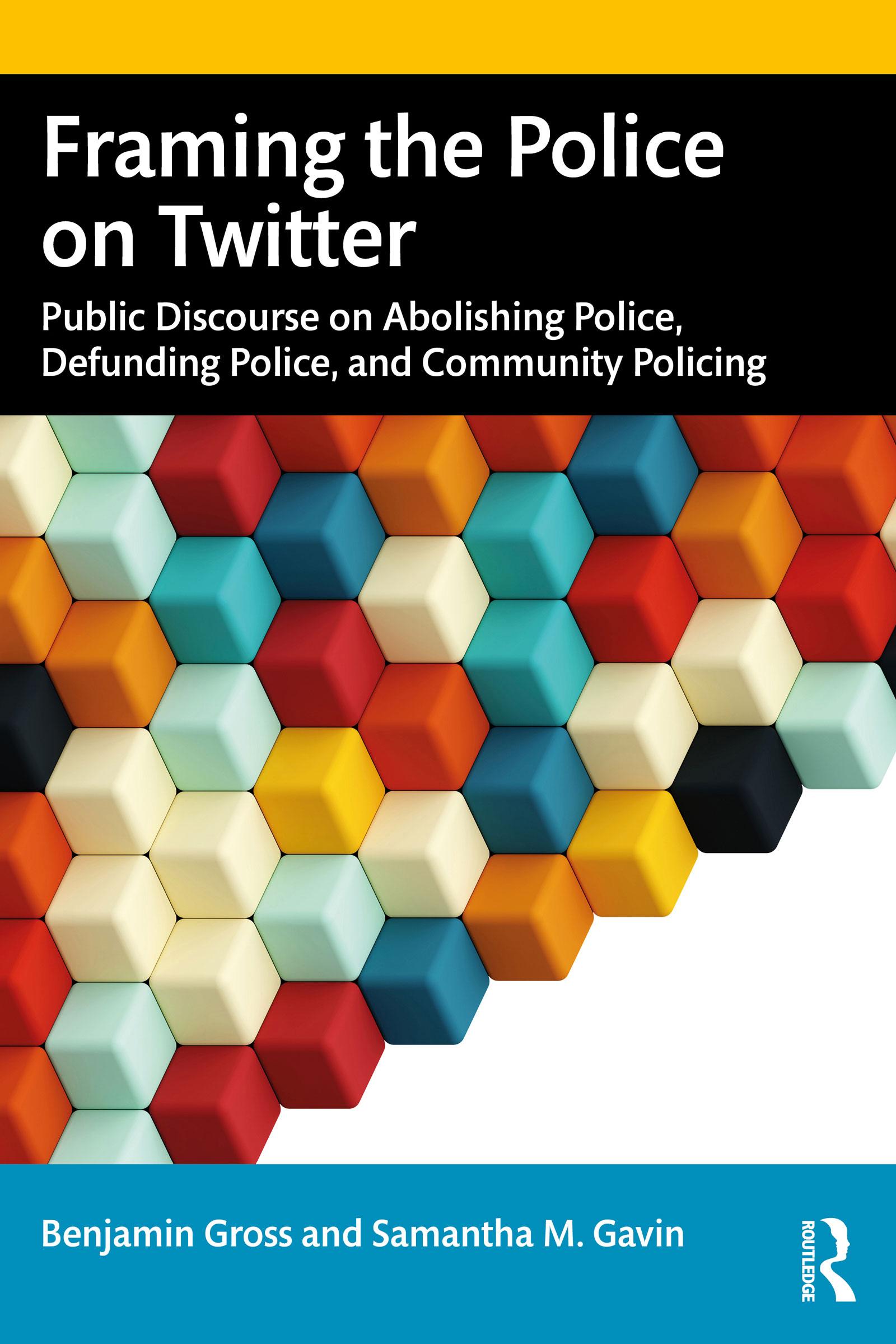
This work assesses the various meanings attached to calls for police reform in the public discourse on social media, providing readers with a greater appreciation of the assumptions, empirical claims, and rhetorical nuances that underpin the current dialogue about police policy. Drawing upon an intersectional theoretical and mixed-methods approach, the authors look at what it means to "defund" or "abolish" the police, as well as the definition of community policing.
The death of George Floyd in 2020 resulted in national and international protests during which some members of the public began to demand "abolishing" or "defunding" the police, ideas previously put forth in academic arenas. However, these public protests were often presented in rhetorical ways that differed from the academic roots of the ideas. This book takes a deep look into what it means to "defund" or "abolish" the police, drawing upon academic origins of the concepts while at the same time examining how the public has used Twitter to define and discuss these ideas. The authors identify frameworks built around the concepts, discuss facts and perspectives that have contributed to these ideas, and explain how quantitative methods can be used to illustrate the most prominent frames.
This book incorporates both quantitative and qualitative means of research in an examination of Twitter and brings clarity to the conversation surrounding the "abolish the police", "defund the police", and "community policing" concepts. It is suitable for undergraduate to graduate-level college courses in criminology, sociology, policing, race in America, communication, social media, and research methods.
Payez facilement par carte, Klarna, Apple Pay ou Google Pay. Pas satisfait ? Vous avez toujours une garantie de remboursement de 14 jours. En savoir plus dans nos conditions. Si vous avez des questions, envoyez-nous un e-mail à hello@memmo.org.
Memmo facilite tes études, où que tu sois dans le monde. On rassemble tes manuels de cours et des outils d'étude intelligents au même endroit : résumés, quiz, podcasts et flashcards. Et il y a Ted, ton compagnon d'étude qui répond à toutes tes questions. Plus de 50 000 étudiants étudient déjà ici – conçu pour t'aider à apprendre plus vite et à moins stresser.