
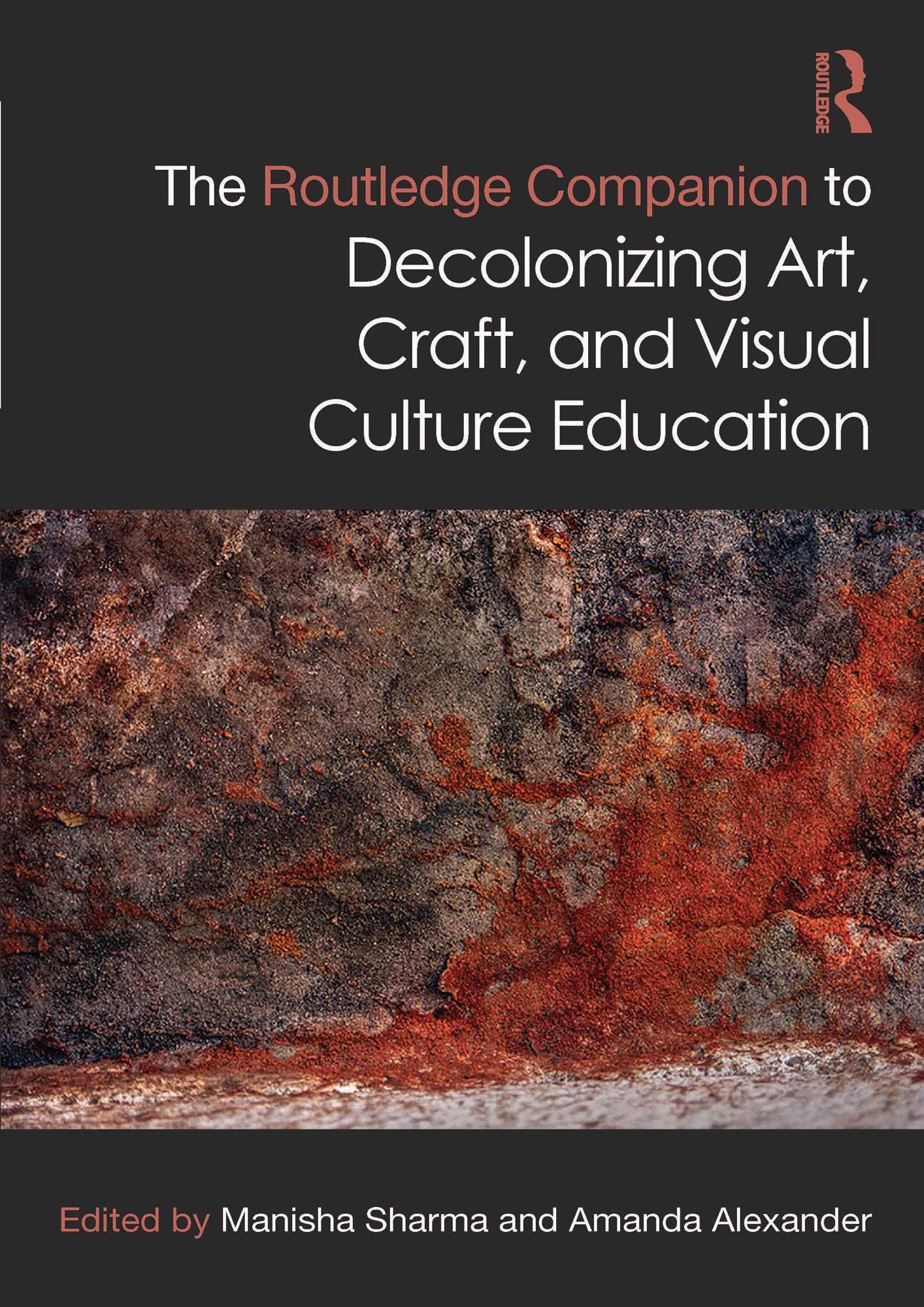
This companion demonstrates how art, craft, and visual culture education activate social imagination and action that is equity- and justice-driven. Specifically, this book provides arts-engaged, intersectional understandings of decolonization in the contemporary art world that cross disciplinary lines.
Visual and traditional essays in this book combine current scholarship with pragmatic strategies and insights grounded in the reality of socio-cultural, political, and economic communities across the globe. Across three sections (creative shorts, enacted encounters, and ruminative research), a diverse group of authors address themes of histories, space and land, mind and body, and the digital realm. Chapters highlight and illustrate how artists, educators, and researchers grapple with decolonial methods, theories, and strategies—in research, artmaking, and pedagogical practice. Each chapter includes discursive questions and resources for further engagement with the topics at hand.
The book is targeted towards scholars and practitioners of art education, studio art, and art history, K-12 art teachers, as well as artist educators and teaching artists in museums and communities.
Payez facilement par carte, Klarna, Apple Pay ou Google Pay. Pas satisfait ? Vous avez toujours une garantie de remboursement de 14 jours. En savoir plus dans nos conditions. Si vous avez des questions, envoyez-nous un e-mail à hello@memmo.org.
Memmo facilite tes études, où que tu sois dans le monde. On rassemble tes manuels de cours et des outils d'étude intelligents au même endroit : résumés, quiz, podcasts et flashcards. Et il y a Ted, ton compagnon d'étude qui répond à toutes tes questions. Plus de 50 000 étudiants étudient déjà ici – conçu pour t'aider à apprendre plus vite et à moins stresser.