
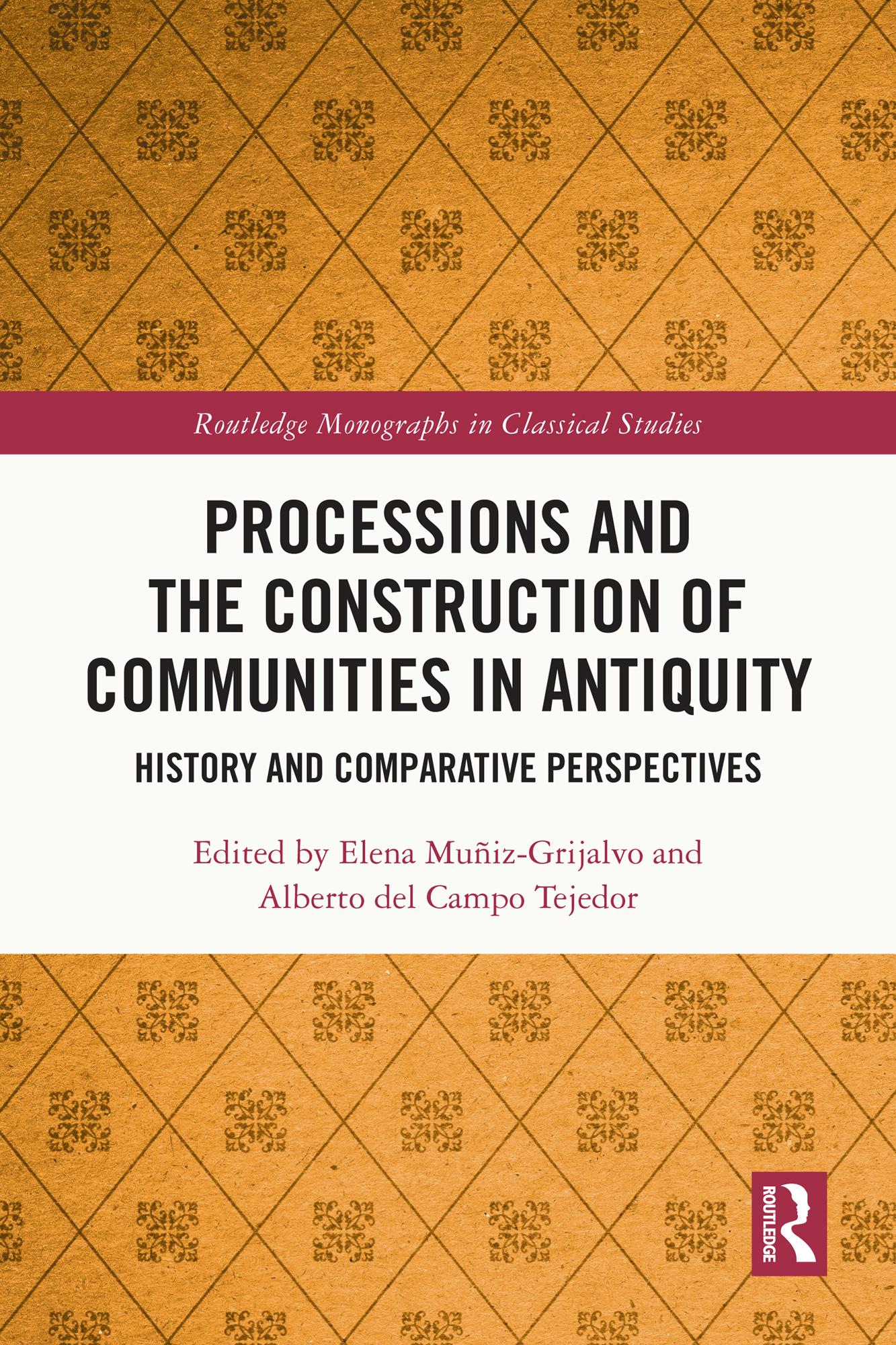
This volume elucidates how processions, from antiquity to the present, contribute to creating consensus with regards to both political power and communitarian experiences.
Many classical sources often only tangentially allude to processions, focusing instead on other ritual moments, such as sacrifice. This book adopts a comparative approach, bringing together historians of antiquity and later periods as well as social anthropologists working on contemporary societies, analysing both ancient and modern examples of how rituals, symbols, actors, and spectators interact in the construction of communities. The different examples explored in this study illustrate the performative capacity of processions to construct reality: the protagonism of image and movement, the design of cultic itineraries, and the active participation of members of the public. In studying these examples, readers develop an understanding of how power is exercised and perceived, the extent of its legitimacy, and the limits of community in a variety of case studies.
Processions and the Construction of Communities in Antiquity is of interest to students and scholars of the classical and early Christian worlds, especially those working on cult, religion, and community formation. The volume also appeals to social anthropologists interested in these issues across a broader chronology.
Payez facilement par carte, Klarna, Apple Pay ou Google Pay. Pas satisfait ? Vous avez toujours une garantie de remboursement de 14 jours. En savoir plus dans nos conditions. Si vous avez des questions, envoyez-nous un e-mail à hello@memmo.org.
Memmo facilite tes études, où que tu sois dans le monde. On rassemble tes manuels de cours et des outils d'étude intelligents au même endroit : résumés, quiz, podcasts et flashcards. Et il y a Ted, ton compagnon d'étude qui répond à toutes tes questions. Plus de 50 000 étudiants étudient déjà ici – conçu pour t'aider à apprendre plus vite et à moins stresser.