
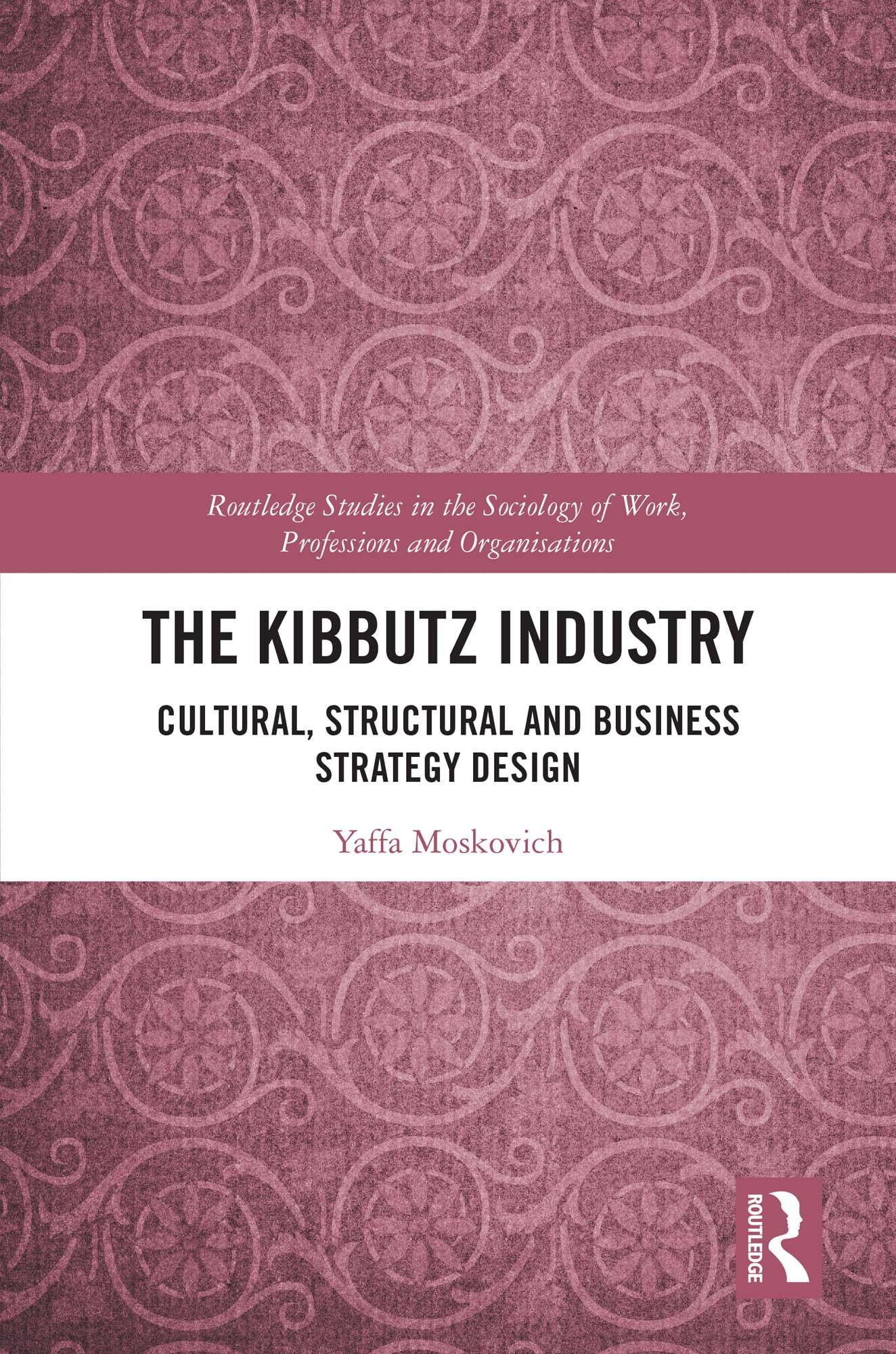
This book examines the changes in many kibbutz factories which have recently transformed from socialist entities, with egalitarian and cooperative relationships, to hierarchical and market-driven structures.
Focusing on five case studies from an ethnographic perspective, the book explores the reasons for this organizational change and examines its ideological, social, and economic causes. Ranging from organizational culture as a tool for economic success to the cooperative clan lifestyle and its organizational experience for improving human life and economic production, the author uncovers and investigates various hidden layers of the organizational culture in the kibbutz, revealing that cultural change in the factories was intended as a way of coping with a changing competitive environment. Adding new typologies for familial business types, demonstrating how hybrid organizational structures have promoted economic success, and examining the lesser-studied communal perspective, it shows how social development can be used to provide a deeper analysis of the kibbutz industry as a microcosm of the changes in communal lifestyle that have recently shifted toward materialism and capitalism. As such, The Kibbutz Industry will appeal to scholars and students with interests in the sociology of organization, business studies, human resource management, and organizational behavior.
Payez facilement par carte, Klarna, Apple Pay ou Google Pay. Pas satisfait ? Vous avez toujours une garantie de remboursement de 14 jours. En savoir plus dans nos conditions. Si vous avez des questions, envoyez-nous un e-mail à hello@memmo.org.
Memmo facilite tes études, où que tu sois dans le monde. On rassemble tes manuels de cours et des outils d'étude intelligents au même endroit : résumés, quiz, podcasts et flashcards. Et il y a Ted, ton compagnon d'étude qui répond à toutes tes questions. Plus de 50 000 étudiants étudient déjà ici – conçu pour t'aider à apprendre plus vite et à moins stresser.