
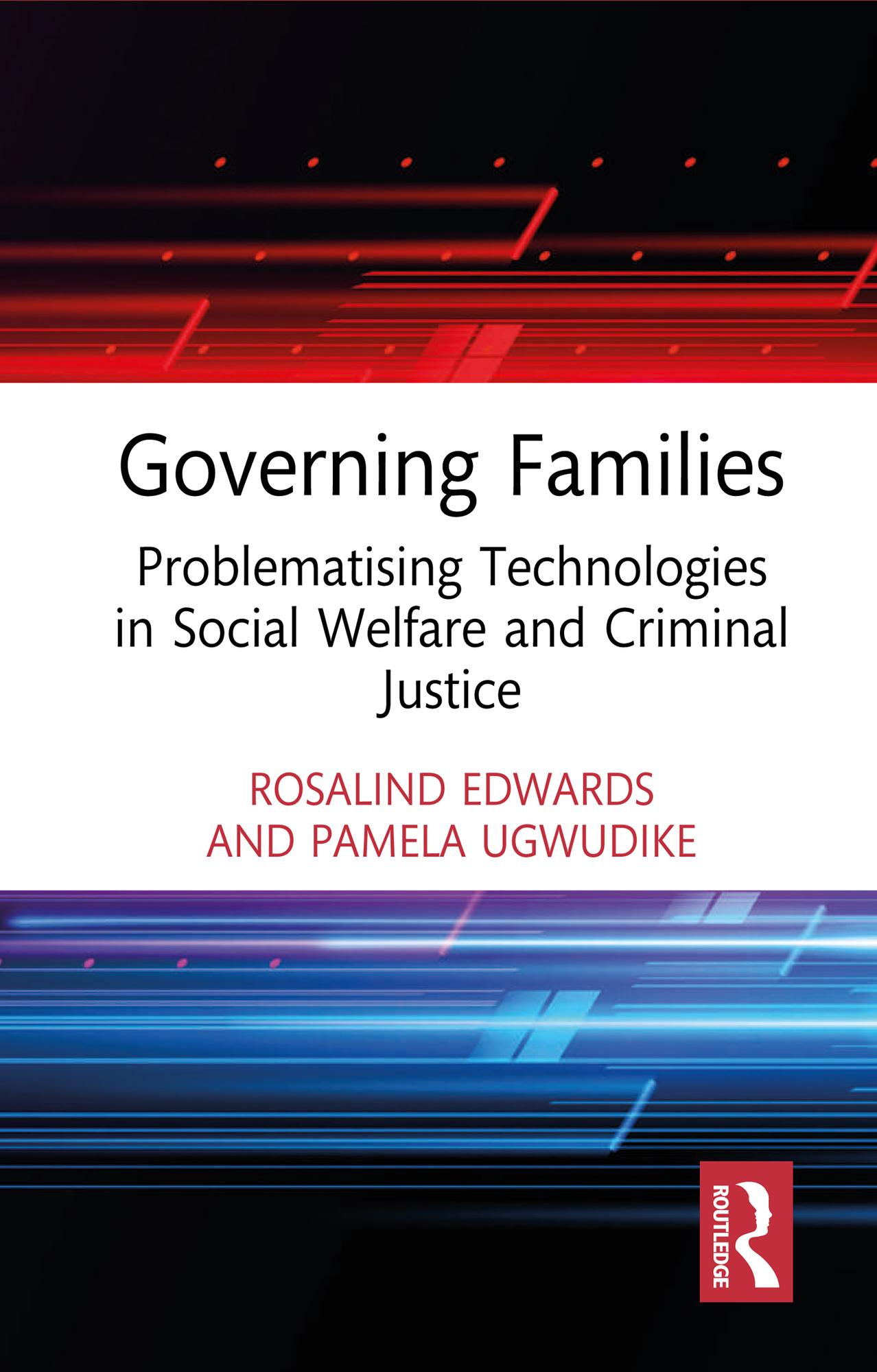
This book provides a focused discussion of how families are governed through technologies. It shows how states attempt to influence, shape and govern families as both the source of and solution to a range of social problems including crime.
The book critically reviews family governance in contemporary neo-liberal society, notably through technologies of self-responsibilisation, biologisation, and artificial intelligence. The book draws attention to the poor working class and racialised families that often are marked out and evaluated as culpable, dysfunctional, and a threat to economic and social order, obscuring the structural inequalities that underpin family lives and discriminations that are built into the tools that identify and govern families.
Filling a gap where disciplinary perspectives cross-cut, this book brings together sociological and criminological perspectives to provide a unique cross-disciplinary approach to the topic. It will be of interest to researchers, scholars and lecturers studying sociology and criminology, as well as policy-makers and professionals working in the fields of early years and family intervention programmes, including in social work, health, education, and the criminologically-relevant professions such as police and probation.
Payez facilement par carte, Klarna, Apple Pay ou Google Pay. Pas satisfait ? Vous avez toujours une garantie de remboursement de 14 jours. En savoir plus dans nos conditions. Si vous avez des questions, envoyez-nous un e-mail à hello@memmo.org.
Memmo facilite tes études, où que tu sois dans le monde. On rassemble tes manuels de cours et des outils d'étude intelligents au même endroit : résumés, quiz, podcasts et flashcards. Et il y a Ted, ton compagnon d'étude qui répond à toutes tes questions. Plus de 50 000 étudiants étudient déjà ici – conçu pour t'aider à apprendre plus vite et à moins stresser.