
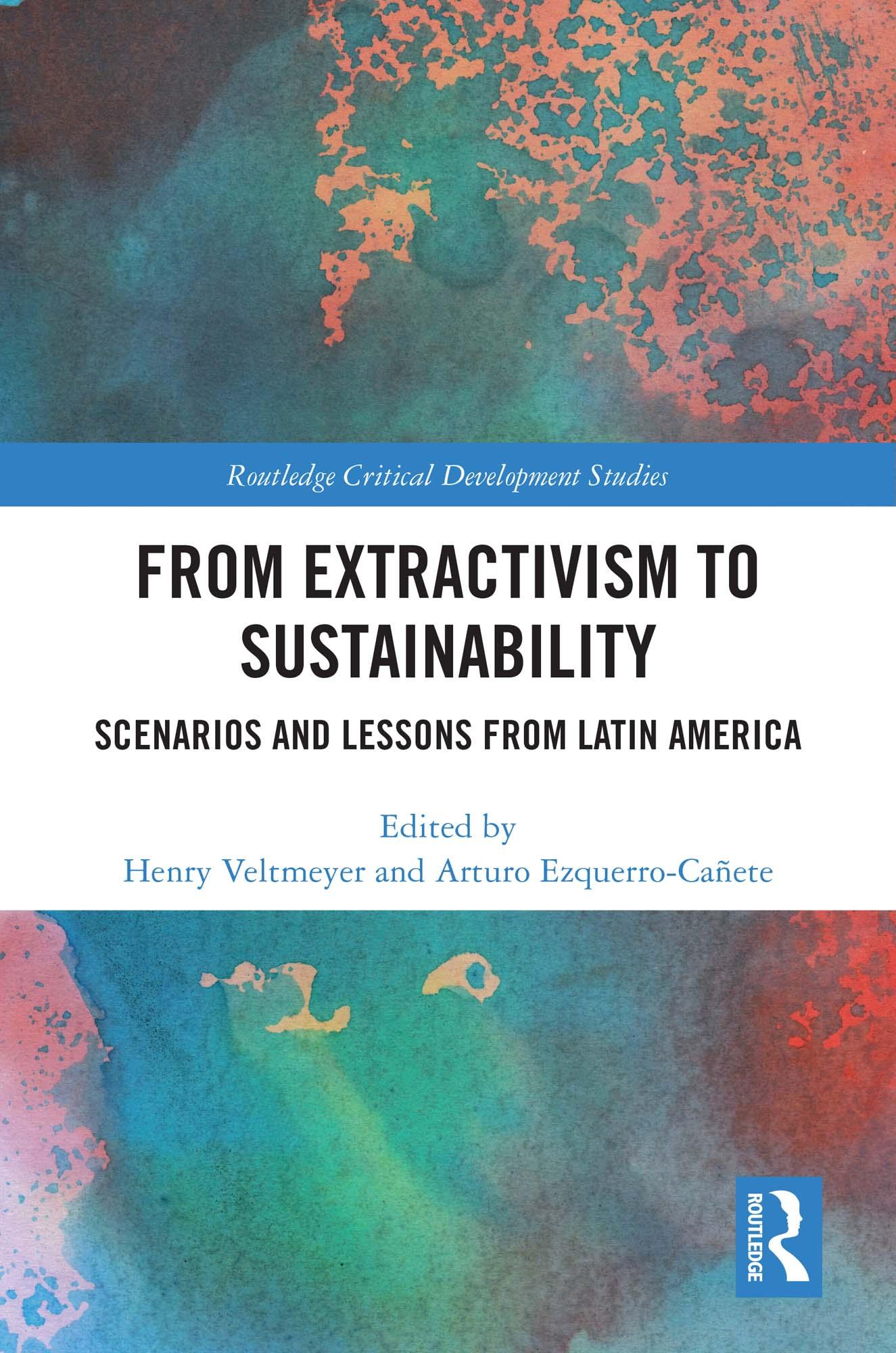
This book investigates how extractive capitalism has developed over the past three decades, what dynamics of resistance have been deployed to combat it, and whether extractivism can ever be transformed into being a part of a progressive development path.
It was not until the 20th century that the extraction of natural resources and raw materials took on a decidedly capitalist form, with the global north extracting primary commodities from the global south as a means of capital accumulation. This book investigates whether extractivism, despite its well-documented negative and destructive socioenvironmental impacts and the powerful forces of resistance that it has generated, could ever be transformed into a sustainable post-development strategy. Drawing on diverse sectoral forms of extractivism (mining, fossil fuels, agriculture), this book analyses the dynamics of both the forces of resistance generated by the advance of extractive capital and alternate scenarios for a more sustainable and liveable future. The book draws particularly on the Latin American experience, where both the propensity of capitalism towards crisis and the development of resistance dynamics to ‘extractive’ capital have had their greatest impact in the neoliberal era.
This book will be of interest to researchers and students across development studies, economics, political economy, environmental studies, Indigenous studies, and Latin American affairs.
Payez facilement par carte, Klarna, Apple Pay ou Google Pay. Pas satisfait ? Vous avez toujours une garantie de remboursement de 14 jours. En savoir plus dans nos conditions. Si vous avez des questions, envoyez-nous un e-mail à hello@memmo.org.
Memmo facilite tes études, où que tu sois dans le monde. On rassemble tes manuels de cours et des outils d'étude intelligents au même endroit : résumés, quiz, podcasts et flashcards. Et il y a Ted, ton compagnon d'étude qui répond à toutes tes questions. Plus de 50 000 étudiants étudient déjà ici – conçu pour t'aider à apprendre plus vite et à moins stresser.