
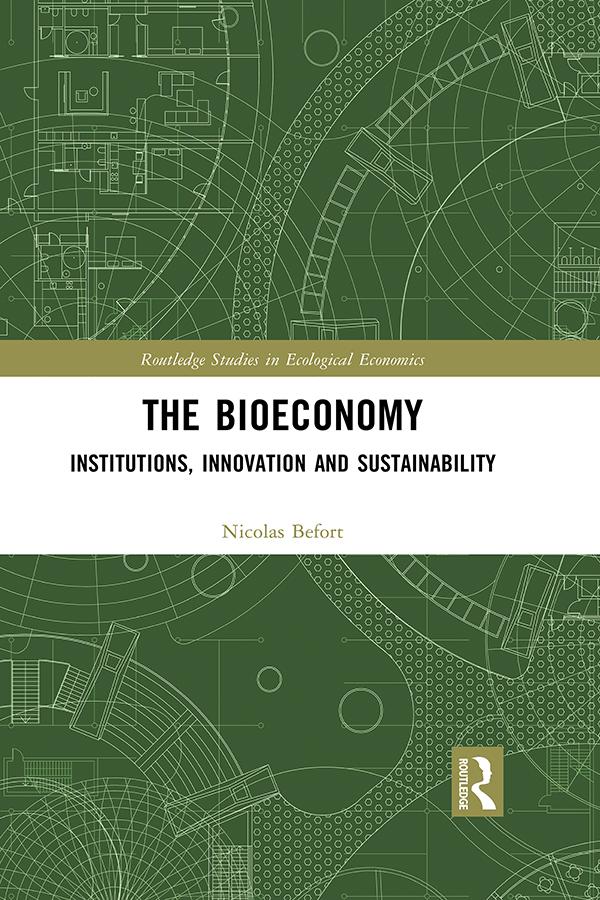
The bioeconomy is steadily becoming more important in regional, national and European public policies. As it encompasses the transformation of agricultural, marine and organic resources into food, feed, fuels, energy and materials, the bioeconomy should become a major new industry, outlining the possibility of a post-fossil future. This book is the first attempt to depict the origins, formation and challenges of this new industry in terms of emerging institutions, innovation and economic strategies. The result of this work is that the substitution of raw materials alone is not enough to get out of the fossil economy.
This book develops a political economy of the ecological transition which theorizes the transition as a new crisis of capitalism. This phase is characterized by stakeholders’ attempts to develop renewed rationales and strategies to take control of the reorganization of flows of natural resources, their outcomes and their evaluation. The proposed framework considers recent results in four complementary research strands: transition studies, institutional economics, ecological economics and the evolutionary economics of innovation.
The book will be of interest to researchers interested in the development of the bioeconomy, and both researchers and students seeking to understand the role of heterodox economics in the ecological transition.
Payez facilement par carte, Klarna, Apple Pay ou Google Pay. Pas satisfait ? Vous avez toujours une garantie de remboursement de 14 jours. En savoir plus dans nos conditions. Si vous avez des questions, envoyez-nous un e-mail à hello@memmo.org.
Memmo facilite tes études, où que tu sois dans le monde. On rassemble tes manuels de cours et des outils d'étude intelligents au même endroit : résumés, quiz, podcasts et flashcards. Et il y a Ted, ton compagnon d'étude qui répond à toutes tes questions. Plus de 50 000 étudiants étudient déjà ici – conçu pour t'aider à apprendre plus vite et à moins stresser.