
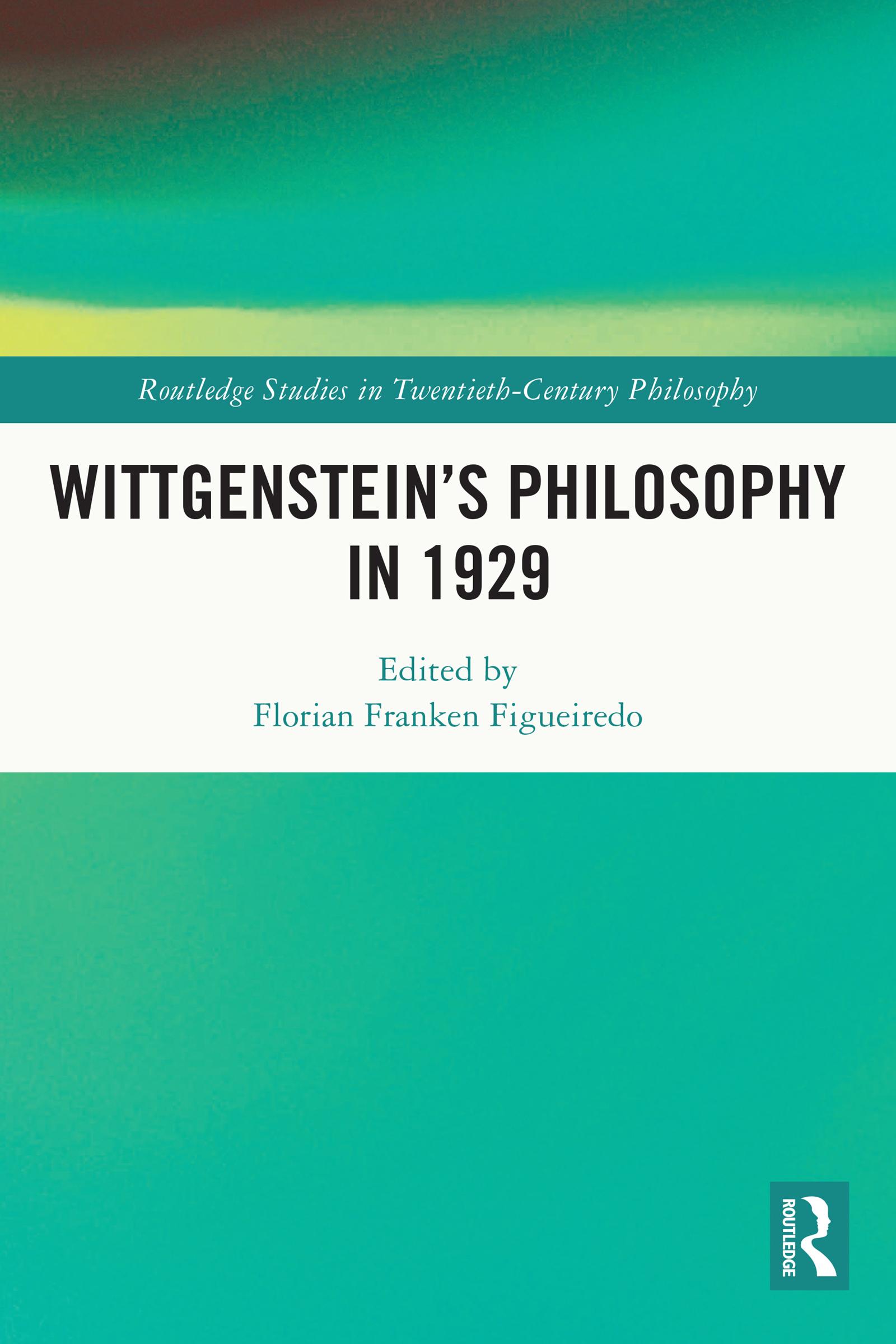
The book explores the impact of manuscript remarks during the year 1929 on the development of Wittgenstein’s thought. Although its intention is to put the focus specifically on the manuscripts, the book is not purely exegetical. The contributors generate important new insights for understanding Wittgenstein’s philosophy and his place in the history of analytic philosophy.
Wittgenstein’s writings from the years 1929-1930 are valuable, not simply because they marked Wittgenstein’s return to academic philosophy after a seven-year absence, but because these works indicate several changes in his philosophical thinking. The chapters in this volume clarify the significance of Wittgenstein’s return to philosophy in 1929. In Part 1, the contributors address different issues in the philosophy of mathematics, e.g. Wittgenstein's understanding of certain aspects of intuitionism and his commitment to verificationism, as well as his idea of "a new system". Part 2 examines Wittgenstein's philosophical development and his understanding of philosophical method. Here the contributors examine particular problems Wittgenstein dealt with in 1929, e.g. the colour-exclusion problem, and the use of thought experiments as well as his relationship to Frank Ramsey and philosophical pragmatism. Part 3 features essays on phenomenological language. These chapters address the role of spatial analogies and the structure of visual space. Finally, Part 4 includes one chapter on Wittgenstein’s few manuscript remarks about ethics and religion and relates it to his Lecture on Ethics.
Wittgenstein’s Philosophy in 1929 will be of great interest to scholars and advanced students working on Wittgenstein and the history of analytic philosophy.
Payez facilement par carte, Klarna, Apple Pay ou Google Pay. Pas satisfait ? Vous avez toujours une garantie de remboursement de 14 jours. En savoir plus dans nos conditions. Si vous avez des questions, envoyez-nous un e-mail à hello@memmo.org.
Memmo facilite tes études, où que tu sois dans le monde. On rassemble tes manuels de cours et des outils d'étude intelligents au même endroit : résumés, quiz, podcasts et flashcards. Et il y a Ted, ton compagnon d'étude qui répond à toutes tes questions. Plus de 50 000 étudiants étudient déjà ici – conçu pour t'aider à apprendre plus vite et à moins stresser.