
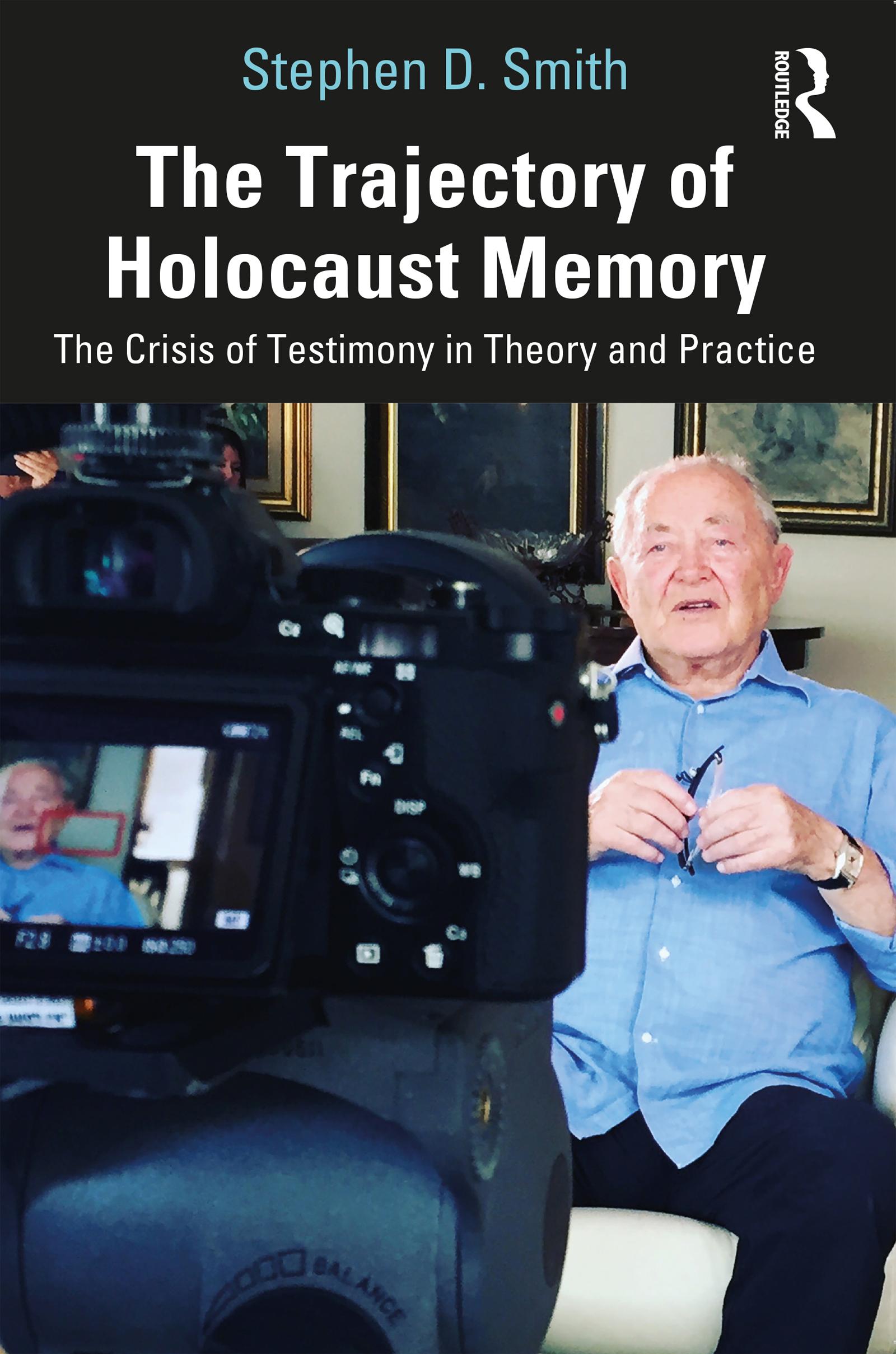
The Trajectory of Holocaust Memory: The Crisis of Testimony in Theory and Practice re-considers survivor testimony, moving from a subject-object reading of the past to a subject-subject encounter in the present. It explores how testimony evolves in relationship to the life of eyewitnesses across time.
This book breaks new ground based on three principles. The first draws on Martin Buber’s “I-Thou” concept, transforming the object of history into an encounter between subjects. The second employs the Jungian concept of identity, whereby the individual (internal identity) and the persona (external identity) reframe testimony as an extension of the individual. They are a living subject, rather than merely a persona or narrative. The third principle draws on Daniel Kahneman’s concept of the experiencing self, which relives events as they occurred, and the remembering self, which reflects on their meaning in sum. Taken together, these principles comprise a new literacy of testimony that enables the surviving victim and the listener to enter a relationship of trust.
Designed for readers of Holocaust history and literature, this book defines the modalities of memory, witness, and testimony. It shows how encountering the individual who lived through the past changes how testimony is understood, and therefore what it can come to mean.
Payez facilement par carte, Klarna, Apple Pay ou Google Pay. Pas satisfait ? Vous avez toujours une garantie de remboursement de 14 jours. En savoir plus dans nos conditions. Si vous avez des questions, envoyez-nous un e-mail à hello@memmo.org.
Memmo facilite tes études, où que tu sois dans le monde. On rassemble tes manuels de cours et des outils d'étude intelligents au même endroit : résumés, quiz, podcasts et flashcards. Et il y a Ted, ton compagnon d'étude qui répond à toutes tes questions. Plus de 50 000 étudiants étudient déjà ici – conçu pour t'aider à apprendre plus vite et à moins stresser.