
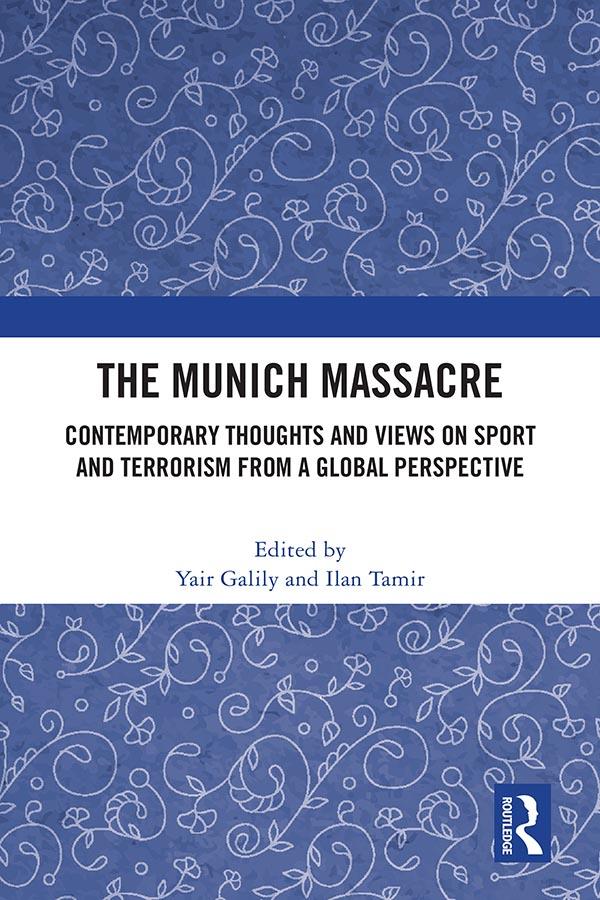
This book contextualizes the Munich massacre as one of the factors that contributed to a re-thinking of security strategies in the early 1970s, a moment in the evolution of modern governments’ fight against terrorism.
In the early hours of September 5th, 1972, heavily armed members of the Palestinian group, Black September, turned terrorism into a global televisual spectacle for the first time by entering the Olympic Village, where they murdered two Israeli athletes and took nine of their teammates hostage in 31 Connollystraße. Indeed, terrorism has far-reaching implications on social, psychological, and political levels. Sporting attacks on athletic personalities or mega-events may also seriously affect the reputation of the political leadership, ultimately undermining the state’s authority. Hence, 50 years later, this book aims to gather contemporaneous scholarly work that further explores this topic from a variety of perspectives—from security, sociology, media, history, public relations, to the political, ideological, and psychological aspects of sport and terror.
This volume will be of great use to scholars and researchers interested in Terrorist and Security studies, political violence, and the Arab Israeli conflict, particularly the collective memory of the Munich Massacre. The chapters in this book were first published as a special issue of Israel Affairs.
Payez facilement par carte, Klarna, Apple Pay ou Google Pay. Pas satisfait ? Vous avez toujours une garantie de remboursement de 14 jours. En savoir plus dans nos conditions. Si vous avez des questions, envoyez-nous un e-mail à hello@memmo.org.
Memmo facilite tes études, où que tu sois dans le monde. On rassemble tes manuels de cours et des outils d'étude intelligents au même endroit : résumés, quiz, podcasts et flashcards. Et il y a Ted, ton compagnon d'étude qui répond à toutes tes questions. Plus de 50 000 étudiants étudient déjà ici – conçu pour t'aider à apprendre plus vite et à moins stresser.