
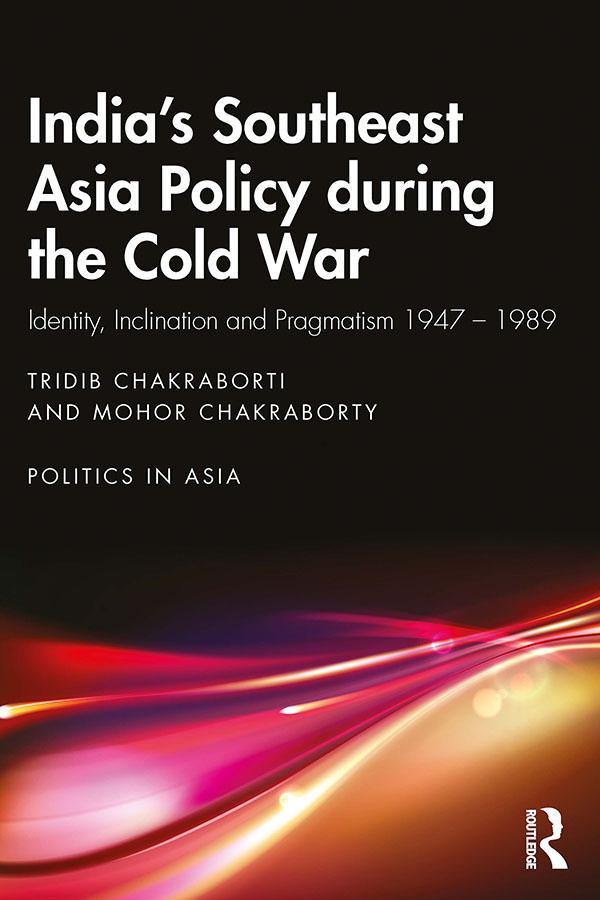
Over the course of four decades of the Cold War, Chakraborti and Chakraborty analyse India’s path from nonalignment towards realism and self-assertion, and finally to confidence-building and interdependence with respect to their neighbours in Southeast Asia.
What were the reasons for India’s shift from non-alignment to a more pragmatic approach to foreign relations in its relationships with both the non-Communist states of ASEAN and the Communist States of Indochina? How was this shift perceived by those countries? To what degree were Pakistan’s foreign and defence policies responsible for India’s changes in alignment throughout the Cold War? What lessons can we draw from these events, as the Indo-Pacific is again becoming a major arena of great power rivalry? In order to address these questions, Chakraborti and Chakraborty study the development of India’s foreign and security policies throughout the period, tracking the changes of stances between and within administrations. They evaluate how these decisions were driven by a combination of ideology, pragmatism and changes in priorities as the regional architecture developed over time.
A valuable read for scholars and students of India’s foreign relations and of Indo-Pacific geopolitics more broadly.
Payez facilement par carte, Klarna, Apple Pay ou Google Pay. Pas satisfait ? Vous avez toujours une garantie de remboursement de 14 jours. En savoir plus dans nos conditions. Si vous avez des questions, envoyez-nous un e-mail à hello@memmo.org.
Memmo facilite tes études, où que tu sois dans le monde. On rassemble tes manuels de cours et des outils d'étude intelligents au même endroit : résumés, quiz, podcasts et flashcards. Et il y a Ted, ton compagnon d'étude qui répond à toutes tes questions. Plus de 50 000 étudiants étudient déjà ici – conçu pour t'aider à apprendre plus vite et à moins stresser.