
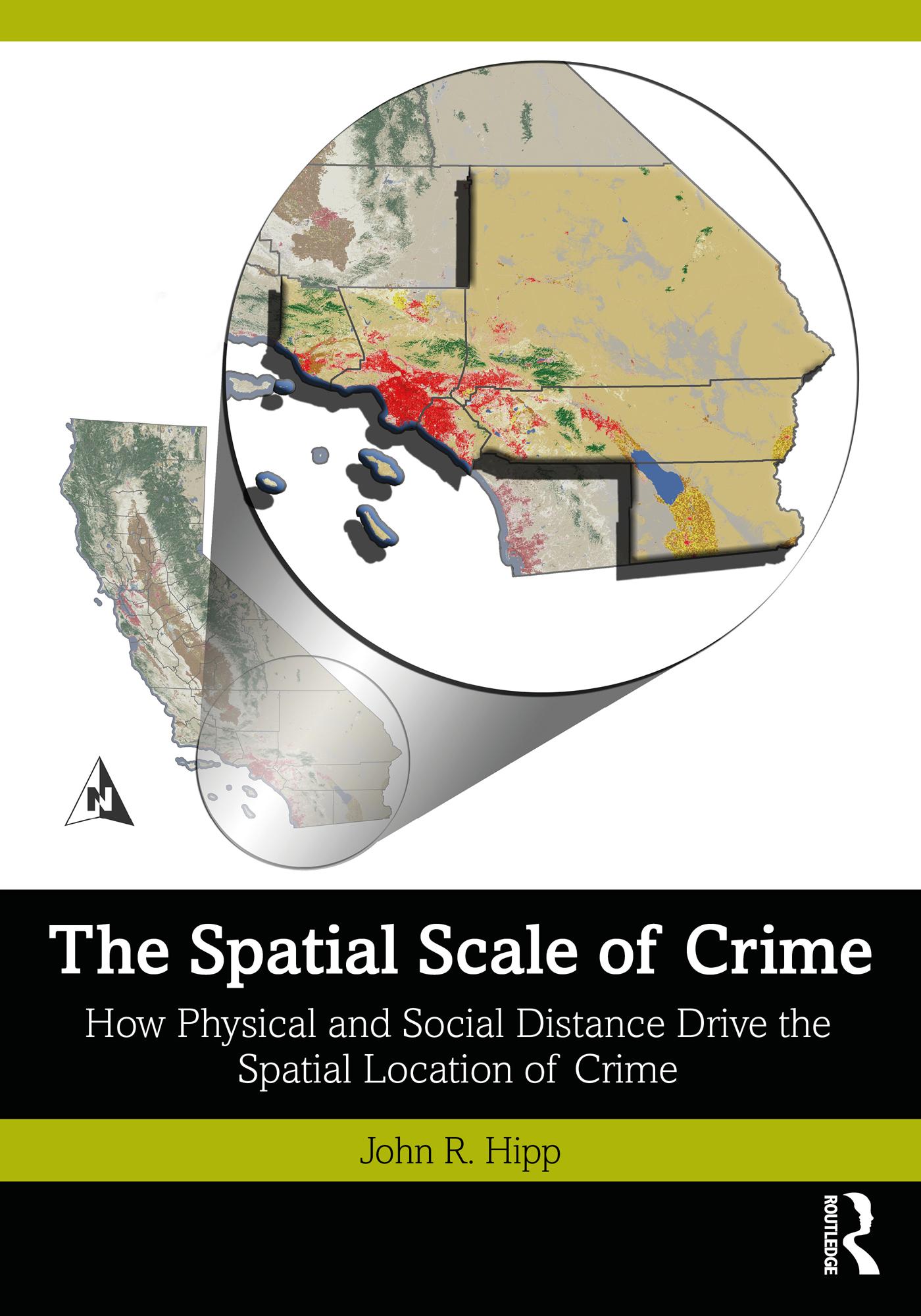
Combining insights from two distinct research traditions—the communities and crime tradition that focuses on why some neighborhoods have more crime than others, and the burgeoning crime and place literature that focuses on crime in micro-geographic units—this book explores the spatial scale of crime. Criminologist John Hipp articulates a new theoretical perspective that provides an individual- and household-level theory to underpin existing ecological models of neighborhoods and crime. A focus is maintained on the agents of change within neighborhoods and communities, and how households nested in neighborhoods might come to perceive problems in the neighborhood and then have a choice of exit, voice, loyalty, or neglect (EVLN).
A characteristic of many crime incidents is that they happen at a particular spatial location and a point in time. These two simple insights suggest the need for both a spatial and a longitudinal perspective in studying crime events. The spatial question focuses on why crime seems to occur more frequently in some locations than others, and the consequences of this for certain areas of cities, or neighborhoods. The longitudinal component focuses on how crime impacts, and is impacted by, characteristics of the environment. This book looks at where offenders, targets, and guardians might live, and where they might spatially travel throughout the environment, exploring how vibrant neighborhoods are generated, how neighborhoods change, and what determines why some neighborhoods decline over time while others avoid this fate.
Hipp’s theoretical model provides a cohesive response to the general question of the spatial scale of crime and articulates necessary future directions for the field. This book is essential for students and scholars interested in spatial-temporal criminology.
WINNER of the 2023 James Short Senior Scholar Award!
Payez facilement par carte, Klarna, Apple Pay ou Google Pay. Pas satisfait ? Vous avez toujours une garantie de remboursement de 14 jours. En savoir plus dans nos conditions. Si vous avez des questions, envoyez-nous un e-mail à hello@memmo.org.
Memmo facilite tes études, où que tu sois dans le monde. On rassemble tes manuels de cours et des outils d'étude intelligents au même endroit : résumés, quiz, podcasts et flashcards. Et il y a Ted, ton compagnon d'étude qui répond à toutes tes questions. Plus de 50 000 étudiants étudient déjà ici – conçu pour t'aider à apprendre plus vite et à moins stresser.