
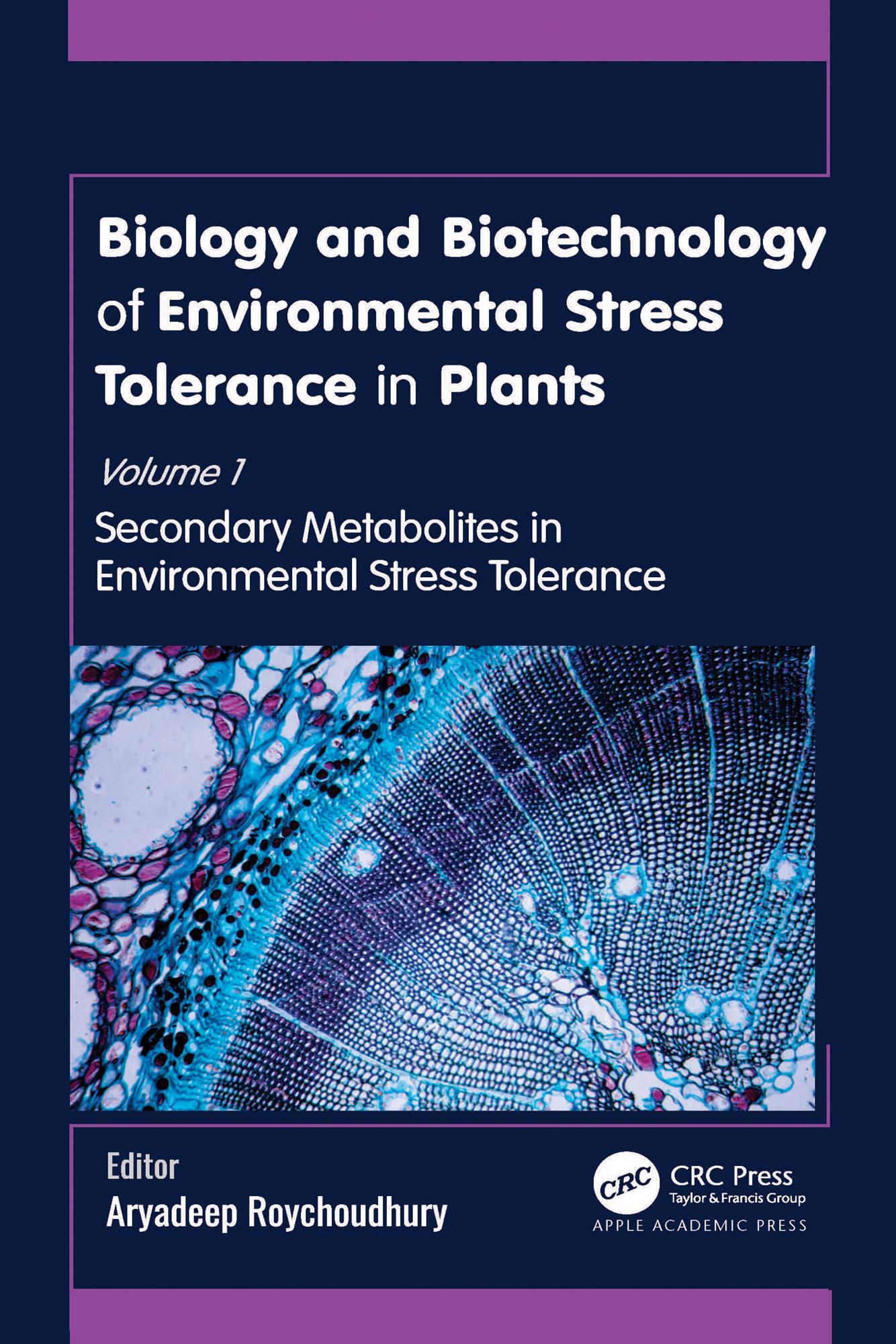
Abiotic stresses such as drought, high salt, cold, heat, UV radiation, heavy metal pollution, etc., are increasingly responsible for restricting plant growth and agricultural production and are becoming more alarming due to threats from global climate change. To combat these threats, this new 3-volume set provides a comprehensive understanding of the mechanisms that mediate biosynthesis, accumulation, and degradation of plant metabolites to improve crop production and enhance abiotic stress tolerance in plants.
Volume 1: Secondary Metabolites in Environmental Stress Tolerance focuses exclusively on the diverse secondary metabolites that play a major role in the adaptation of plants to the environment and in overcoming stress conditions as well as their implications for enhancing tolerance mechanisms. The book presents available information on the protective roles rendered by a wide array of antioxidative secondary metabolites and their regulation during diverse environmental stress.
Volume 2: Trace Elements in Environmental Stress Tolerance throws light on the different inorganic trace elements, including metal nanoparticles, that help to deal with environmental stresses. While these elements at high level create considerable phytotoxicity and halt metabolic and enzymatic activity, they also promote growth and development in limited quantity, so that they have significant potential in revamping plant morphology and physiology under stressed conditions. Hence, optimum concentration management of these elements can help to mitigate world hunger and contribute toward sustainable agriculture and food security under challenging environments.
Volume 3: Sustainable Approaches for Enhancing Environmental Stress Tolerance focuses on the agronomic and biochemical approaches as well as biotechnological and high-throughput technologies, including the prospects of genetic engineering, epigenetics and the latest CRISPR/Cas technology, in generating stress-tolerant plants. The volume provides a clear roadmap for the implementation of techniques for improving abiotic stress tolerance in plants for better sustenance.
Payez facilement par carte, Klarna, Apple Pay ou Google Pay. Pas satisfait ? Vous avez toujours une garantie de remboursement de 14 jours. En savoir plus dans nos conditions. Si vous avez des questions, envoyez-nous un e-mail à hello@memmo.org.
Memmo facilite tes études, où que tu sois dans le monde. On rassemble tes manuels de cours et des outils d'étude intelligents au même endroit : résumés, quiz, podcasts et flashcards. Et il y a Ted, ton compagnon d'étude qui répond à toutes tes questions. Plus de 50 000 étudiants étudient déjà ici – conçu pour t'aider à apprendre plus vite et à moins stresser.