
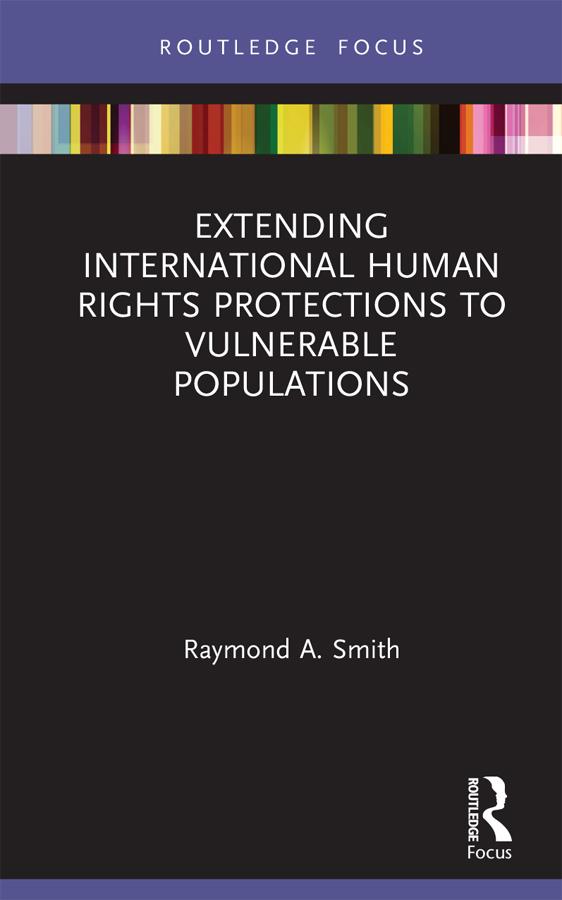
This book inductively develops a new typology that identifies and evaluates three principal strategies that have been, and are being, used to extend international human rights protections to new categories of vulnerable populations.
The book explicates the evolution and ongoing utility of the three strategies: categorical enlargement, conceptual expansion, and group-conscious universal application. The strategies are elucidated by case studies of nine distinct vulnerable populations: national minorities; those oppressed on the basis of caste; people with albinism; cross-cultural migrants; members of the African diaspora; Roma/Gypsies; persons affected by leprosy; older individuals; and lesbian, gay, bisexual, and transgender (LGBT) people. The book concludes by considering the utility of the three strategies for emerging vulnerable populations. It encourages discourse about the protection of vulnerable populations to move beyond a stale fixation on the texts of treaties and towards a more proactive normative framework that prioritizes the lived experiences of human beings.
Extending International Human Rights Protections to Vulnerable Populations will be of key interest to students and scholars of international human rights, to social justice advocates, to human rights practitioners, and to those working with oppressed groups, human rights law, and international relations.
Payez facilement par carte, Klarna, Apple Pay ou Google Pay. Pas satisfait ? Vous avez toujours une garantie de remboursement de 14 jours. En savoir plus dans nos conditions. Si vous avez des questions, envoyez-nous un e-mail à hello@memmo.org.
Memmo facilite tes études, où que tu sois dans le monde. On rassemble tes manuels de cours et des outils d'étude intelligents au même endroit : résumés, quiz, podcasts et flashcards. Et il y a Ted, ton compagnon d'étude qui répond à toutes tes questions. Plus de 50 000 étudiants étudient déjà ici – conçu pour t'aider à apprendre plus vite et à moins stresser.