
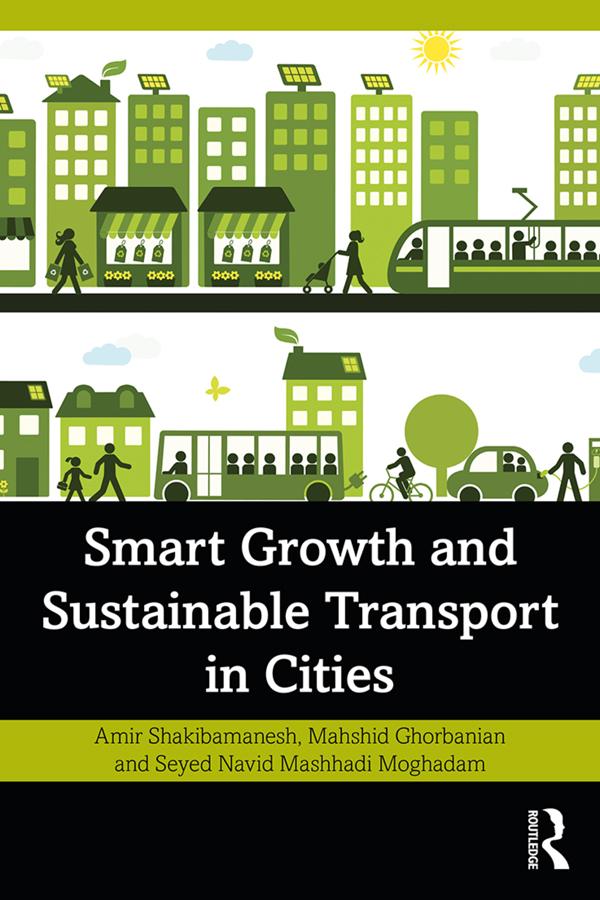
This book delves into the urban planning theory of “smart growth” to encourage the creation of smart cities, where compact urban spaces are optimized to create transit-oriented, pedestrian- and bicycle-friendly areas, with a clear focus on developing a sustainable, humanistic transport system.
Over the last century, increased demographic changes and use of motor vehicles in the wake of “urbanization” led to the rapid expansion of cities, giving rise to economic, social and environmental problems. Sprawls and extension into natural areas caused a scattered urban context replete with empty spaces. This book provides an effective solution to this with an overview of the historical application of smart growth principles as a response to the issue of sprawling cityscapes, and sheds light on the theoretical information and methodologies used by cities to re-develop the urban landscape. It also encloses a checklist for practitioners and decision makers to inform the developmental process and integrate smart growth strategies into land use planning.
This book effectively engages with the global problem of urban sprawl in cities and hence will be an asset to both urban planning professionals, and graduate and postgraduate students of urban studies and the related disciplines.
Payez facilement par carte, Klarna, Apple Pay ou Google Pay. Pas satisfait ? Vous avez toujours une garantie de remboursement de 14 jours. En savoir plus dans nos conditions. Si vous avez des questions, envoyez-nous un e-mail à hello@memmo.org.
Memmo facilite tes études, où que tu sois dans le monde. On rassemble tes manuels de cours et des outils d'étude intelligents au même endroit : résumés, quiz, podcasts et flashcards. Et il y a Ted, ton compagnon d'étude qui répond à toutes tes questions. Plus de 50 000 étudiants étudient déjà ici – conçu pour t'aider à apprendre plus vite et à moins stresser.