
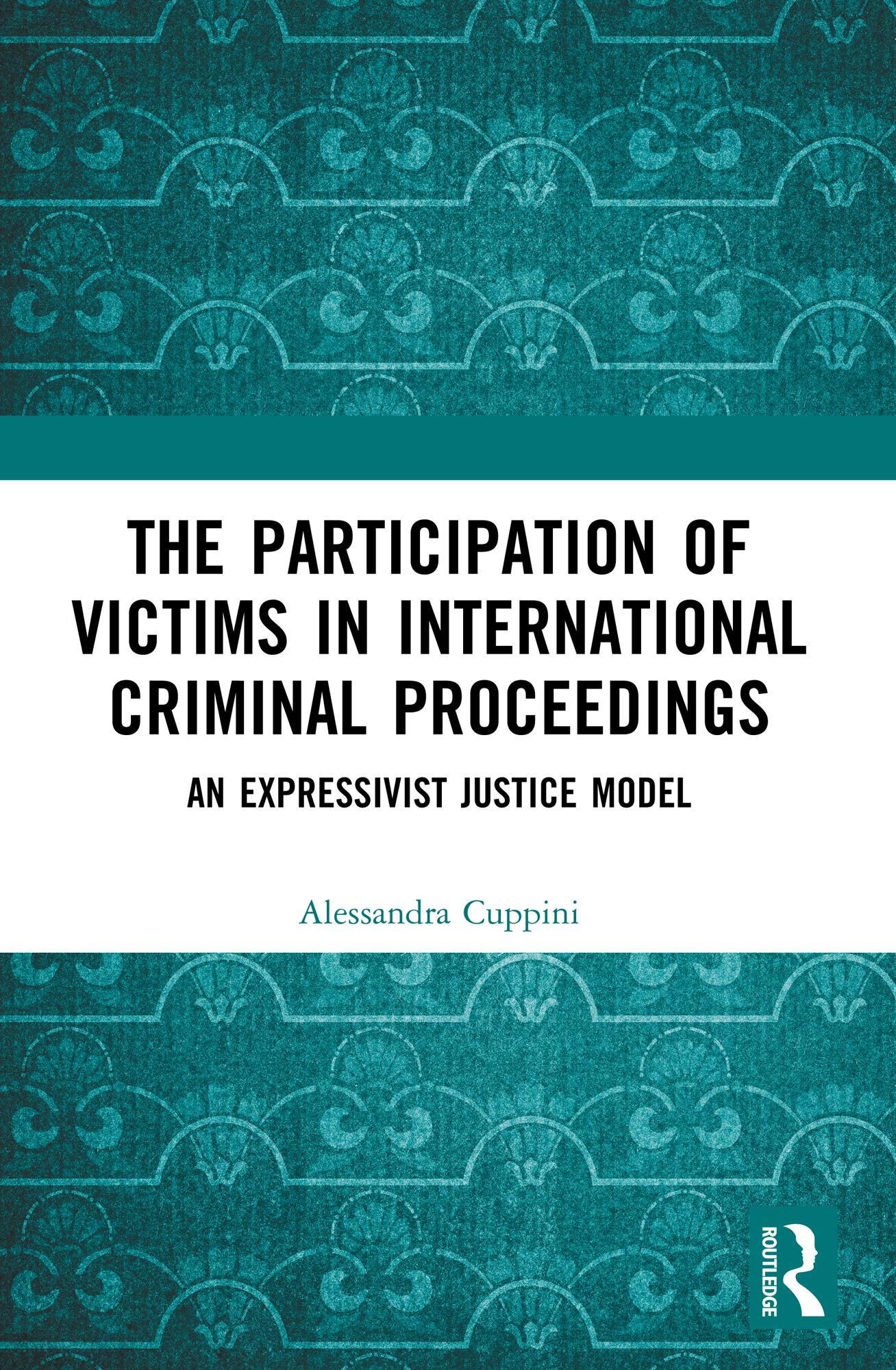
This book argues that the expressivist justice model provides a meaningful foundation for the participation of victims in international criminal proceedings.
Traditional criminal justice theories have tended to marginalise the role afforded to victims while informing the criminal procedures utilised by international criminal courts. As a result, giving content to, shaping, and enhancing victims’ participatory rights have been some of the most debated issues in international criminal justice. This book contributes to this debate by advancing expressivism, which has the capacity to create a historical narrative of gross human rights violations, as a core of international criminal justice able to provide a worthwhile basis for the participation of victims in proceedings and clarifying the scope and content of their participatory rights. The work provides an in-depth discussion on issues related to victims’ participatory rights from the perspective of international human rights law, victimology, and the philosophical foundation of international criminal justice.
The book will be a valuable resource for researchers, academics, and policymakers working in the areas of international criminal justice, international human rights law, transitional justice, and conflict studies.
Payez facilement par carte, Klarna, Apple Pay ou Google Pay. Pas satisfait ? Vous avez toujours une garantie de remboursement de 14 jours. En savoir plus dans nos conditions. Si vous avez des questions, envoyez-nous un e-mail à hello@memmo.org.
Memmo facilite tes études, où que tu sois dans le monde. On rassemble tes manuels de cours et des outils d'étude intelligents au même endroit : résumés, quiz, podcasts et flashcards. Et il y a Ted, ton compagnon d'étude qui répond à toutes tes questions. Plus de 50 000 étudiants étudient déjà ici – conçu pour t'aider à apprendre plus vite et à moins stresser.