
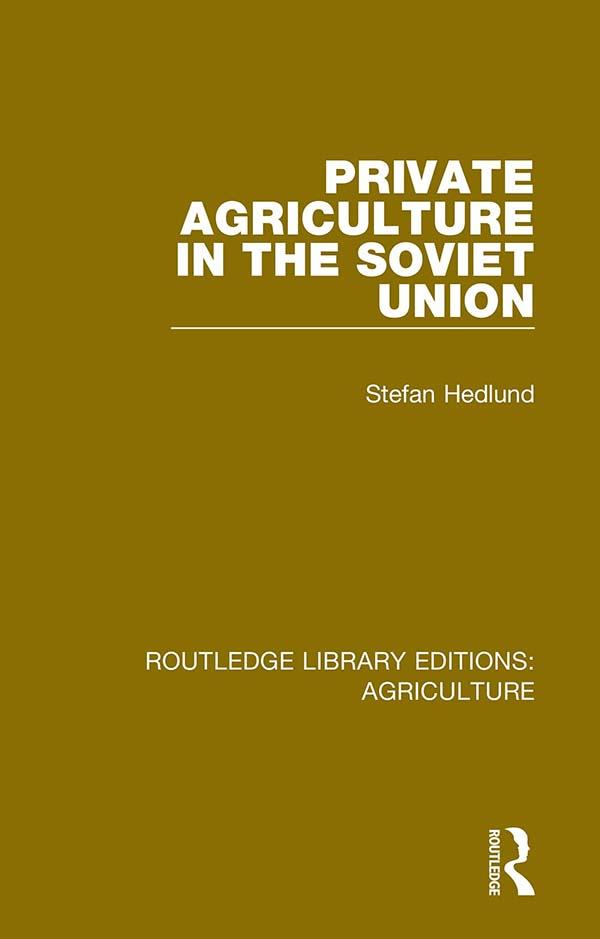
First published in 1989. Perestroika, it was widely believed, must succeed in agriculture before permanent change could be affected elsewhere in the Soviet economy. But Soviet agriculture had so far remained stubbornly inefficient and resistant to change. In this book Stefan Hedlund investigates the reasons for this state of affairs.
The author gives an account of the emergence, development and performance of private agriculture in the Soviet Union. In particular he describes the essentials of the peculiarly Soviet hybrid of private and socialized agriculture. He places the private sector within the broader framework of Soviet agriculture. He saw Soviet agriculture as a ‘Black Hole’, ready to absorb any resources that came near, be they private plots, urban gardens, factory workshops or military units.
Hedlund also examines the impact on the peasants as producers of decades of negative ideological pronouncements in Party propaganda, and of discrimination and at times outright harassment by local officials. He points out that this background makes the prospect of any positive response from the peasants to Gorbachev’s call for perestroika in agriculture extremely unlikely.
Payez facilement par carte, Klarna, Apple Pay ou Google Pay. Pas satisfait ? Vous avez toujours une garantie de remboursement de 14 jours. En savoir plus dans nos conditions. Si vous avez des questions, envoyez-nous un e-mail à hello@memmo.org.
Memmo facilite tes études, où que tu sois dans le monde. On rassemble tes manuels de cours et des outils d'étude intelligents au même endroit : résumés, quiz, podcasts et flashcards. Et il y a Ted, ton compagnon d'étude qui répond à toutes tes questions. Plus de 50 000 étudiants étudient déjà ici – conçu pour t'aider à apprendre plus vite et à moins stresser.