
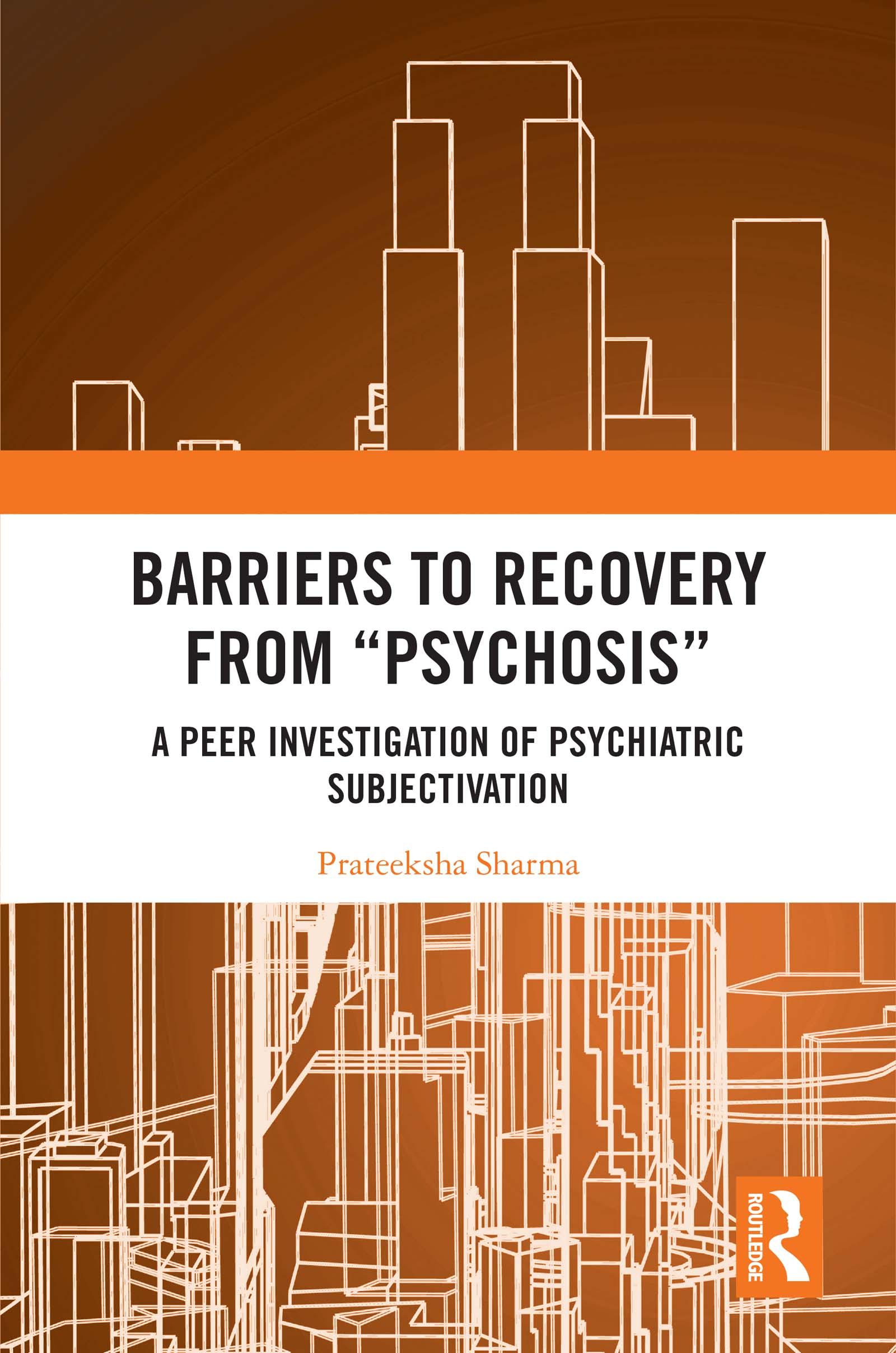
This book inaugurates the field of Mad Studies in the Indian subcontinent investigating the barriers to recovery from the perspective of "patients" and caregivers.
Offering a radical critique of the mental health system, it questions why the phenomenon of recovery from serious mental health issues is not more widespread. Drawing from narratives of "patients", evidence from lived experiences around the globe and literature on recovery in psychiatry, mental health legislations and policies, it establishes the hitherto silenced voice of the "patient" as having testimonial viability, via an emancipatory scholarship. It highlights the repeated marginalization of "patients" and the identity prejudice they experience in day-to-day situations as a form of epistemic violence. The book examines the barriers to recovery through an interdisciplinary investigation, scrutinizing relationships between individuals and institutions at interpersonal, intersocial and global levels.
The book will be of interest to researchers and scholars of psychiatry, psychology, anthropology, sociology, disability studies, Mad Studies, law and policy, cultural studies, mental health, medicine as well as general readers.
Payez facilement par carte, Klarna, Apple Pay ou Google Pay. Pas satisfait ? Vous avez toujours une garantie de remboursement de 14 jours. En savoir plus dans nos conditions. Si vous avez des questions, envoyez-nous un e-mail à hello@memmo.org.
Memmo facilite tes études, où que tu sois dans le monde. On rassemble tes manuels de cours et des outils d'étude intelligents au même endroit : résumés, quiz, podcasts et flashcards. Et il y a Ted, ton compagnon d'étude qui répond à toutes tes questions. Plus de 50 000 étudiants étudient déjà ici – conçu pour t'aider à apprendre plus vite et à moins stresser.