
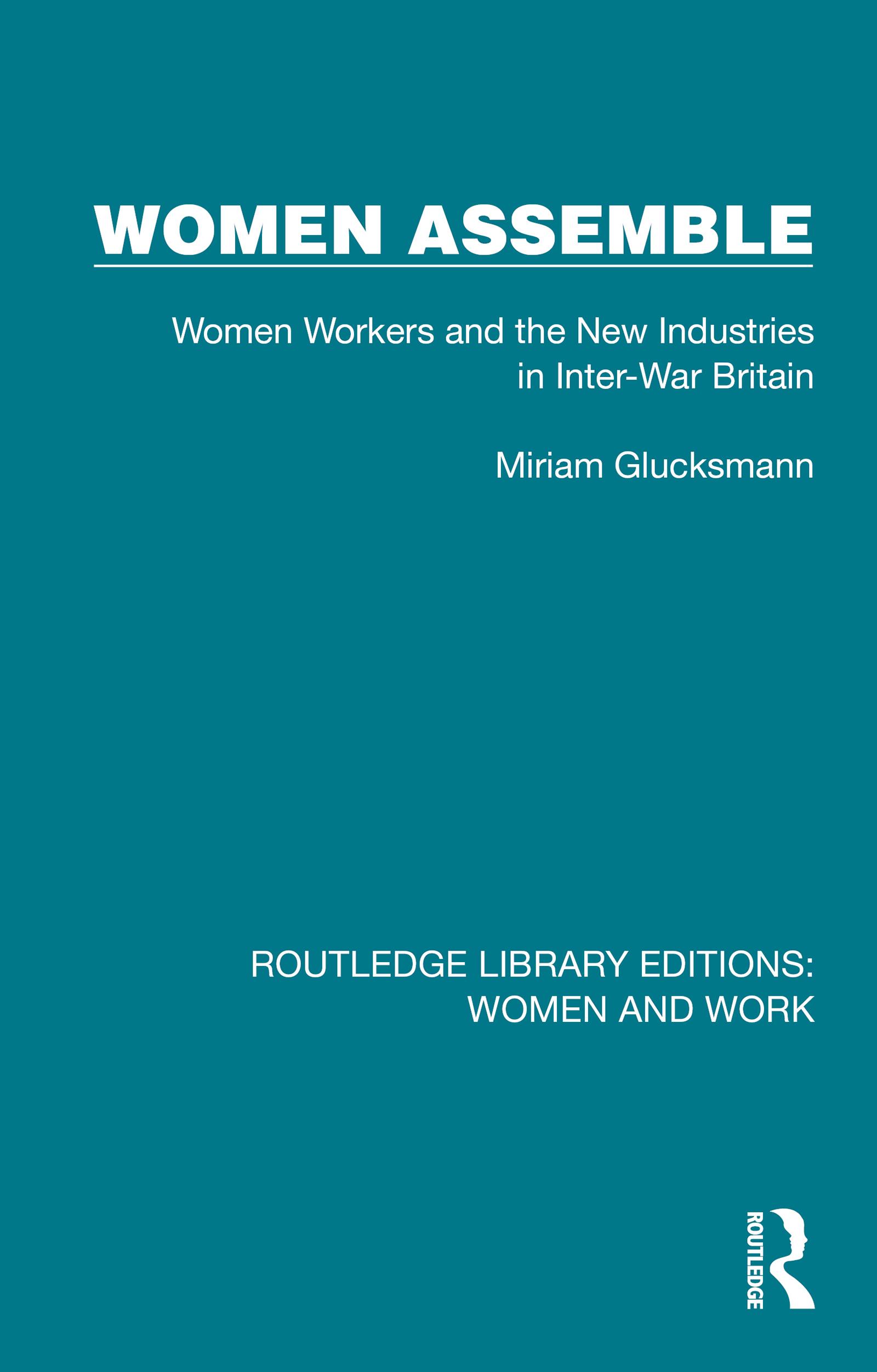
Why did working-class women become the central labour force on assembly lines in the new consumer goods’ industries of the inter-war period? What was the long-term significance of this for the pattern of women’s work, both in paid employment and in the home?
Originally published in 1990, Women Assemble fills a major gap in the history of women and work, and develops a theory of women’s class relations, and of course gender and class more generally, by means of an original case-study. Taken from a wide variety of sources, it uses a multidisciplinary approach and is brought to life by interviews with people who worked in assembly-line industries during the inter-war period.
This extremely readable study is important to feminists, historians, and sociologists, as well as to all those concerned with issues of gender, class, and the labour process.
Payez facilement par carte, Klarna, Apple Pay ou Google Pay. Pas satisfait ? Vous avez toujours une garantie de remboursement de 14 jours. En savoir plus dans nos conditions. Si vous avez des questions, envoyez-nous un e-mail à hello@memmo.org.
Memmo facilite tes études, où que tu sois dans le monde. On rassemble tes manuels de cours et des outils d'étude intelligents au même endroit : résumés, quiz, podcasts et flashcards. Et il y a Ted, ton compagnon d'étude qui répond à toutes tes questions. Plus de 50 000 étudiants étudient déjà ici – conçu pour t'aider à apprendre plus vite et à moins stresser.