
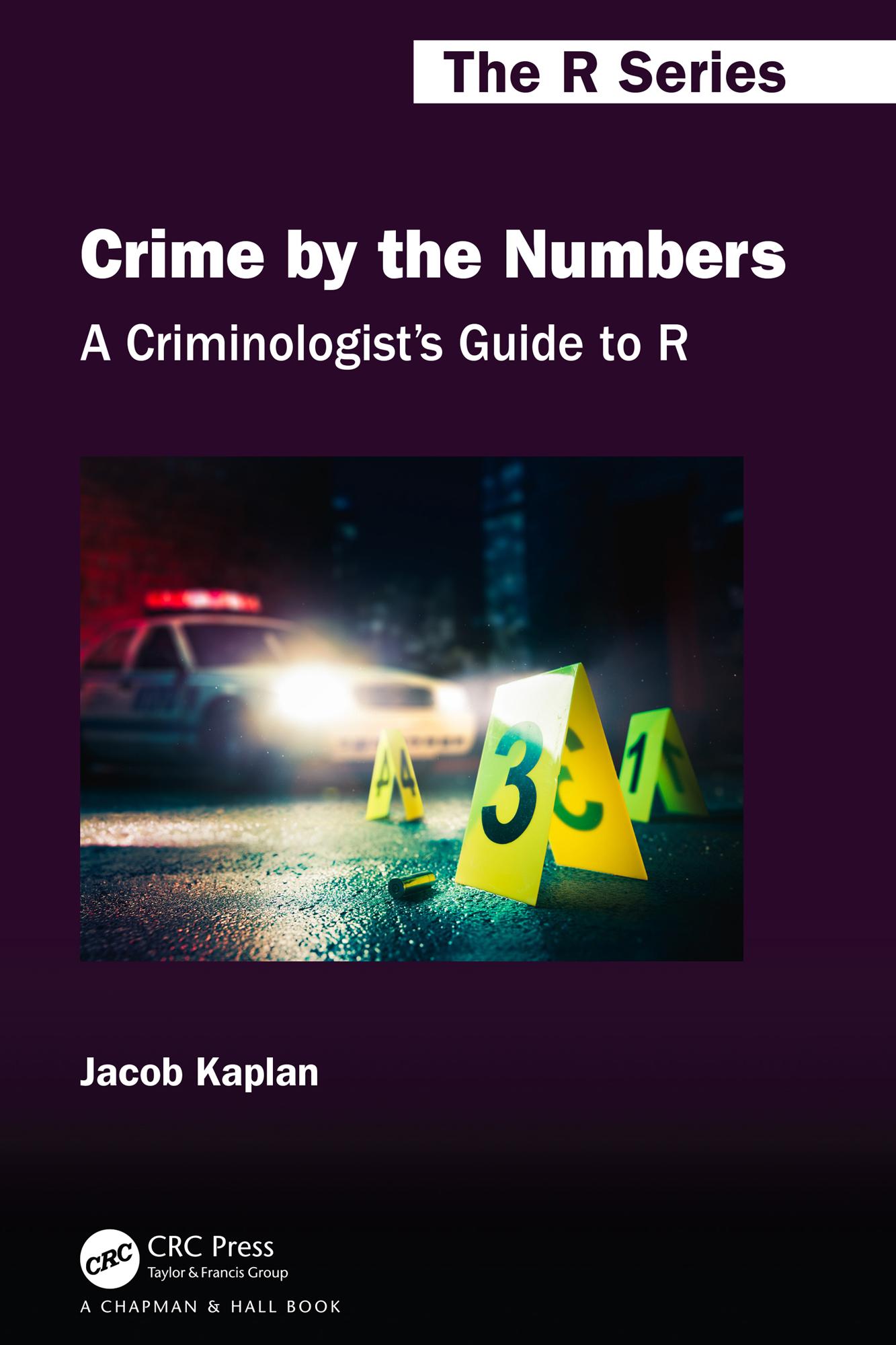
A Criminologist's Guide to R: Crime by the Numbers introduces the programming language R and covers the necessary skills to conduct quantitative research in criminology. By the end of this book, a person without any prior programming experience can take raw crime data, be able to clean it, visualize the data, present it using R Markdown, and change it to a format ready for analysis. A Criminologist's Guide to R focuses on skills specifically for criminology such as spatial joins, mapping, and scraping data from PDFs, however any social scientist looking for an introduction to R for data analysis will find this useful.
Key Features:
- Introduction to RStudio including how to change user preference settings.
- Basic data exploration and cleaning – subsetting, loading data, regular expressions, aggregating data.
- Graphing with ggplot2.
- How to make maps (hotspot maps, choropleth maps, interactive maps).
- Webscraping and PDF scraping.
- Project management – how to prepare for a project, how to decide which projects to do, best ways to collaborate with people, how to store your code (using git), and how to test your code.
Payez facilement par carte, Klarna, Apple Pay ou Google Pay. Pas satisfait ? Vous avez toujours une garantie de remboursement de 14 jours. En savoir plus dans nos conditions. Si vous avez des questions, envoyez-nous un e-mail à hello@memmo.org.
Memmo facilite tes études, où que tu sois dans le monde. On rassemble tes manuels de cours et des outils d'étude intelligents au même endroit : résumés, quiz, podcasts et flashcards. Et il y a Ted, ton compagnon d'étude qui répond à toutes tes questions. Plus de 50 000 étudiants étudient déjà ici – conçu pour t'aider à apprendre plus vite et à moins stresser.