
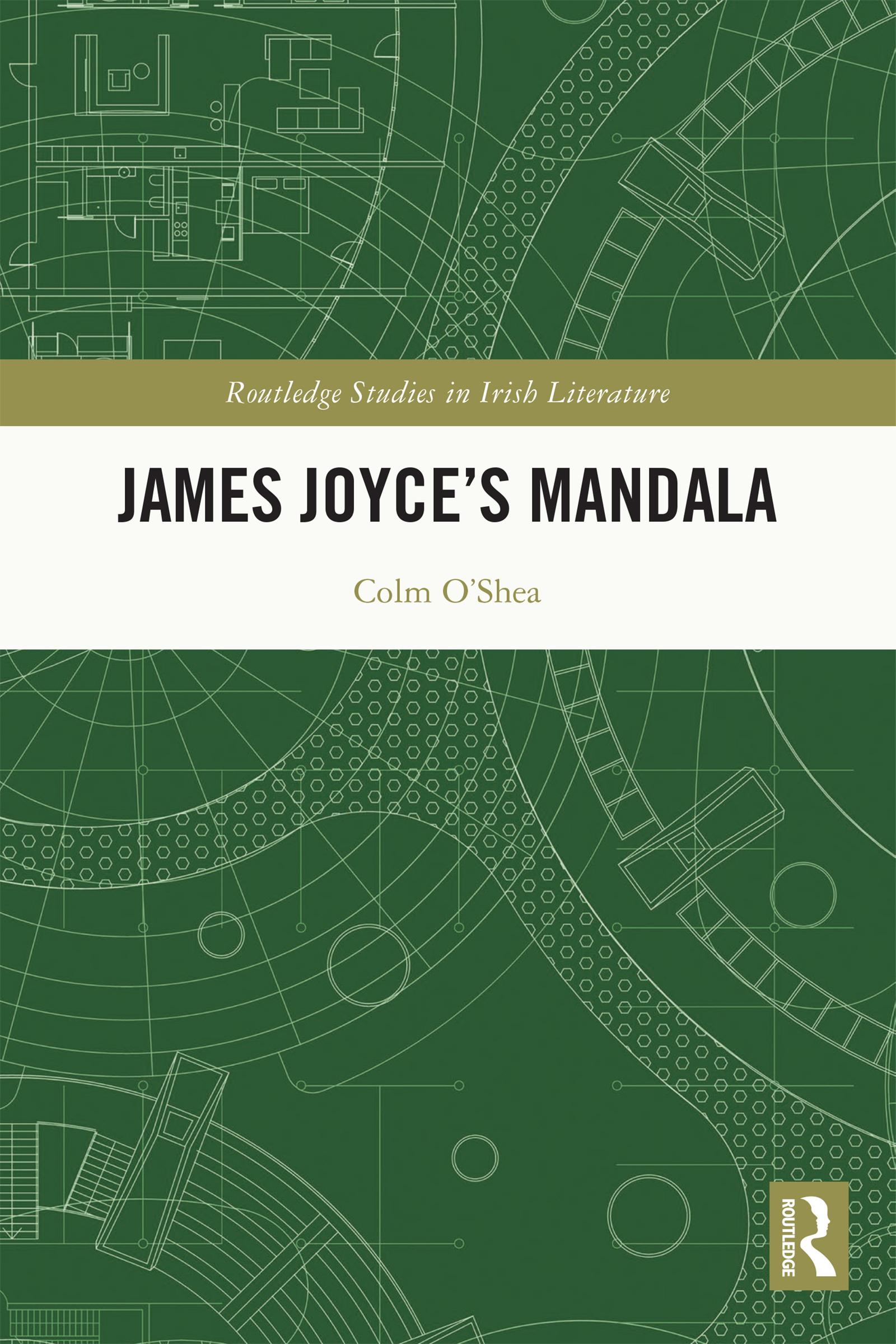
The Sanskrit word mandala can be translated as "sacred circle." Within the circle sits a microcosm of the universe and/or consciousness, repre-sented by icons. Eastern civilizations developed the spiritual-artistic practice of creating mandalas—with sand, paint, and architecture—to high technical sophistication, making manifest a geometry with layers of esoteric meaning for both the mandala artist and the initiated spectator. James Joyce’s Mandala outlines and explains this iconic sacred geometry, and assesses to what extent Joyce’s works of literature, in particular Finnegans Wake, can be understood as mandalic constructs. Using exam-ples from Dubliners to the Wake, we see how fundamental to Joyce’s fiction is the issue of spiritual paralysis (a problem the mandala attempts to dissolve) and also how fascinated he was by geometric imagery and symmetry, the technical devices employed in mandala construction. This is the first book-length comparison of Joyce’s work with the mythic structure of the mandala. Never discounting the richness of Joyce’s genius, it uses his "collideorscape" to explore the secrets of the mandala principle as much as it uses mandala theory to illuminate his famed book of the night.
Payez facilement par carte, Klarna, Apple Pay ou Google Pay. Pas satisfait ? Vous avez toujours une garantie de remboursement de 14 jours. En savoir plus dans nos conditions. Si vous avez des questions, envoyez-nous un e-mail à hello@memmo.org.
Memmo facilite tes études, où que tu sois dans le monde. On rassemble tes manuels de cours et des outils d'étude intelligents au même endroit : résumés, quiz, podcasts et flashcards. Et il y a Ted, ton compagnon d'étude qui répond à toutes tes questions. Plus de 50 000 étudiants étudient déjà ici – conçu pour t'aider à apprendre plus vite et à moins stresser.