
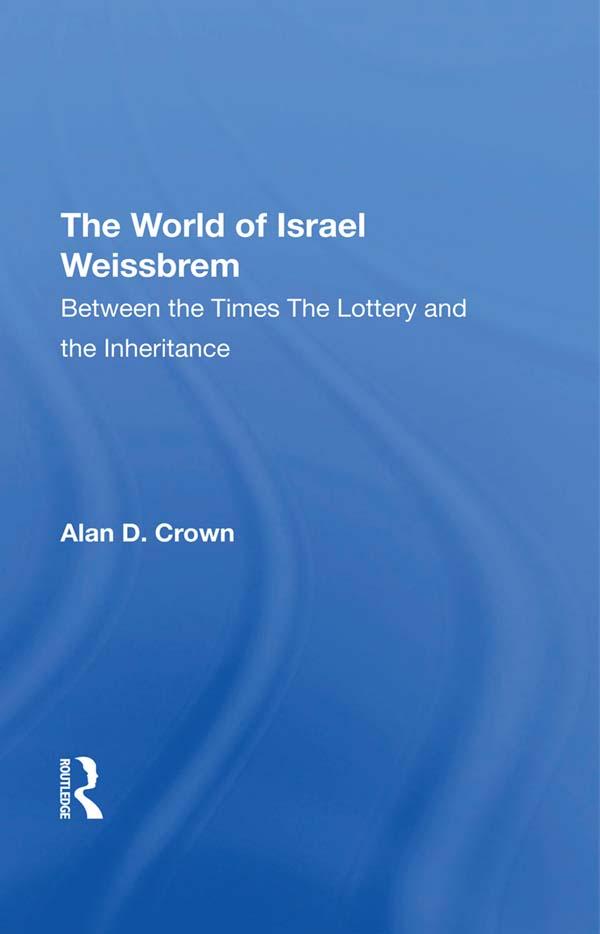
Translation is an art as taxing as any of the fine arts practiced by humankind. The translator is caught between the need to render the original in a readable and polished version of the target language and the obligation not to depart too far from the original, which might have fine nuances not easily transferred from one language to another. The problem is so well known that generations of students have given their years to studying languages so as not to lose those drops of the original distillation that are inevitably spilled in the process of transfer. The translator cannot retreat from the confrontation and must do the best he can. In translating Israel W eissbrem's work one is faced with a complicating factor: The author was writing in a language that was in the process of revivification after a long era during which it had been able to cope with the demands made upon its resources. The literary demands up until then were largely of the philosophical and theological order with which the extant lexicographical inventory could cope. Then, in the nineteenth century, belles lettres, poetry, the novel, and the essay made demands that necessitated updating the Hebrew language into a vernacular that could muster an inventory of phrases for every life setting.
Pages: 171
Catégorie: Språk & Lingvistik
e-ISBN: 9781000612448
Poids d'expédition: 1.2 kg
Expédié sous: 1-2 jours
Payez facilement par carte, Klarna, Apple Pay ou Google Pay. Pas satisfait ? Vous avez toujours une garantie de remboursement de 14 jours. En savoir plus dans nos conditions. Si vous avez des questions, envoyez-nous un e-mail à hello@memmo.org.
Memmo facilite tes études, où que tu sois dans le monde. On rassemble tes manuels de cours et des outils d'étude intelligents au même endroit : résumés, quiz, podcasts et flashcards. Et il y a Ted, ton compagnon d'étude qui répond à toutes tes questions. Plus de 50 000 étudiants étudient déjà ici – conçu pour t'aider à apprendre plus vite et à moins stresser.
Tu pourrais aussi aimer
Acheter le livre0