
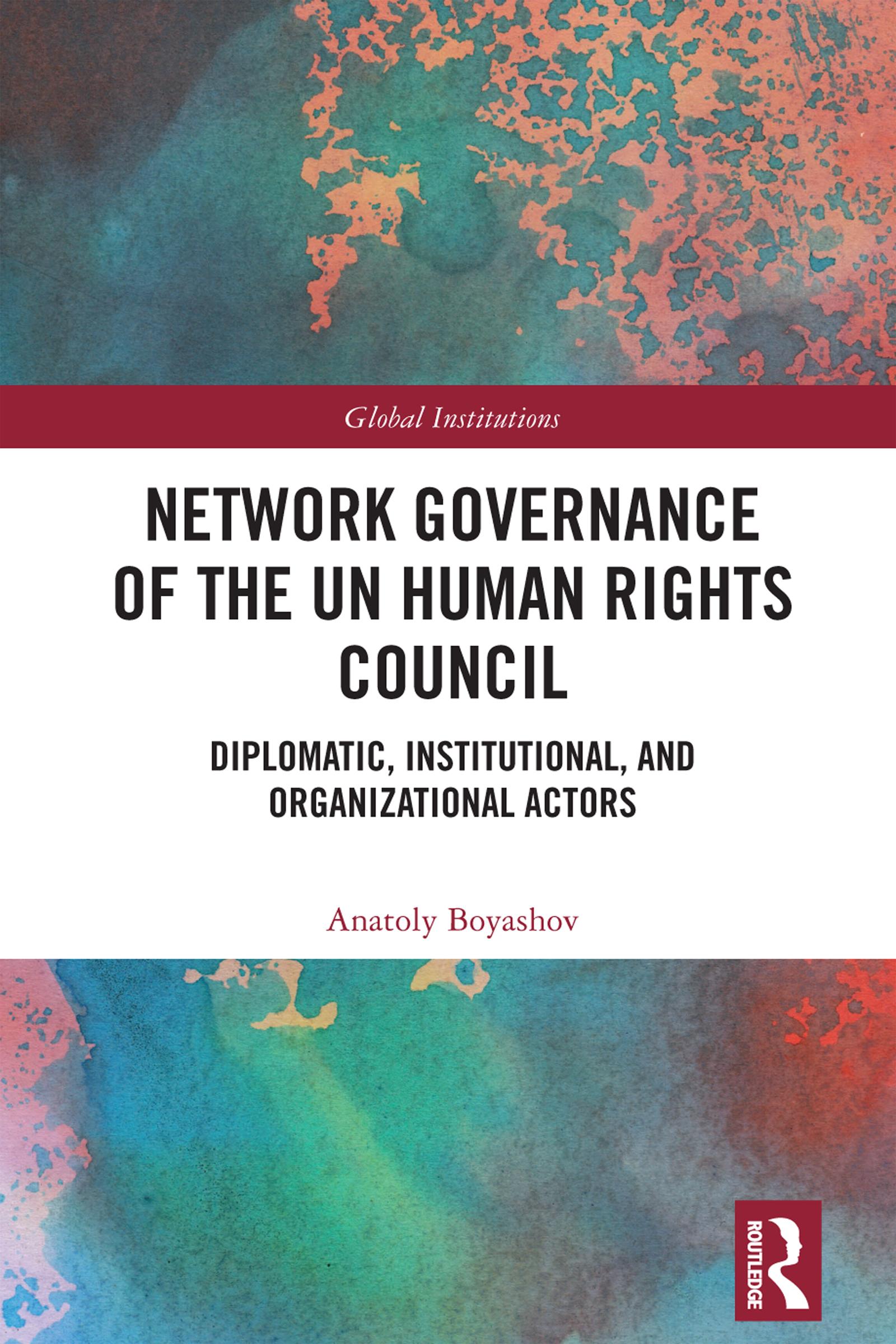
This book explores how the structures of international organizations have become increasingly complex and considers why states choose to become part of networks of international organizations alongside non-state actors.
While granting participation rights to non-state actors, states have been actively involved in establishing complex ties with them. International organizations, in their turn, have enhanced the sustainment of complex networks. The author argues that the involvement in networks of international organizations provides better capacities in communication. Thus, being a governmental or non-governmental entity, an actor tends to occupy the beneficial structural positions of a leader, connecting to as many actors as possible; or a broker bridging isolated subgroups within a network. Through a study of the UN Human Rights Council (HRC) and the respective diplomatic, institutional, and organizational networks that participate in it, he explores the most visible stakeholders, the institutional setting of the HRC, and the multilateral negotiations on the prevention of human rights violations in 2010-2019.
The volume will appeal to scholars, students and practitioners interested in the international organisations, networks, foreign policy, the United Nations and the Human Rights Council.
Payez facilement par carte, Klarna, Apple Pay ou Google Pay. Pas satisfait ? Vous avez toujours une garantie de remboursement de 14 jours. En savoir plus dans nos conditions. Si vous avez des questions, envoyez-nous un e-mail à hello@memmo.org.
Memmo facilite tes études, où que tu sois dans le monde. On rassemble tes manuels de cours et des outils d'étude intelligents au même endroit : résumés, quiz, podcasts et flashcards. Et il y a Ted, ton compagnon d'étude qui répond à toutes tes questions. Plus de 50 000 étudiants étudient déjà ici – conçu pour t'aider à apprendre plus vite et à moins stresser.