
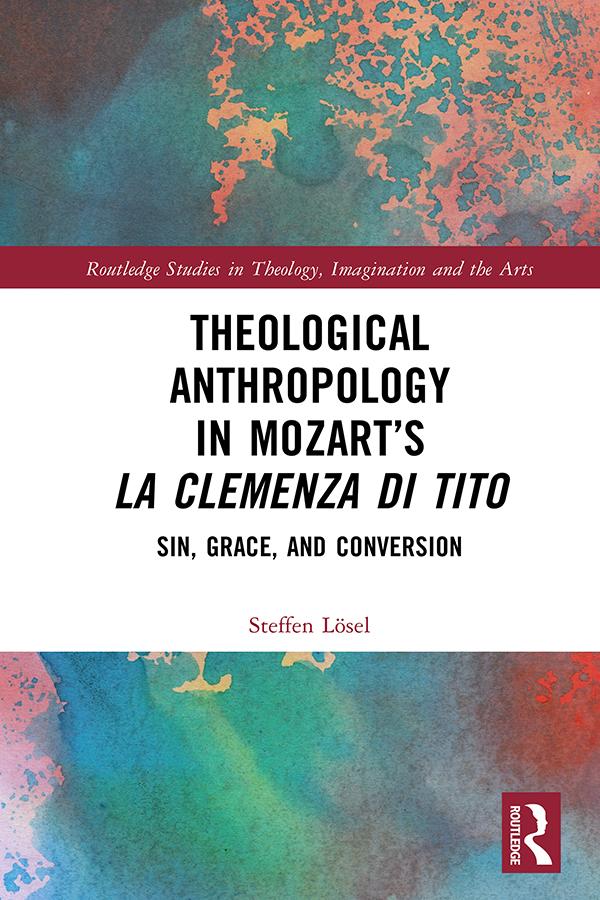
This book asks what theological messages theologically educated Catholics in late-eighteenth-century Prague might have perceived in Mozart’s late opera seria La clemenza di Tito. The book’s thesis is two-fold: first, that Catholics might have heard the opera’s advocacy of enlightened absolutism as a celebration of a distinctly Catholic understanding of political governance; and second, that they might have found in the opera a metaphor for the relationship between a gracious God and humanity caught up in sin, expressed as sexual concupiscence, pride, and lust for power. The book develops its interpretation of the opera through narrative character analyses of the main protagonists, an examination of their dramatic development, and by paying attention to the biblical and theological associations they may have evoked in a Catholic audience. The book is geared towards academic readers interested in opera, theologians, historians, and those who work at the intersection of theology and the arts. It contributes to a better understanding of the theological implications of Mozart’s operatic work.
Payez facilement par carte, Klarna, Apple Pay ou Google Pay. Pas satisfait ? Vous avez toujours une garantie de remboursement de 14 jours. En savoir plus dans nos conditions. Si vous avez des questions, envoyez-nous un e-mail à hello@memmo.org.
Memmo facilite tes études, où que tu sois dans le monde. On rassemble tes manuels de cours et des outils d'étude intelligents au même endroit : résumés, quiz, podcasts et flashcards. Et il y a Ted, ton compagnon d'étude qui répond à toutes tes questions. Plus de 50 000 étudiants étudient déjà ici – conçu pour t'aider à apprendre plus vite et à moins stresser.