
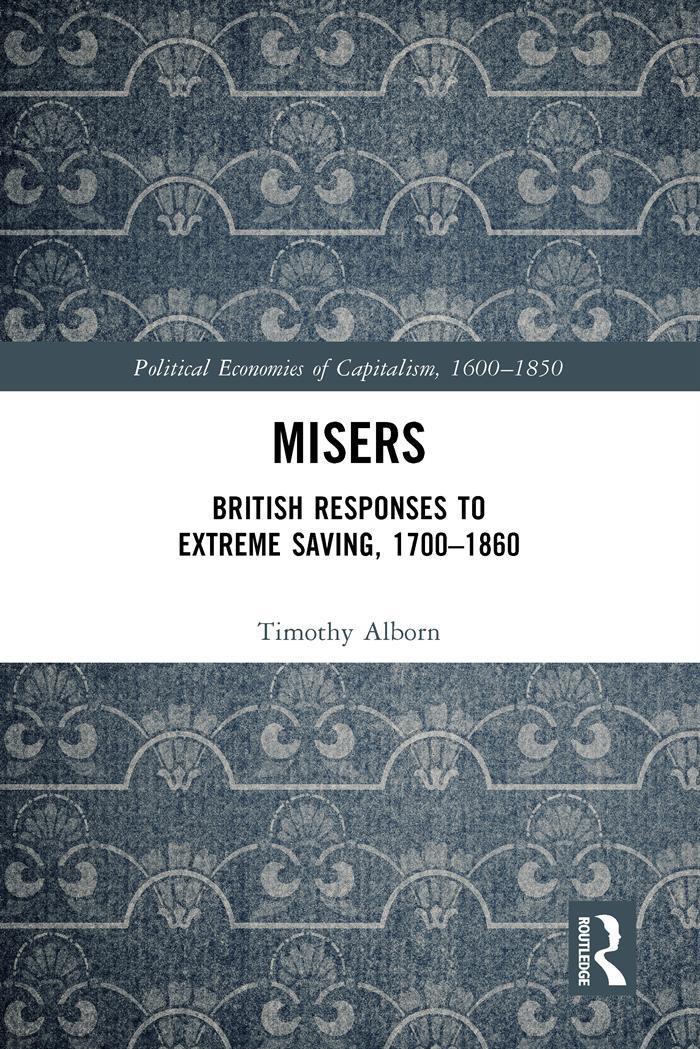
This volume uses the extreme case of misers to examine interlocking categories that undergirded the emergence of modern British society, including new perspectives on charity, morality, and marriage; new representations of passion and sympathy; and new modes of saving, spending, and investment.
Misers surveys this class of people—as invented and interpreted in sermons, poems, novels, and plays; analyzed by economists and philosophers; and profiled in obituaries and biographies—to explore how British attitudes about saving money shifted between 1700 and 1860. As opposed to the century before, the nineteenth century witnessed a new appreciation for misers, as economists credited them with adding to the nation's stock of capital and novelists newly imagined their capacity to empathize with fellow human beings. These characters shared the spotlight with real people who posthumously donned that label, populating into a cottage industry of miser biographies by the 1850s. By the time A Christmas Carol appeared in 1843, many Victorians had come to embrace misers as links that connected one generation’s extreme saving with the next generation’s virtuous spending.
With a broad chronological period, this volume is useful for students and scholars interested in representation of misers in eighteenth- and nineteenth-century Britain.
Payez facilement par carte, Klarna, Apple Pay ou Google Pay. Pas satisfait ? Vous avez toujours une garantie de remboursement de 14 jours. En savoir plus dans nos conditions. Si vous avez des questions, envoyez-nous un e-mail à hello@memmo.org.
Memmo facilite tes études, où que tu sois dans le monde. On rassemble tes manuels de cours et des outils d'étude intelligents au même endroit : résumés, quiz, podcasts et flashcards. Et il y a Ted, ton compagnon d'étude qui répond à toutes tes questions. Plus de 50 000 étudiants étudient déjà ici – conçu pour t'aider à apprendre plus vite et à moins stresser.