
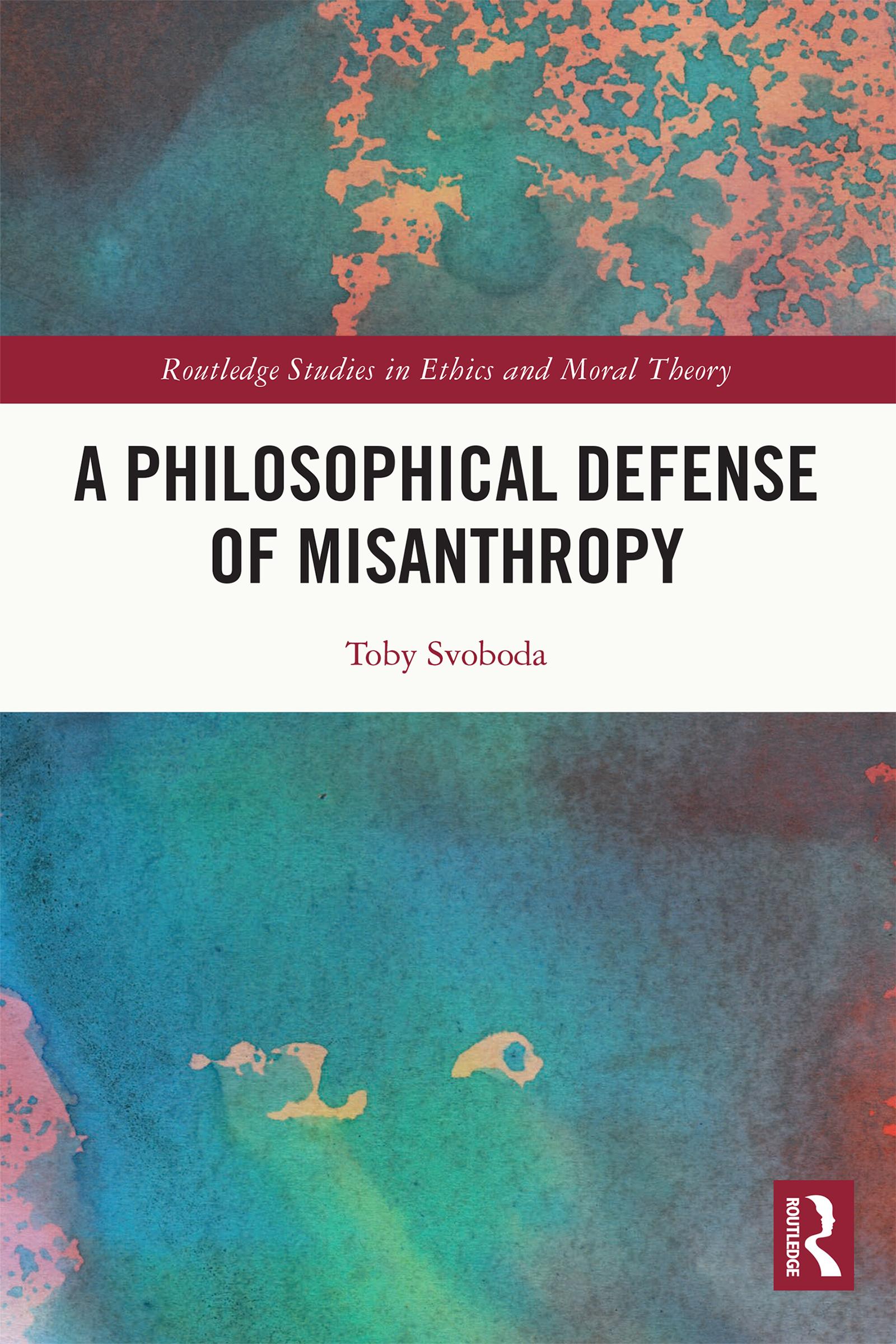
This book argues that it can be both reasonable and appropriate to adopt a certain kind of misanthropy. The author defends a cognitivist version of misanthropy, an attitude whose central feature is the judgment that humanity is morally bad.
Misanthropy is often dismissed on moral grounds. Many people hold that malice toward human persons is problematic and vulnerable to moral objections. In this book, the author advocates for cognitivist misanthropy. He defends an Asymmetry Thesis, according to which a morally bad deed carries more weight than a morally good deed, even if the harm of the former is exactly equal to the benefit of the latter. He makes the case that being misanthropic in the cognitivist sense is morally permissible and compatible with a broad range of moral reasons for action. He also considers the role of misanthropy in environmental thought, arguing that charges of misanthropy against certain "non-anthropocentric" views do not have the force they are typically thought to carry. Finally, the author investigates the practical implications of adopting cognitivist misanthropy, asking what living with such an attitude would involve.
A Philosophical Defense of Misanthropy will appeal to researchers and advanced students working in ethics and the philosophy of human nature.
Payez facilement par carte, Klarna, Apple Pay ou Google Pay. Pas satisfait ? Vous avez toujours une garantie de remboursement de 14 jours. En savoir plus dans nos conditions. Si vous avez des questions, envoyez-nous un e-mail à hello@memmo.org.
Memmo facilite tes études, où que tu sois dans le monde. On rassemble tes manuels de cours et des outils d'étude intelligents au même endroit : résumés, quiz, podcasts et flashcards. Et il y a Ted, ton compagnon d'étude qui répond à toutes tes questions. Plus de 50 000 étudiants étudient déjà ici – conçu pour t'aider à apprendre plus vite et à moins stresser.