
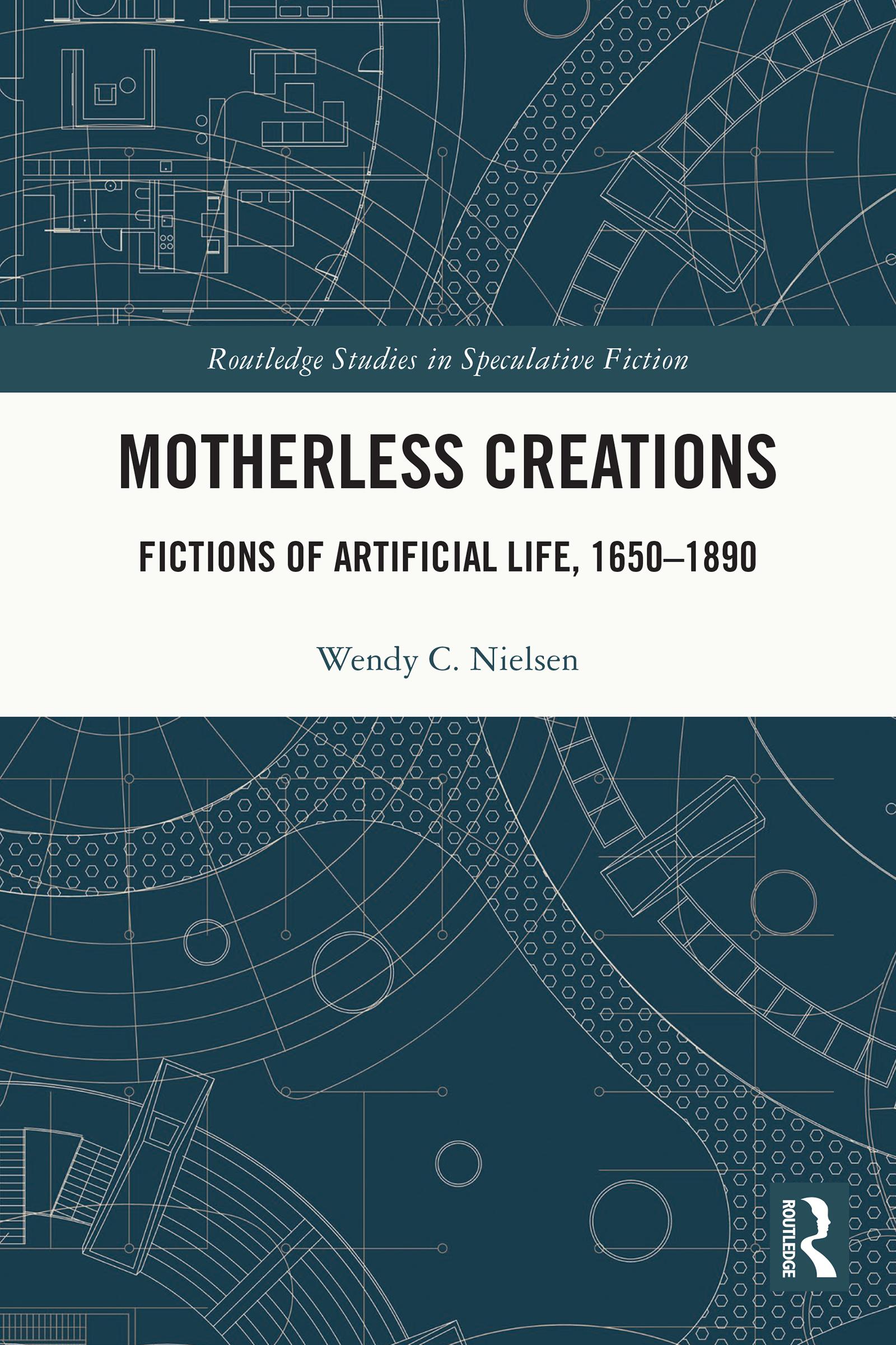
This book explains the elimination of maternal characters in American, British, French, and German literature before 1890 by examining motherless creations: Pygmalion’s statue, Frankenstein’s creature, homunculi, automata, androids, golems, and steam men. These beings typify what is now called artificial life, living systems made through manufactured means. Fantasies about creating life ex-utero were built upon misconceptions about how life began, sustaining pseudoscientific beliefs about the birthing body. Physicians, inventors, and authors of literature imagined generating life without women to control the process of reproduction and generate perfect progeny. Thus, some speculative fiction before 1890 belongs to the literary genealogy of transhumanism, the belief that technology will someday transform some humans into superior, immortal beings. Female motherless creations tend to operate as sexual companions. Male ones often emerge as subaltern figures analogous to enslaved beings, illustrating that reproductive rights inform readers’ sense of who counts as human in fictions of artificial life.
Payez facilement par carte, Klarna, Apple Pay ou Google Pay. Pas satisfait ? Vous avez toujours une garantie de remboursement de 14 jours. En savoir plus dans nos conditions. Si vous avez des questions, envoyez-nous un e-mail à hello@memmo.org.
Memmo facilite tes études, où que tu sois dans le monde. On rassemble tes manuels de cours et des outils d'étude intelligents au même endroit : résumés, quiz, podcasts et flashcards. Et il y a Ted, ton compagnon d'étude qui répond à toutes tes questions. Plus de 50 000 étudiants étudient déjà ici – conçu pour t'aider à apprendre plus vite et à moins stresser.