
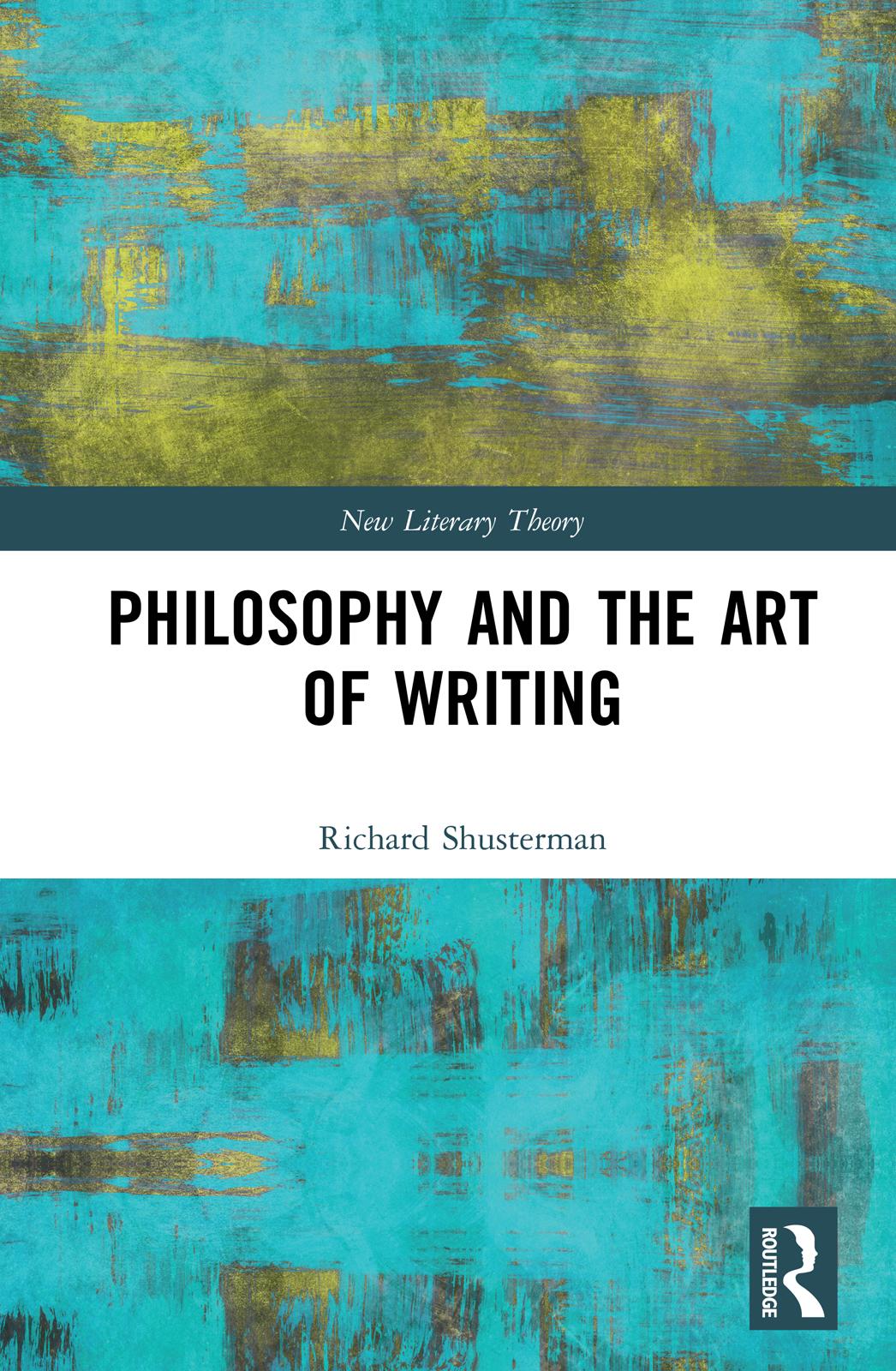
Philosophy and literature enjoy a close, complex relationship. Elucidating the connections between these two fields, this book examines the ways philosophy deploys literary means to advance its practice, particularly as a way of life that extends beyond literary forms and words into physical deeds, nonlinguistic expression, and subjective moods and feelings.
Exploring thinkers from Socrates and Confucius to Foucault and Simone de Beauvoir, Richard Shusterman probes the question of what roles literature could play in a vision of philosophy as something essentially lived rather than merely written. To develop this vision of philosophy that incorporates literature but seeks to go beyond the verbal to realize the embodied fullness of life and capture its inexpressible dimensions, Shusterman gives particular attention to authors who straddle the literature/philosophical divide: from Augustine and Montaigne through Wordsworth and Kierkegaard to T.S. Eliot, Georges Bataille, Maurice Blanchot, and Bertrand Russell. The book concludes with a chapter on the Chinese art of writing with its mixture of poetry, calligraphy, and painting.
Philosophy and the Art of Writing should interest students and researchers in literary theory and philosophy. It also opens the practice of philosophy to people who are not professionals in the writing of philosophy or literary theory.
Payez facilement par carte, Klarna, Apple Pay ou Google Pay. Pas satisfait ? Vous avez toujours une garantie de remboursement de 14 jours. En savoir plus dans nos conditions. Si vous avez des questions, envoyez-nous un e-mail à hello@memmo.org.
Memmo facilite tes études, où que tu sois dans le monde. On rassemble tes manuels de cours et des outils d'étude intelligents au même endroit : résumés, quiz, podcasts et flashcards. Et il y a Ted, ton compagnon d'étude qui répond à toutes tes questions. Plus de 50 000 étudiants étudient déjà ici – conçu pour t'aider à apprendre plus vite et à moins stresser.