
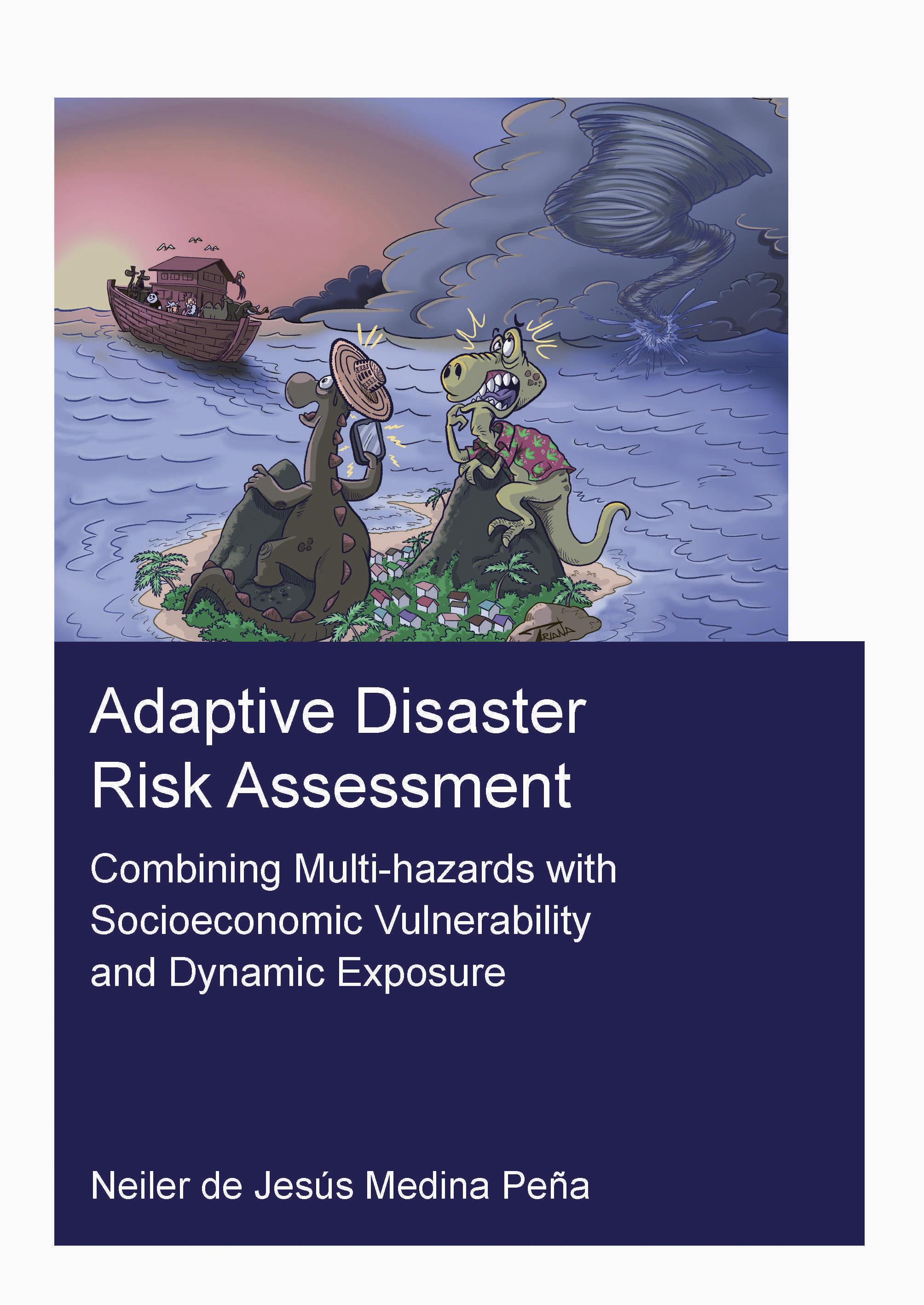
Climate change, combined with the rapid and often unplanned urbanisation trends, is associated with a rising trend in the frequency and severity of disasters triggered by natural hazards. In order to face the impacts of such threats, it is necessary to have an appropriate Disaster Risk Assessment (DRA). Traditional DRA approaches for disaster risk reduction (DRR) have focused mainly on the hazard component of risk, with little attention to the vulnerability and the exposure components. To address this issue, this dissertation’s main objective is to develop and test a disaster risk modelling framework that incorporates socioeconomic vulnerability and the adaptive nature of exposure associated with human behaviour in extreme hydro-meteorological events in the context of SIDS. To achieve the objective, an Adaptive Disaster Risk Assessment (ADRA) framework is proposed. ADRA uses an index-based approach (PeVI) to assess the socioeconomic vulnerability using three components: susceptibility, lack of coping capacities, and lack of adaptation. Furthermore, ADRA explicitly incorporates the exposure component using two approaches; first, a logistic regression model was built using the actual evacuation rates observed during Hurricane Irma, and second, an Agent-based model is used to simulate how households change their exposure levels in relation to different sources of information
Payez facilement par carte, Klarna, Apple Pay ou Google Pay. Pas satisfait ? Vous avez toujours une garantie de remboursement de 14 jours. En savoir plus dans nos conditions. Si vous avez des questions, envoyez-nous un e-mail à hello@memmo.org.
Memmo facilite tes études, où que tu sois dans le monde. On rassemble tes manuels de cours et des outils d'étude intelligents au même endroit : résumés, quiz, podcasts et flashcards. Et il y a Ted, ton compagnon d'étude qui répond à toutes tes questions. Plus de 50 000 étudiants étudient déjà ici – conçu pour t'aider à apprendre plus vite et à moins stresser.