
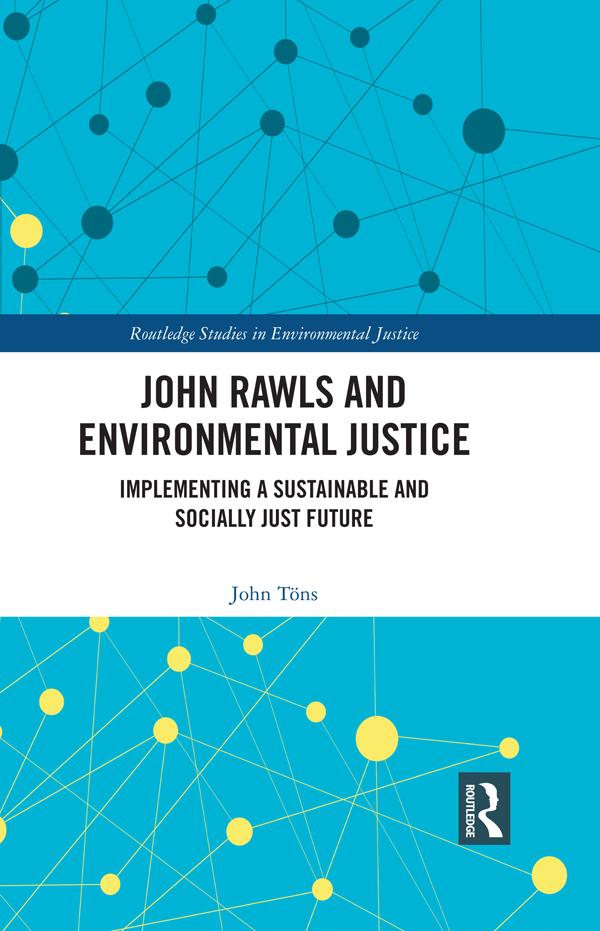
Using the principles of John Rawls’ theory of justice, this book offers an alternative political vision, one which describes a mode of governance that will enable communities to implement a sustainable and socially just future.
Rawls described a theory of justice that not only describes the sort of society in which anyone would like to live but that any society can create a society based on just institutions. While philosophers have demonstrated that Rawls’s theory can provide a framework for the discussion of questions of environmental justice, the problem for many philosophical theories is that discussions of sustainable development open the need to address questions of ecological interdependence, historical inequality in past resource use and the recognition that we cannot afford to ignore the limitations of growth. These ideas do not fit in comfortably in standard discourse about theories of justice. In contrast, this book frames the discussion of global justice in terms of environmental sustainability. The author argues that these ideas can be used to develop a coherent political theory that reconciles cosmopolitan arguments and the non-cosmopolitan or nationalist arguments concerning social and environmental justice.
This book will be of great interest to students and scholars of environmental philosophy and ethics, moral and political philosophy, global studies and sustainable development.
Payez facilement par carte, Klarna, Apple Pay ou Google Pay. Pas satisfait ? Vous avez toujours une garantie de remboursement de 14 jours. En savoir plus dans nos conditions. Si vous avez des questions, envoyez-nous un e-mail à hello@memmo.org.
Memmo facilite tes études, où que tu sois dans le monde. On rassemble tes manuels de cours et des outils d'étude intelligents au même endroit : résumés, quiz, podcasts et flashcards. Et il y a Ted, ton compagnon d'étude qui répond à toutes tes questions. Plus de 50 000 étudiants étudient déjà ici – conçu pour t'aider à apprendre plus vite et à moins stresser.