
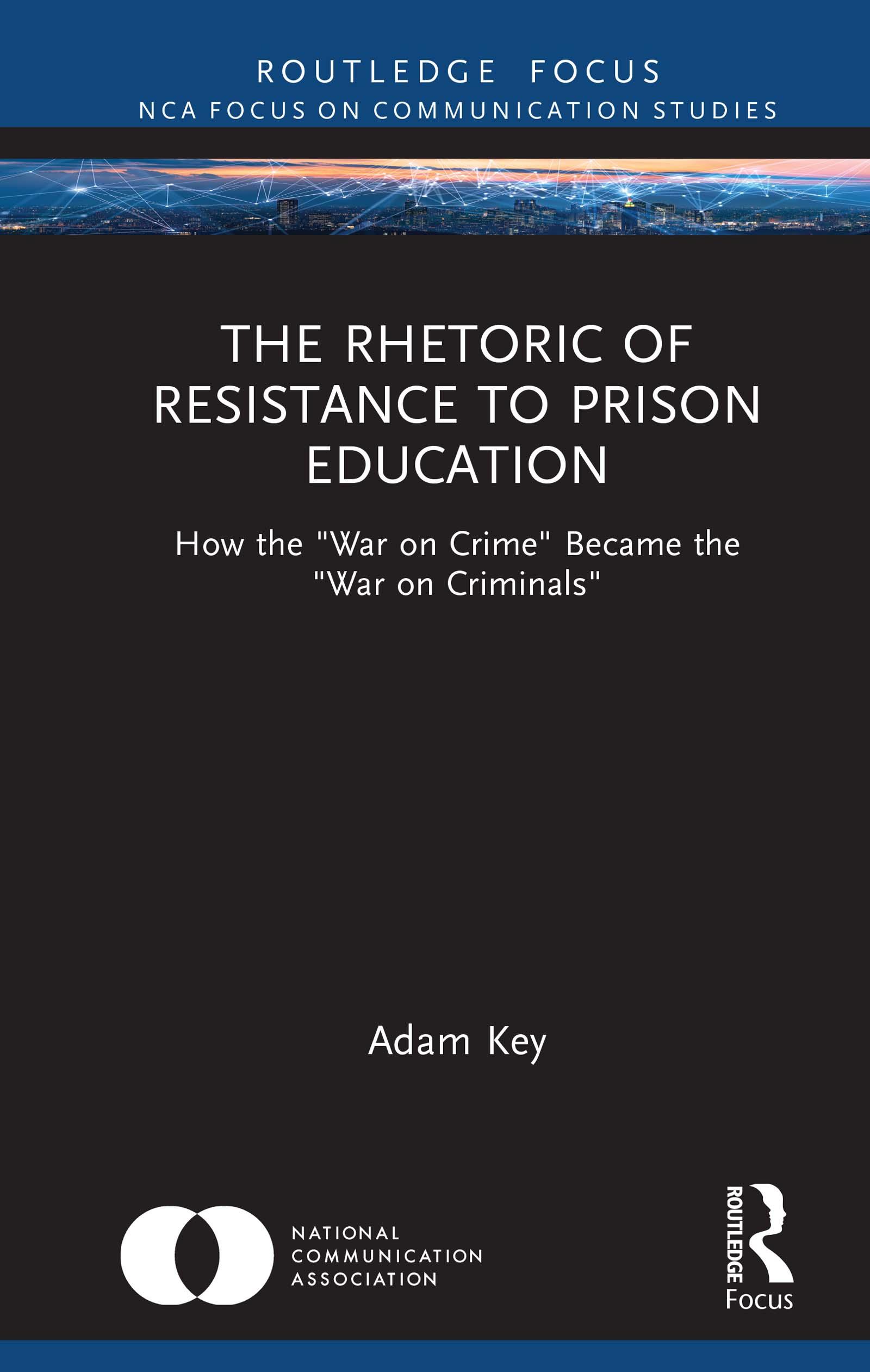
This book explores the discourse and rhetoric that resists and opposes postsecondary prison education. Positioning prison college programs as the best method to truly reduce recidivism, the book shows how the public – and by extension politicians – remain largely opposed to public funding for these programs, and how prisoners face internal resistance from their fellow inmates when pursuing higher education.
Utilizing methods including critical rhetorical history, media analysis, and autoethnography, the author explores and critiques the discourses which inhibit prison education. Cultural discourses, echoed through media portrayal of prisoners, produce criminals as both subhuman and always-already a threat to the public. This book highlights the history of rhetorical opposition to prison education; closely analyzes how convictism, prejudicial and discriminatory bias against prisoners, blocks education access and feeds the prison-industrial-complex an ever-recycled supply of free prison labor; and discusses the implications of prison education for understanding and contesting cultural discourses of criminality.
This book will be an important reference for scholars, graduate students, and upper-level undergraduates in the fields of Rhetoric, Criminal justice, and Sociology, as well as Media and Communication studies more generally, Politics, and Education studies.
Payez facilement par carte, Klarna, Apple Pay ou Google Pay. Pas satisfait ? Vous avez toujours une garantie de remboursement de 14 jours. En savoir plus dans nos conditions. Si vous avez des questions, envoyez-nous un e-mail à hello@memmo.org.
Memmo facilite tes études, où que tu sois dans le monde. On rassemble tes manuels de cours et des outils d'étude intelligents au même endroit : résumés, quiz, podcasts et flashcards. Et il y a Ted, ton compagnon d'étude qui répond à toutes tes questions. Plus de 50 000 étudiants étudient déjà ici – conçu pour t'aider à apprendre plus vite et à moins stresser.