
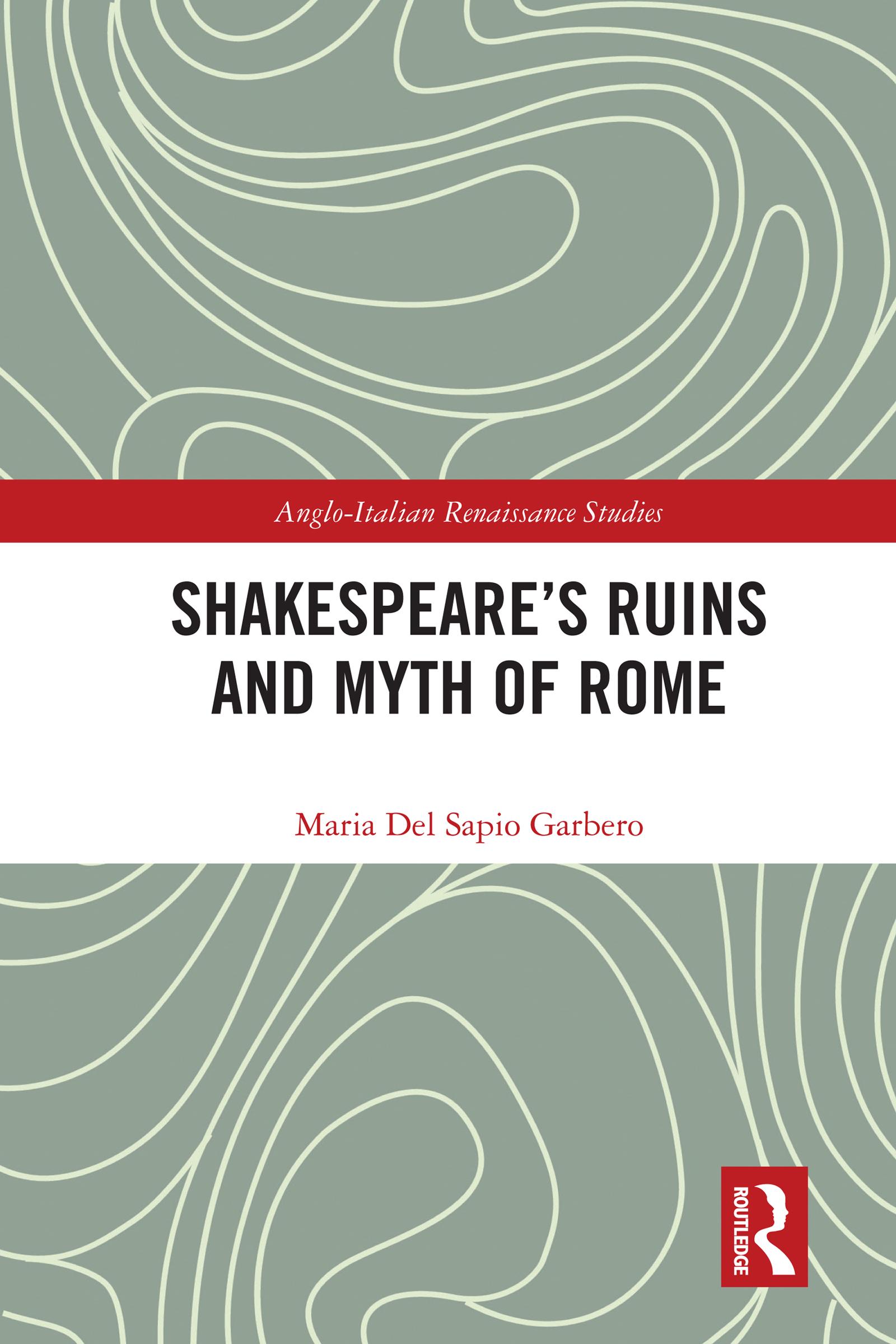
Rome was tantamount to its ruins, a dismembered body, to the eyes of those – Italians and foreigners – who visited the city in the years prior to or encompassing the lengthy span of the Renaissance. Drawing on the double movement of archaeological exploration and creative reconstruction entailed in the humanist endeavour to ‘resurrect’ the past, ‘ruins’ are seen as taking precedence over ‘myth’, in Shakespeare’s Rome. They are assigned the role of a heuristic model, and discovered in all their epistemic relevance in Shakespeare’s dramatic vision of history and his negotiation of modernity. This is the first book of its kind to address Shakespeare’s relationship with Rome’s authoritative myth, archaeologically, by taking as a point of departure a chronological reversal, namely the vision of the ‘eternal’ city as a ruinous scenario and hence the ways in which such a layered, ‘silent’, and aporetic scenario allows for an archaeo-anatomical approach to Shakespeare’s Roman works.
Payez facilement par carte, Klarna, Apple Pay ou Google Pay. Pas satisfait ? Vous avez toujours une garantie de remboursement de 14 jours. En savoir plus dans nos conditions. Si vous avez des questions, envoyez-nous un e-mail à hello@memmo.org.
Memmo facilite tes études, où que tu sois dans le monde. On rassemble tes manuels de cours et des outils d'étude intelligents au même endroit : résumés, quiz, podcasts et flashcards. Et il y a Ted, ton compagnon d'étude qui répond à toutes tes questions. Plus de 50 000 étudiants étudient déjà ici – conçu pour t'aider à apprendre plus vite et à moins stresser.