
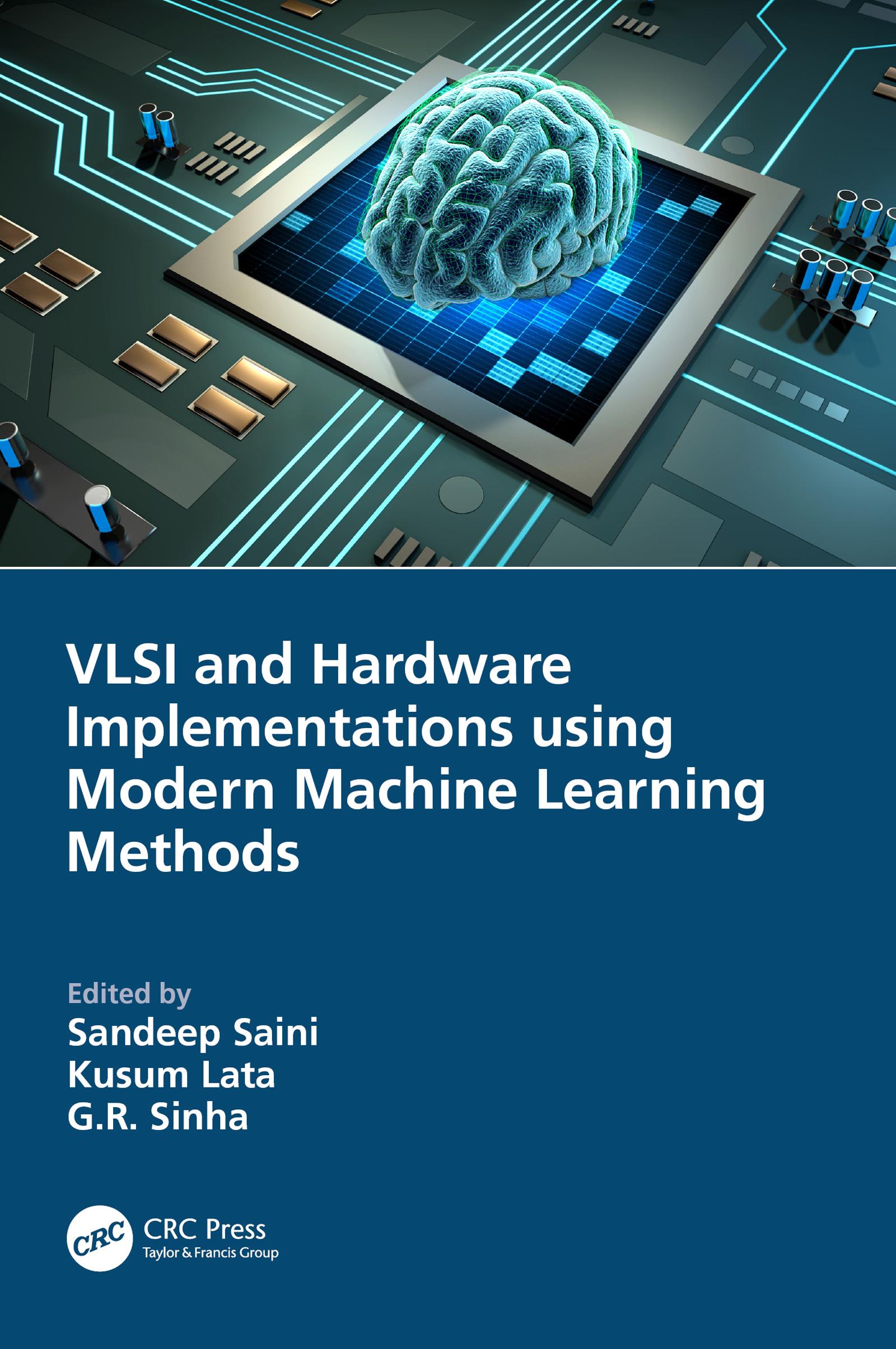
Machine learning is a potential solution to resolve bottleneck issues in VLSI via optimizing tasks in the design process. This book aims to provide the latest machine-learning–based methods, algorithms, architectures, and frameworks designed for VLSI design. The focus is on digital, analog, and mixed-signal design techniques, device modeling, physical design, hardware implementation, testability, reconfigurable design, synthesis and verification, and related areas. Chapters include case studies as well as novel research ideas in the given field. Overall, the book provides practical implementations of VLSI design, IC design, and hardware realization using machine learning techniques.
Features:
- Provides the details of state-of-the-art machine learning methods used in VLSI design
- Discusses hardware implementation and device modeling pertaining to machine learning algorithms
- Explores machine learning for various VLSI architectures and reconfigurable computing
- Illustrates the latest techniques for device size and feature optimization
- Highlights the latest case studies and reviews of the methods used for hardware implementation
This book is aimed at researchers, professionals, and graduate students in VLSI, machine learning, electrical and electronic engineering, computer engineering, and hardware systems.
Payez facilement par carte, Klarna, Apple Pay ou Google Pay. Pas satisfait ? Vous avez toujours une garantie de remboursement de 14 jours. En savoir plus dans nos conditions. Si vous avez des questions, envoyez-nous un e-mail à hello@memmo.org.
Memmo facilite tes études, où que tu sois dans le monde. On rassemble tes manuels de cours et des outils d'étude intelligents au même endroit : résumés, quiz, podcasts et flashcards. Et il y a Ted, ton compagnon d'étude qui répond à toutes tes questions. Plus de 50 000 étudiants étudient déjà ici – conçu pour t'aider à apprendre plus vite et à moins stresser.