
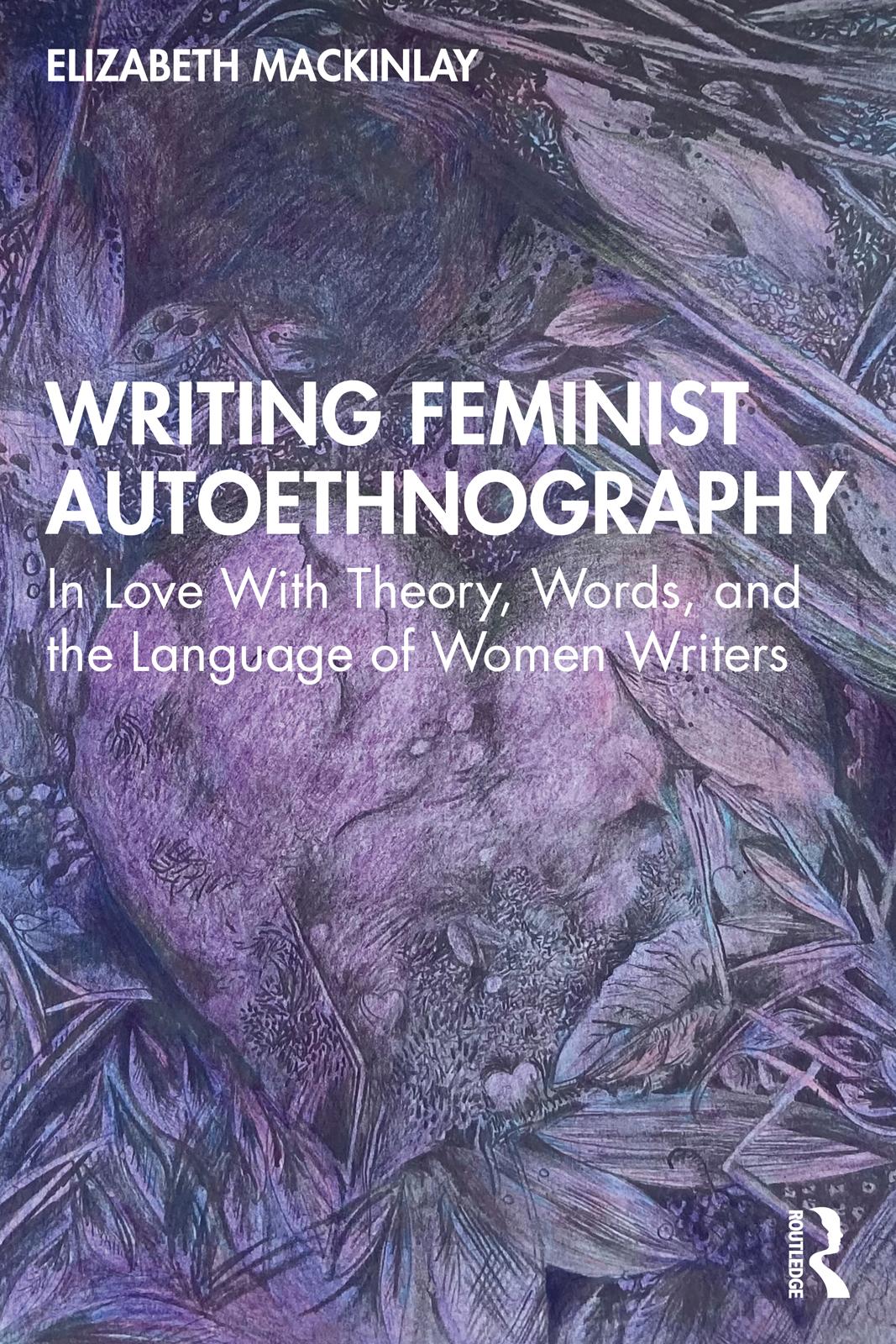
Writing Feminist Autoethnography explores the personal-is-political relationship between autoethnography and feminist theory and practice.
Each chapter introduces the lives and works of a range of feminist thinkers and writers and considers the ways in which their thinking and writing might come to be in relation with our own personal-is-political thinking and writing work as feminist autoethnographers. The book begins with an acknowledgement of the author’s positionality as a white-settler-colonial-woman in relation with Yanyuwa, Garrwa, Mara and Kudanji Aboriginal women. This positionality has continued to resonate deeply with the responses and sensibilities the author holds as a feminist autoethnographer to move beyond coloniality. She explores the writing of Virginia Woolf, Simone Weil, Simone de Beauvoir, Hélène Cixous, Kathleen Stewart, bell hooks and Ruth Behar, with critical affect to embrace, embody and engage with feminist thinking, wondering and feeling. The book creatively and performatively explores what it means to live a feminist life as an autoethnographer.
This book will define and conceptualize feminist autoethnography for all qualitative researchers, especially those interested in critical autoethnography, and scholars in gender studies and communication.
Payez facilement par carte, Klarna, Apple Pay ou Google Pay. Pas satisfait ? Vous avez toujours une garantie de remboursement de 14 jours. En savoir plus dans nos conditions. Si vous avez des questions, envoyez-nous un e-mail à hello@memmo.org.
Memmo facilite tes études, où que tu sois dans le monde. On rassemble tes manuels de cours et des outils d'étude intelligents au même endroit : résumés, quiz, podcasts et flashcards. Et il y a Ted, ton compagnon d'étude qui répond à toutes tes questions. Plus de 50 000 étudiants étudient déjà ici – conçu pour t'aider à apprendre plus vite et à moins stresser.