
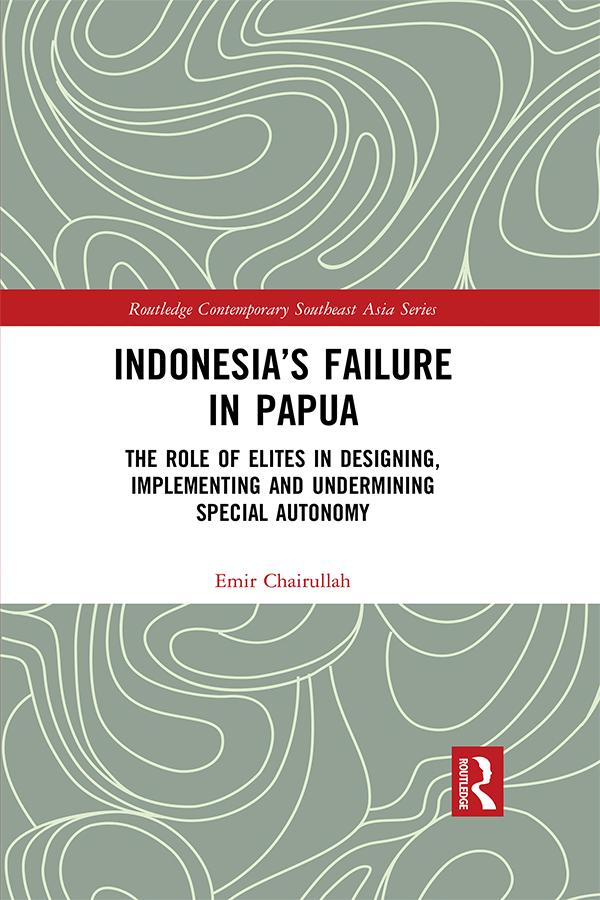
Chairullah investigates how the political, social, and economic interests of national and local elites were negotiated in the formulation and early stages of Special Autonomy in Papua Province, Indonesia.
The Papuan case lends support to the current conception of elite theory, which considers the influence of actors and dynamics beyond power elites in the decision-making process. The failure of the policy implementation as a conflict reduction strategy in the Papuan case can be attributed to the dynamics of elite configurations during the negotiation and early implementation stages. Chairullah presents two significant new findings for research on Papuan Special Autonomy. Firstly, that secret negotiations were held between Papuan and national elites during Abdurrahman Wahid’s presidency, and these were crucial in reducing separatist sentiment in Papua. Secondly, that the United States, through Freeport McMoRan, strongly influenced the Special Autonomy negotiation process. The actions of national elites in Jakarta led to widespread disappointment about the policy at all levels in Papua and the subsequent escalation of separatist sentiment based on Papuan ethnic identity.
An important book for scholars of Indonesian politics and society, and especially those with a particular interest in the Papuan conflict.
Payez facilement par carte, Klarna, Apple Pay ou Google Pay. Pas satisfait ? Vous avez toujours une garantie de remboursement de 14 jours. En savoir plus dans nos conditions. Si vous avez des questions, envoyez-nous un e-mail à hello@memmo.org.
Memmo facilite tes études, où que tu sois dans le monde. On rassemble tes manuels de cours et des outils d'étude intelligents au même endroit : résumés, quiz, podcasts et flashcards. Et il y a Ted, ton compagnon d'étude qui répond à toutes tes questions. Plus de 50 000 étudiants étudient déjà ici – conçu pour t'aider à apprendre plus vite et à moins stresser.