
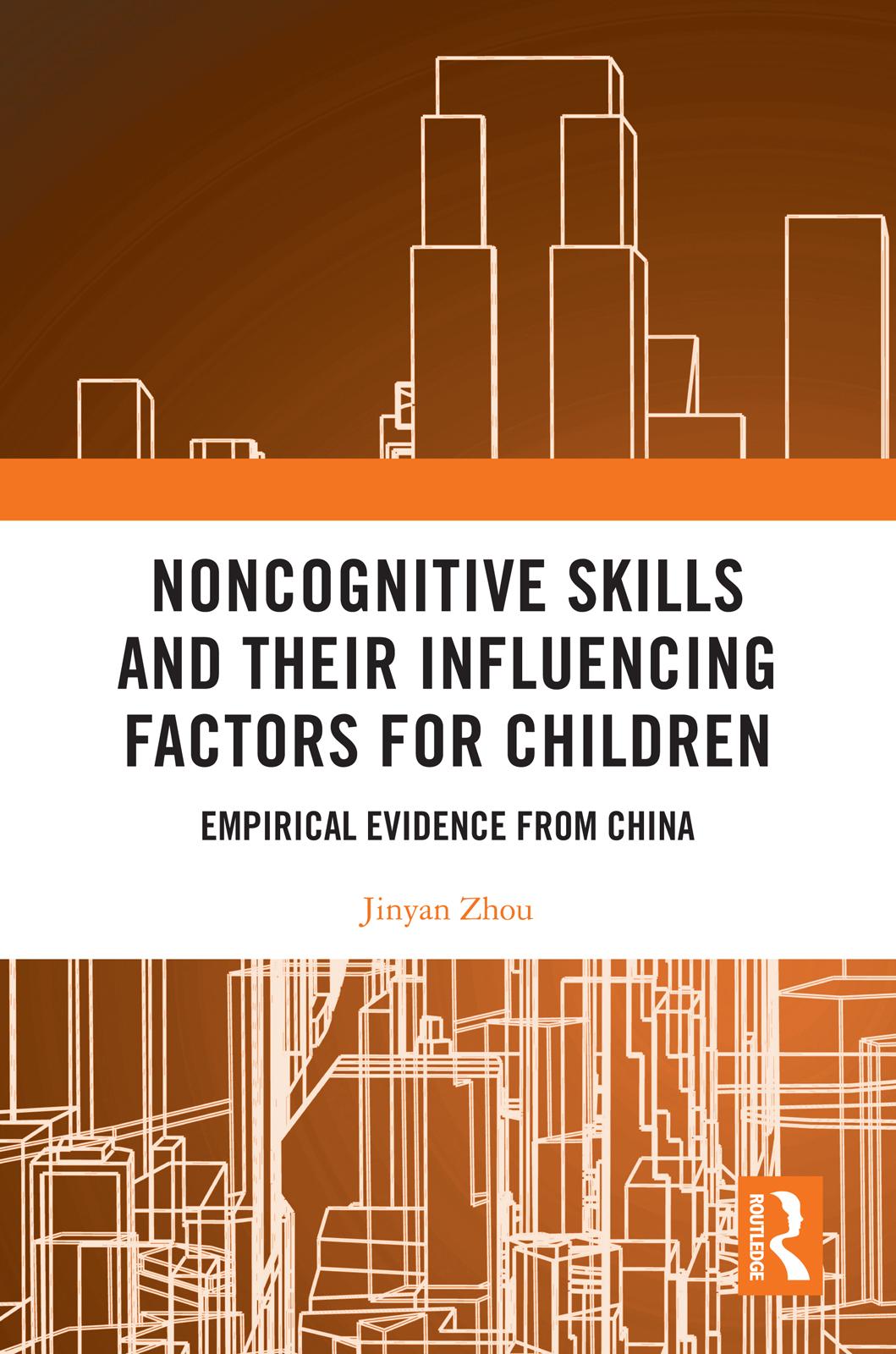
"Non-cognitive skills" are often used to refers to those skills that do not fall within the cognitive category but to describe a stable pattern of thought, feeling, and behavior in different situations and backgrounds with profitable and investable characteristics, such as conscientiousness, perseverance, and teamwork, which are critically important in education. However, for many years, "non-cognitive skills" have always been ignored in human capital theory. The book, using a multidisciplinary approach, tries to uncover the noncognitive components of human capital, so as to answer the question "what is the skill that should be invested in?"
The author expands the connotations of human capital by exploring the value of noncognitive skills and their production patterns, constructing a measurement framework and a set of tools to measure noncognitive skills. She especially carries out an empirical survey which covers primary and secondary school students from seven provinces of China’s east, middle, and west areas. With the data collected, she analyzes Chinese students’ noncognitive development and further identifies the critical factors that may impact their noncognitive skills by applying the Bayesian Model Average approach.
The book will be a theoretical contribution to education economics. Researchers interested in education in China, children’s development, and policymakers in the field of education will find this book helpful and resourceful.
Payez facilement par carte, Klarna, Apple Pay ou Google Pay. Pas satisfait ? Vous avez toujours une garantie de remboursement de 14 jours. En savoir plus dans nos conditions. Si vous avez des questions, envoyez-nous un e-mail à hello@memmo.org.
Memmo facilite tes études, où que tu sois dans le monde. On rassemble tes manuels de cours et des outils d'étude intelligents au même endroit : résumés, quiz, podcasts et flashcards. Et il y a Ted, ton compagnon d'étude qui répond à toutes tes questions. Plus de 50 000 étudiants étudient déjà ici – conçu pour t'aider à apprendre plus vite et à moins stresser.