
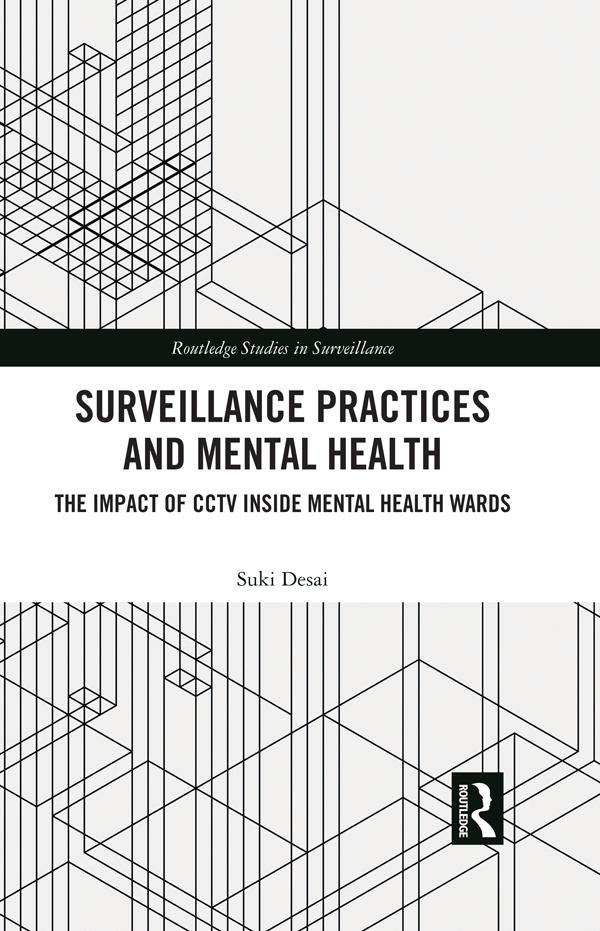
This book examines how CCTV cameras expose the patient body inside the mental health ward, especially the relationship between staff and patients as surveillance subjects.
A key aspect of the book is that existing surveillance literature and mental health literature have largely ignored the influence of CCTV cameras on patient and staff experiences inside mental health wards. Research findings for this book suggest that camera use inside mental health wards is based on a perception of the violent nature of the mental health patient. This perception not only influences ethical mental health practice inside the ward but also impacts how patients experience the ward.
It is not known how and why CCTV camera use has expanded to its uses inside mental health wards. These include not only communal areas of the ward but also patient bedrooms. The research, therefore, examines how and why camera technology was introduced inside three Psychiatric Intensive Care Mental Health Units located in England, UK. Aimed at both undergraduate and postgraduate students, this book will appeal to sociology, mental health, and surveillance studies students, as well as practitioners in mental health nursing, caseworkers and social caregivers.
Payez facilement par carte, Klarna, Apple Pay ou Google Pay. Pas satisfait ? Vous avez toujours une garantie de remboursement de 14 jours. En savoir plus dans nos conditions. Si vous avez des questions, envoyez-nous un e-mail à hello@memmo.org.
Memmo facilite tes études, où que tu sois dans le monde. On rassemble tes manuels de cours et des outils d'étude intelligents au même endroit : résumés, quiz, podcasts et flashcards. Et il y a Ted, ton compagnon d'étude qui répond à toutes tes questions. Plus de 50 000 étudiants étudient déjà ici – conçu pour t'aider à apprendre plus vite et à moins stresser.