
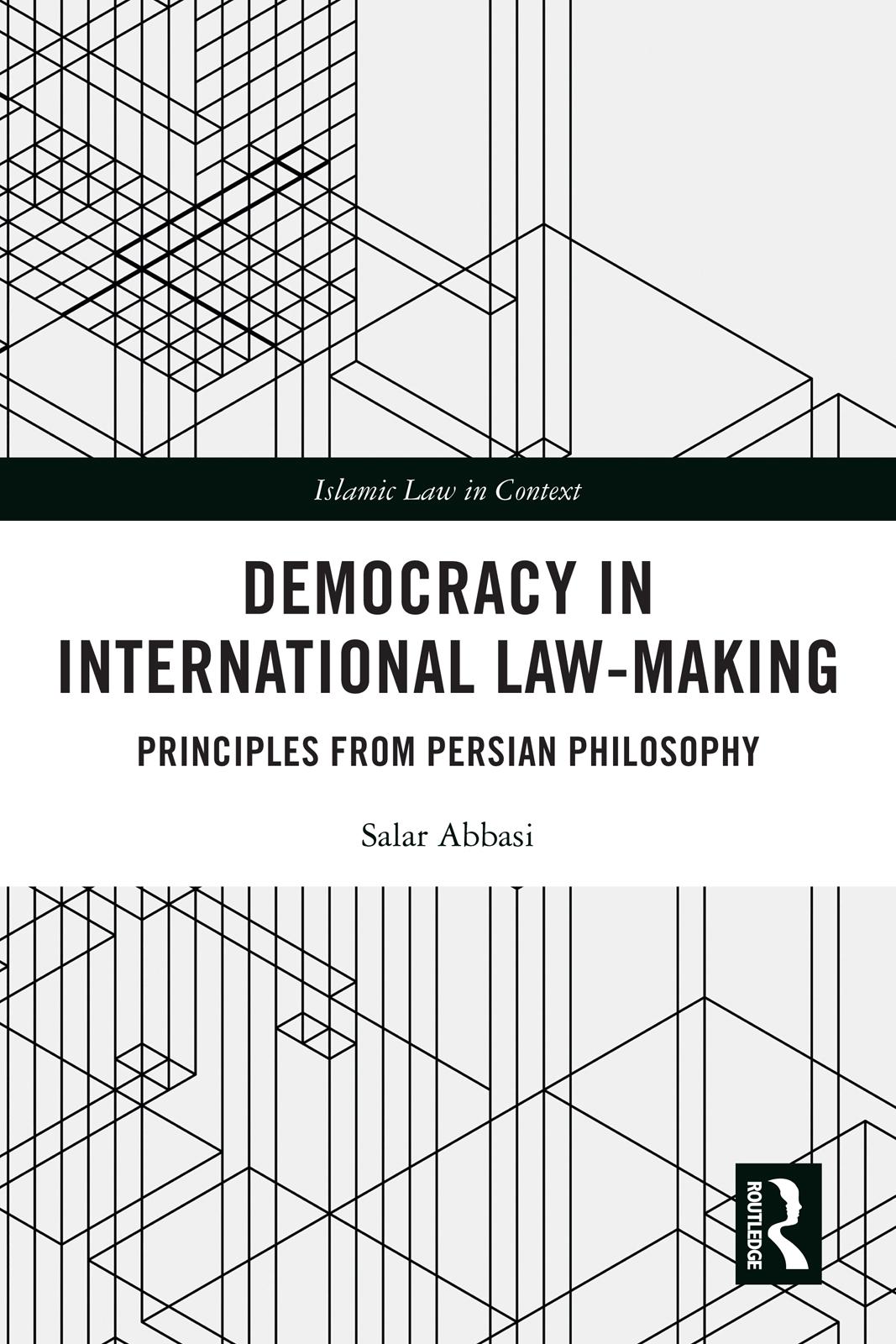
This book provides a critique of current international law-making and draws on a set of principles from Persian philosophers to present an alternative to influence the development of international law-making procedure.
The work conceptualizes a substantive notion of democracy in order to regulate international law-making mechanisms under a set of principles developed between the twelfth and seventeenth centuries in Persia. What the author here names ‘democratic egalitarian multilateralism’ is founded on: the idea of ‘egalitarian law’ by Suhrawardi, the account of ‘substantial motion’ by Mulla Sadra, and the ideal of ‘intercultural dialectical democracy’ developed by Rūmī. Following a discussion of the conceptual flaws of the chartered and customary sources of international law, it is argued that ‘democratic egalitarian multilateralism’ could be a source for a set of principles to regulate the procedures through which international treaties are made as well as a criterion for customary international law-ascertainment.
Presenting an alternative, drawn from a less dominant culture, to the established ideas of international law-making the book will be essential reading for researchers and academics working in public international law, history of law, legal theory, comparative legal theory, Islamic law, and history.
Payez facilement par carte, Klarna, Apple Pay ou Google Pay. Pas satisfait ? Vous avez toujours une garantie de remboursement de 14 jours. En savoir plus dans nos conditions. Si vous avez des questions, envoyez-nous un e-mail à hello@memmo.org.
Memmo facilite tes études, où que tu sois dans le monde. On rassemble tes manuels de cours et des outils d'étude intelligents au même endroit : résumés, quiz, podcasts et flashcards. Et il y a Ted, ton compagnon d'étude qui répond à toutes tes questions. Plus de 50 000 étudiants étudient déjà ici – conçu pour t'aider à apprendre plus vite et à moins stresser.