
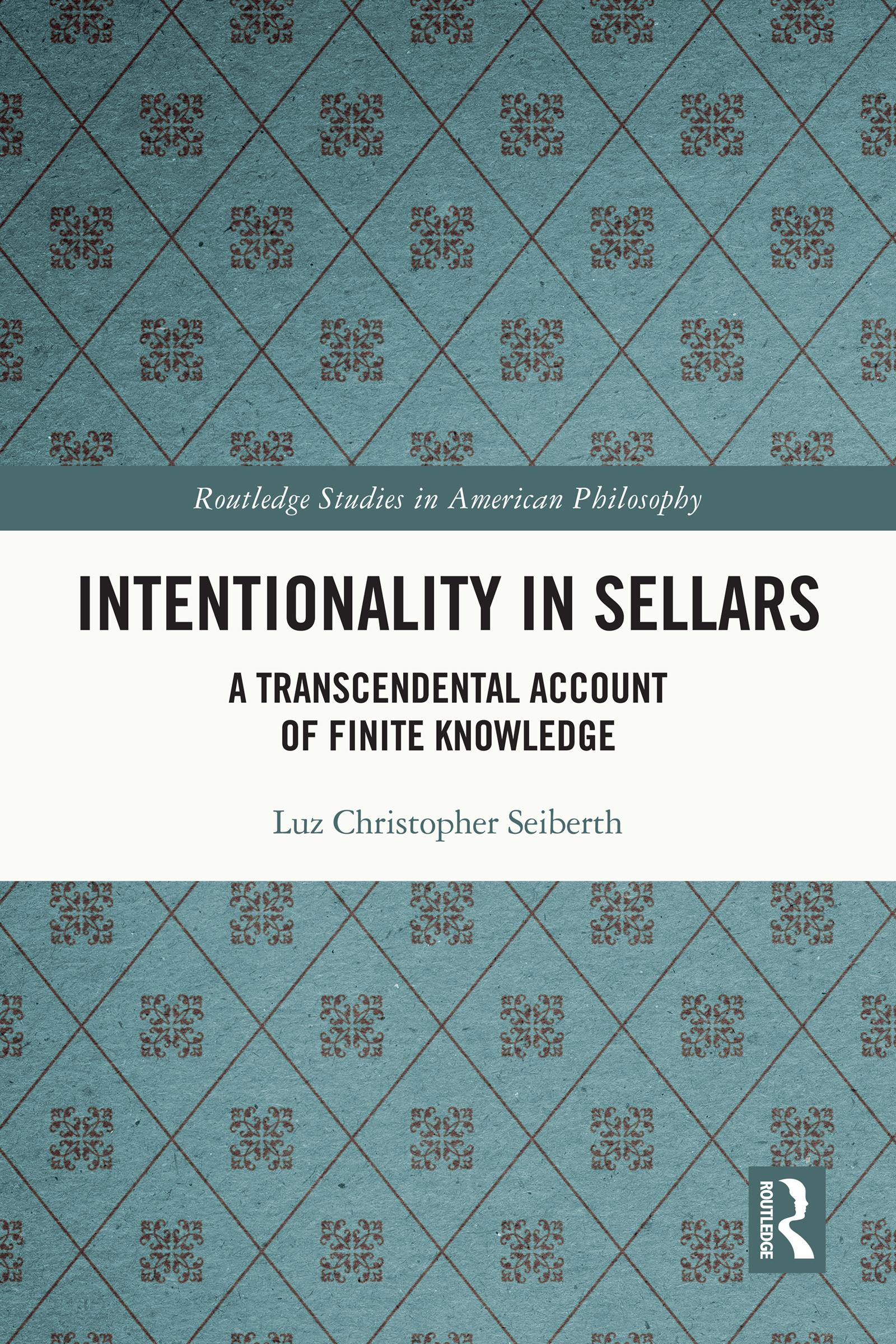
This book argues that Sellars’ theory of intentionality can be understood as an advancement of a transcendental philosophical approach. It shows how Sellars develops his theory of intentionality through his engagement with the theoretical philosophy of Immanuel Kant.
The book delivers a provocative reinterpretation of one of the most problematic and controversial concepts of Sellars' philosophy: the picturing-relation. Sellars' theory of intentionality addresses the question of how to reconcile two aspects that seem opposed: the non-relational theory of intellectual and linguistic content and a causal-transcendental theory of representation inspired by the philosophy of the early Wittgenstein. The author explains how both parts cohere in a transcendental account of finite knowledge. He claims that this can only be achieved by reading Sellars as committed to a transcendental methodology inspired by Kant. In a final step, he brings his interpretation to bear on the contemporary metaphilosophical debate on pragmatism and expressivism.
Intentionality in Sellars will be of interest to scholars of Sellars and Kant, as well as researchers working in philosophy of mind, epistemology, and the history of nineteenth- and twentieth-century philosophy.
Payez facilement par carte, Klarna, Apple Pay ou Google Pay. Pas satisfait ? Vous avez toujours une garantie de remboursement de 14 jours. En savoir plus dans nos conditions. Si vous avez des questions, envoyez-nous un e-mail à hello@memmo.org.
Memmo facilite tes études, où que tu sois dans le monde. On rassemble tes manuels de cours et des outils d'étude intelligents au même endroit : résumés, quiz, podcasts et flashcards. Et il y a Ted, ton compagnon d'étude qui répond à toutes tes questions. Plus de 50 000 étudiants étudient déjà ici – conçu pour t'aider à apprendre plus vite et à moins stresser.