
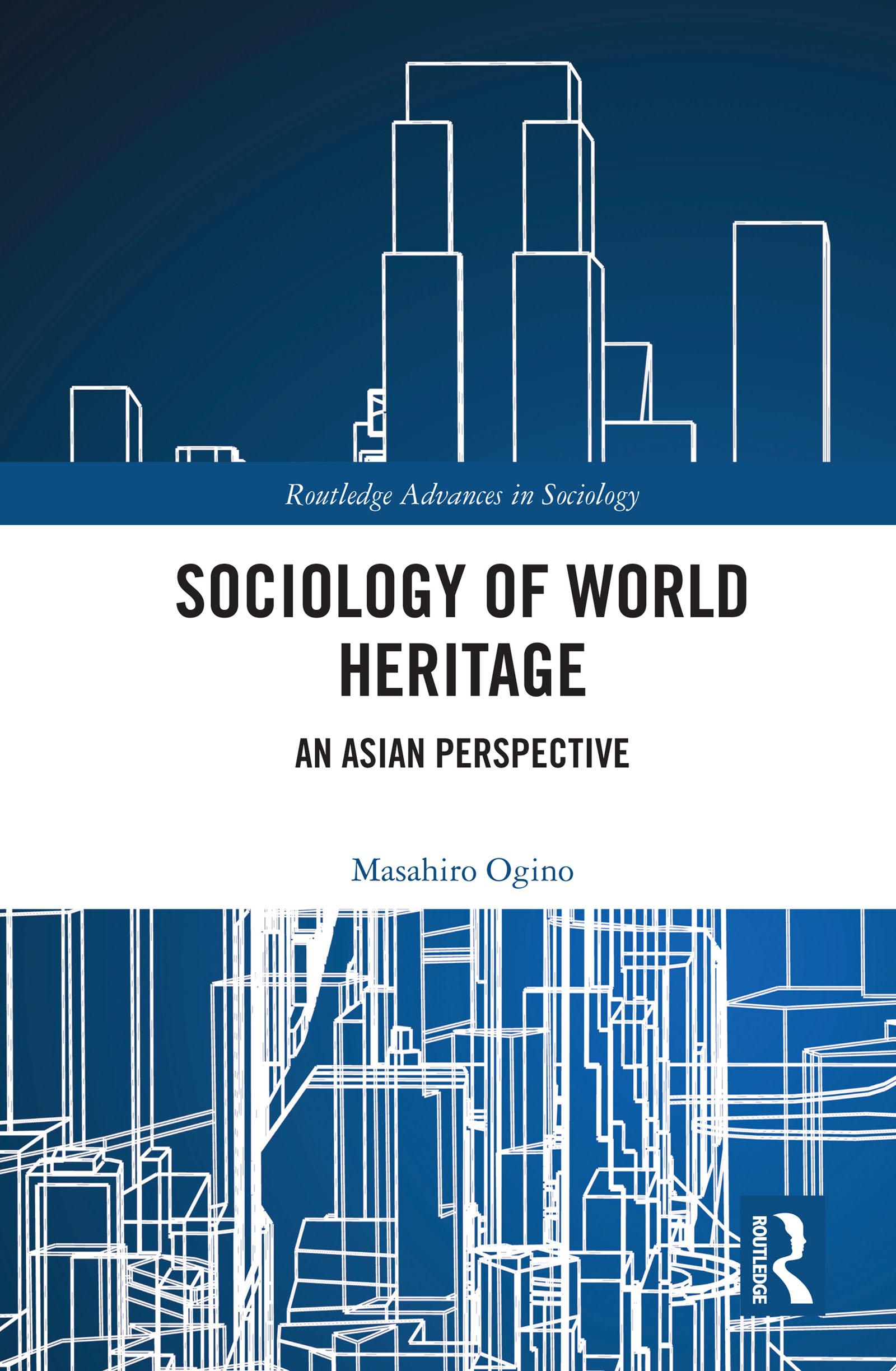
Taking mainly Japanese and other Asian case studies as examples, Ogino examines the motivations behind the preservation of objects and sites considered to be of cultural significance.
Using mainly the perspectives of Japanese approaches to cultural heritage, the book critiques the European logic of cultural heritage enshrined by UNESCO. It contrasts a Western emphasis on monuments and sites, with an Asian emphasis on more intangible forms of heritage, which place less emphasis on a linear view of time. More practically, the authors also analyse the positive and negative impacts that UNESCO-listed status has had on sites in Asia, including Angkor Wat, Nagasaki, and Lijiang. Finally, they address fundamental questions about who gets to decide what counts as cultural heritage, and what the underlying rationale is for actively preserving heritage in the first place.
This books is a thoughtful and provocative analysis of issues that will be of interest to sociologists, as well as scholars and students of cultural heritage.
Payez facilement par carte, Klarna, Apple Pay ou Google Pay. Pas satisfait ? Vous avez toujours une garantie de remboursement de 14 jours. En savoir plus dans nos conditions. Si vous avez des questions, envoyez-nous un e-mail à hello@memmo.org.
Memmo facilite tes études, où que tu sois dans le monde. On rassemble tes manuels de cours et des outils d'étude intelligents au même endroit : résumés, quiz, podcasts et flashcards. Et il y a Ted, ton compagnon d'étude qui répond à toutes tes questions. Plus de 50 000 étudiants étudient déjà ici – conçu pour t'aider à apprendre plus vite et à moins stresser.