
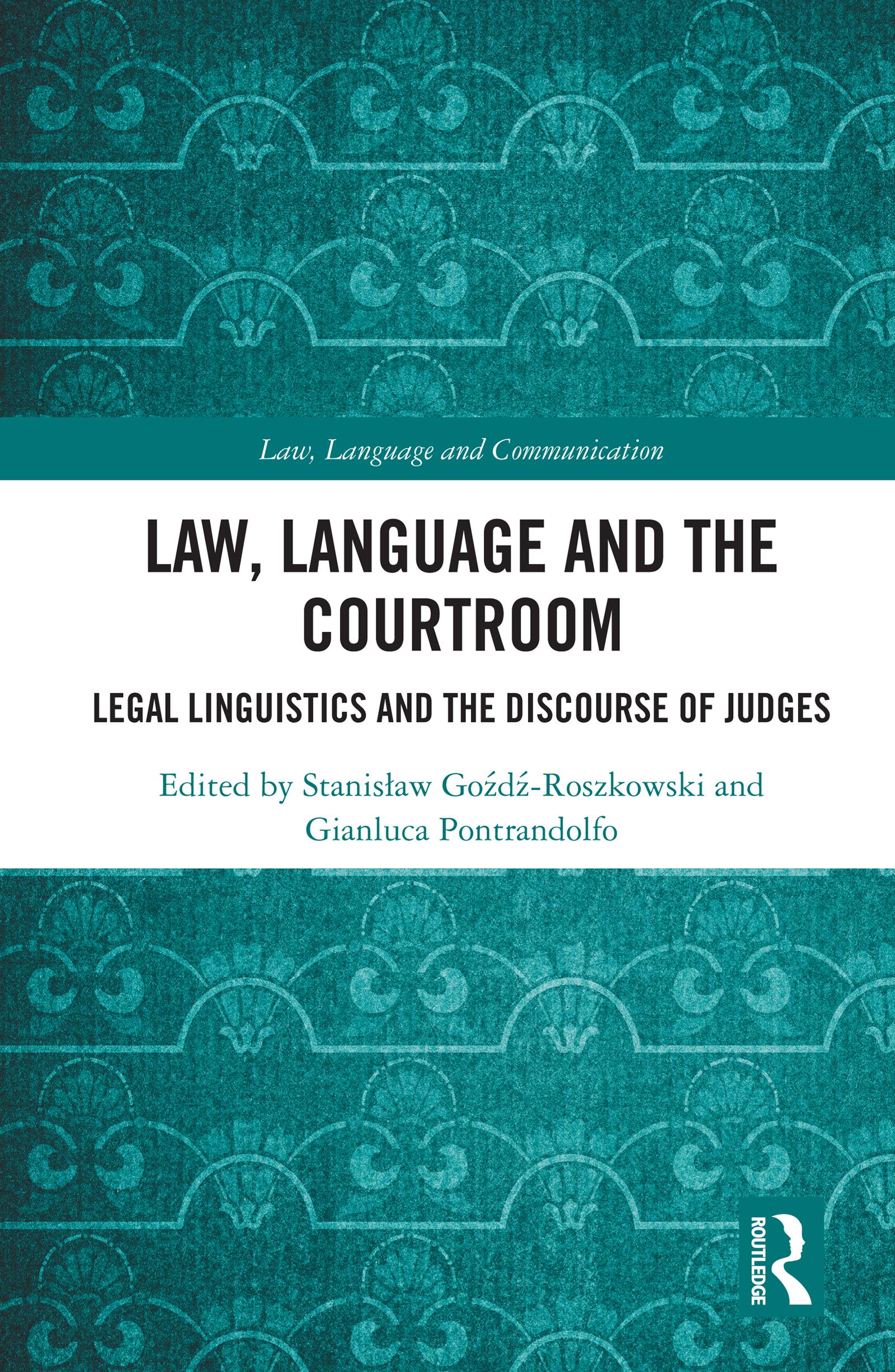
This book explores the language of judges. It is concerned with understanding how language works in judicial contexts. Using a range of disciplinary and methodological perspectives, it looks in detail at the ways in which judicial discourse is argued, constructed, interpreted and perceived. Focusing on four central themes - constructing judicial discourse and judicial identities, judicial argumentation and evaluative language, judicial interpretation, and clarity in judicial discourse - the book’s ultimate goal is to provide a comprehensive and in-depth analysis of current critical issues of the role of language in judicial settings. Contributors include legal linguists, lawyers, legal scholars, legal practitioners, legal translators and anthropologists, who explore patterns of linguistic organisation and use in judicial institutions and analyse language as an instrument for understanding both the judicial decision-making process and its outcome.
The book will be an invaluable resource for scholars in legal linguistics and those specialising in judicial argumentation and reasoning ,and forensic linguists interested in the use of language in judicial settings.
Payez facilement par carte, Klarna, Apple Pay ou Google Pay. Pas satisfait ? Vous avez toujours une garantie de remboursement de 14 jours. En savoir plus dans nos conditions. Si vous avez des questions, envoyez-nous un e-mail à hello@memmo.org.
Memmo facilite tes études, où que tu sois dans le monde. On rassemble tes manuels de cours et des outils d'étude intelligents au même endroit : résumés, quiz, podcasts et flashcards. Et il y a Ted, ton compagnon d'étude qui répond à toutes tes questions. Plus de 50 000 étudiants étudient déjà ici – conçu pour t'aider à apprendre plus vite et à moins stresser.