
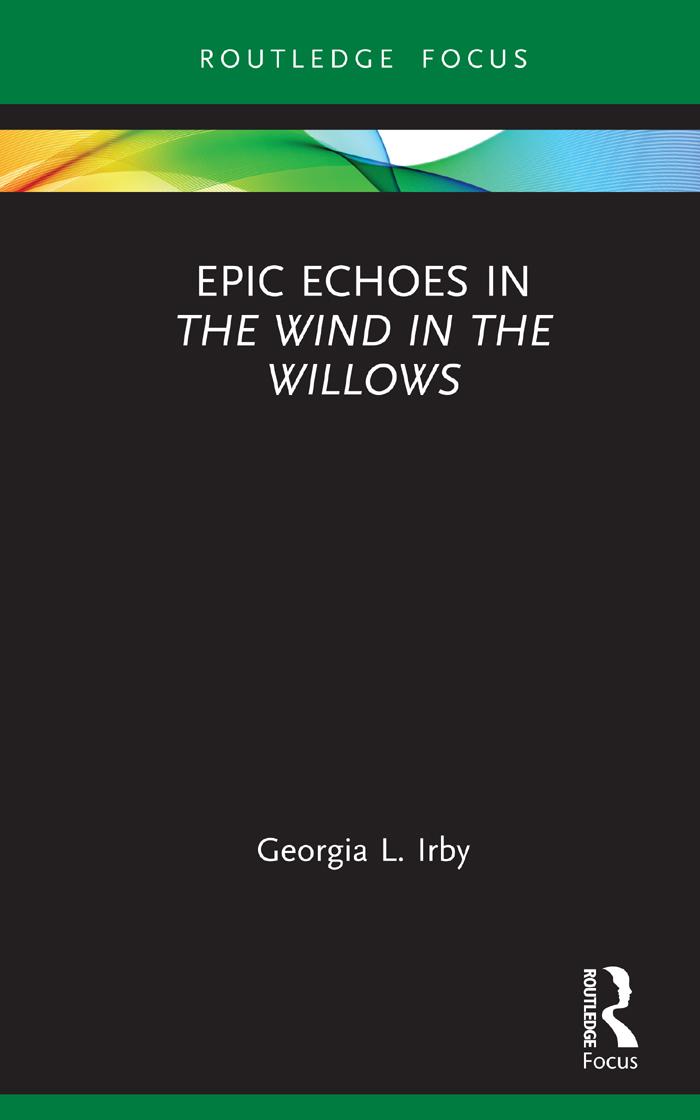
This book explores Grahame’s engagements with classical antiquity in The Wind in the Willows, including ancient epic, parody (Batrachomyomachia), and pastoral imagery.
Irby demonstrates how subtle echoes – such as the structure into 12 books, arming scenes, epic catalogues, anabases and katabases, lying tales, Toad’s "cleverness"—cumulatively suggest a link between The Wind in the Willows and classical literature. This study offers the first sustained treatment of classical allusions in The Wind in the Willows, considering the entire novel, not isolated scenes, building on existing scholarship to yield an interpretation through the lens of classical literature and its reception in Victorian and Edwardian England.
This volume will provide a unique resource for students and scholars of classical reception and literature, as well as comparative literature, English literature, children’s literature, gender studies, and Grahame’s writing.
Payez facilement par carte, Klarna, Apple Pay ou Google Pay. Pas satisfait ? Vous avez toujours une garantie de remboursement de 14 jours. En savoir plus dans nos conditions. Si vous avez des questions, envoyez-nous un e-mail à hello@memmo.org.
Memmo facilite tes études, où que tu sois dans le monde. On rassemble tes manuels de cours et des outils d'étude intelligents au même endroit : résumés, quiz, podcasts et flashcards. Et il y a Ted, ton compagnon d'étude qui répond à toutes tes questions. Plus de 50 000 étudiants étudient déjà ici – conçu pour t'aider à apprendre plus vite et à moins stresser.