
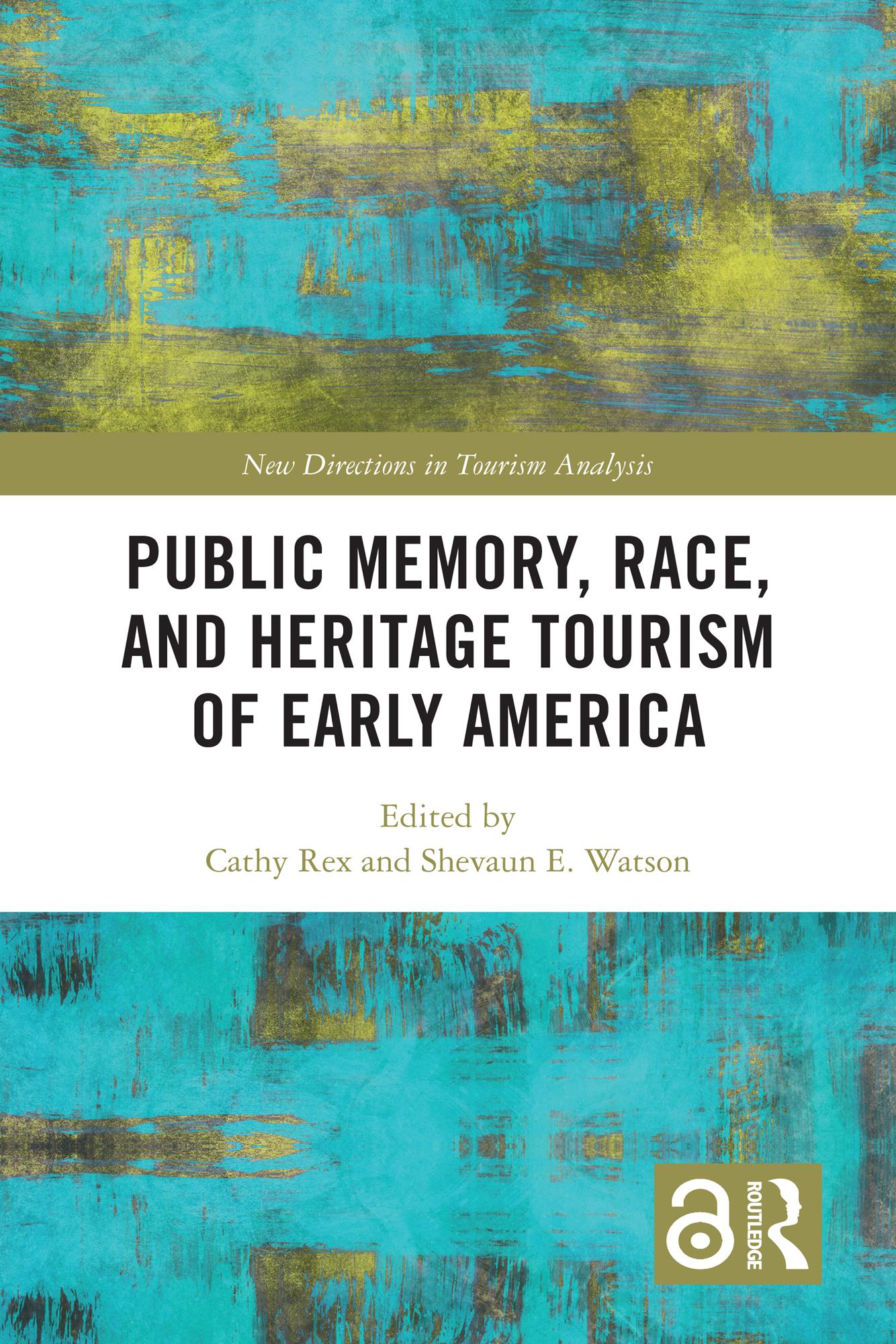
This book addresses the interconnected issues of public memory, race, and heritage tourism, exploring the ways in which historical tourism shapes collective understandings of America’s earliest engagements with race.
It includes contributions from a diverse group of humanities scholars, including early Americanists, and scholars from communication, English, museum studies, historic preservation, art and architecture, Native American studies, and history. Through eight chapters, the collection offers varied perspectives and original analyses of memory-making and re-making through travel to early American sites, bringing needed attention to the considerable role that tourism plays in producing—and possibly unsettling—racialized memories about America’s past. The book is an interdisciplinary effort that analyses lesser-known sites of historical and racial significance throughout North America and the Caribbean (up to about 1830) to unpack the relationship between leisure travel, processes of collective remembering or forgetting, and the connections of tourist sites to colonialism, slavery, genocide, and oppression.
Public Memory, Race, and Heritage Tourism of Early America provides a deconstruction of the touristic experience with racism, slavery, and the Indigenous experience in America that will appeal to students and academics in the social sciences and humanities.
The introductory chapter and chapter 3 of this book are freely available as a downloadable Open Access PDF at http://www.taylorfrancis.com under a Creative Commons [Attribution-Non Commercial-No Derivatives (CC-BY-NC-ND)] 4.0 license.
Payez facilement par carte, Klarna, Apple Pay ou Google Pay. Pas satisfait ? Vous avez toujours une garantie de remboursement de 14 jours. En savoir plus dans nos conditions. Si vous avez des questions, envoyez-nous un e-mail à hello@memmo.org.
Memmo facilite tes études, où que tu sois dans le monde. On rassemble tes manuels de cours et des outils d'étude intelligents au même endroit : résumés, quiz, podcasts et flashcards. Et il y a Ted, ton compagnon d'étude qui répond à toutes tes questions. Plus de 50 000 étudiants étudient déjà ici – conçu pour t'aider à apprendre plus vite et à moins stresser.