
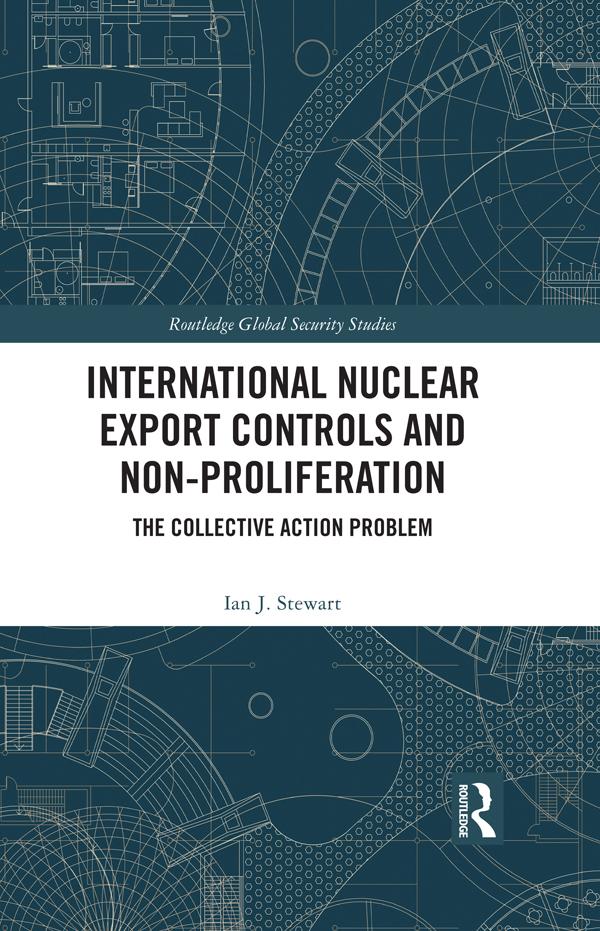
This book examines the evolution of international nuclear non-proliferation trade controls over time.
The book argues that the international nuclear export controls have developed in a sub-optimal way as a result of a non-proliferation collective action problem. This has resulted in competition among suppliers, owing to the absence of an overarching effective system of control. While efforts have been undertaken to address this collective action problem and strengthen controls over time, these measures have been inherently limited, it is argued here, because of the same structural factors and vested interests that led to the creation of the problem in the first place. This study examines international controls from the beginning of the nuclear age and early efforts to control the atom, up to more recent times and the challenge posed by Iranian and North Korean nuclear ambitions. Drawing on a rich body of original archival research and interviews, the book demonstrates that the collective action problem has restrained cooperation in preventing nuclear proliferation and that gaps persist in the international nuclear trade control regime.
This book will be of much interest to students of nuclear proliferation and arms control, security studies, and International Relations.
Payez facilement par carte, Klarna, Apple Pay ou Google Pay. Pas satisfait ? Vous avez toujours une garantie de remboursement de 14 jours. En savoir plus dans nos conditions. Si vous avez des questions, envoyez-nous un e-mail à hello@memmo.org.
Memmo facilite tes études, où que tu sois dans le monde. On rassemble tes manuels de cours et des outils d'étude intelligents au même endroit : résumés, quiz, podcasts et flashcards. Et il y a Ted, ton compagnon d'étude qui répond à toutes tes questions. Plus de 50 000 étudiants étudient déjà ici – conçu pour t'aider à apprendre plus vite et à moins stresser.