
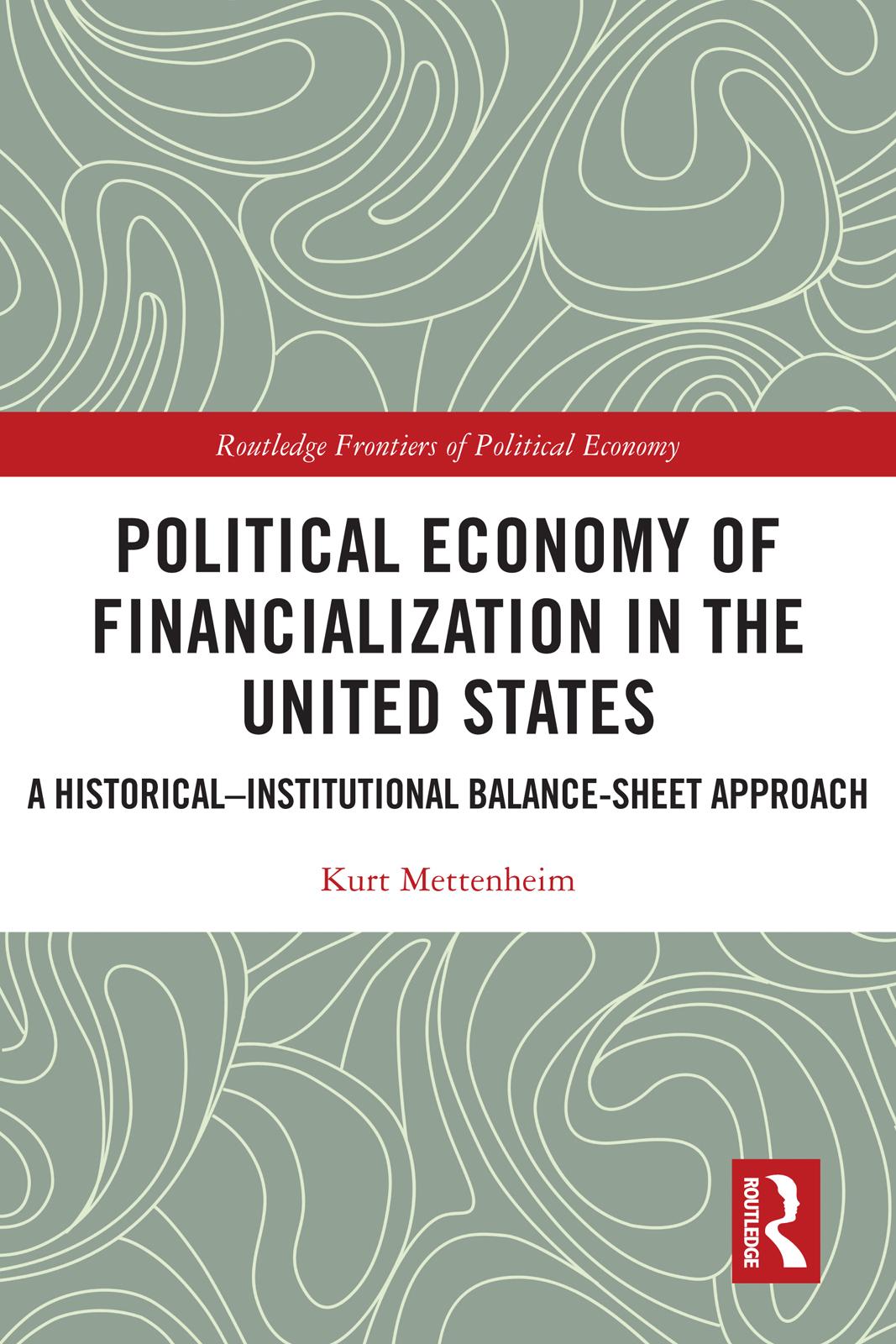
Combining balance sheet analysis with historical institutional analysis, this book traces the evolution of social sector financial balance sheets in the US from 1960 to 2018.
This innovative historical-institutional approach, ranging from the micro level of households to the macro level of the federal government, reveals that the displacement of households by banks has been a long-term process. This gradual compounding of financialization is at odds with widely accepted views about financialization, contemporary banking theory, financial intermediation theory, and post-Keynesian and endogenous money approaches. The book returns to time-tested traditional principles of banking and taps unexpected affinities about market failures in transaction cost economics, financial intermediation theory, and core ideas in classic modern political and social economy about economic moralities and social reactions of self-defense against unfettered markets. This book provides an alternative explanation for the rise of finance and new ways to think about averting financialization and its devastating consequences.
This book marks a significant contribution to the literature on financialization, social economics, banking, and the American political economy.
Payez facilement par carte, Klarna, Apple Pay ou Google Pay. Pas satisfait ? Vous avez toujours une garantie de remboursement de 14 jours. En savoir plus dans nos conditions. Si vous avez des questions, envoyez-nous un e-mail à hello@memmo.org.
Memmo facilite tes études, où que tu sois dans le monde. On rassemble tes manuels de cours et des outils d'étude intelligents au même endroit : résumés, quiz, podcasts et flashcards. Et il y a Ted, ton compagnon d'étude qui répond à toutes tes questions. Plus de 50 000 étudiants étudient déjà ici – conçu pour t'aider à apprendre plus vite et à moins stresser.